
US-China rare earth rivalry reignites in ASEAN arena as Thailand emerges key strategic player
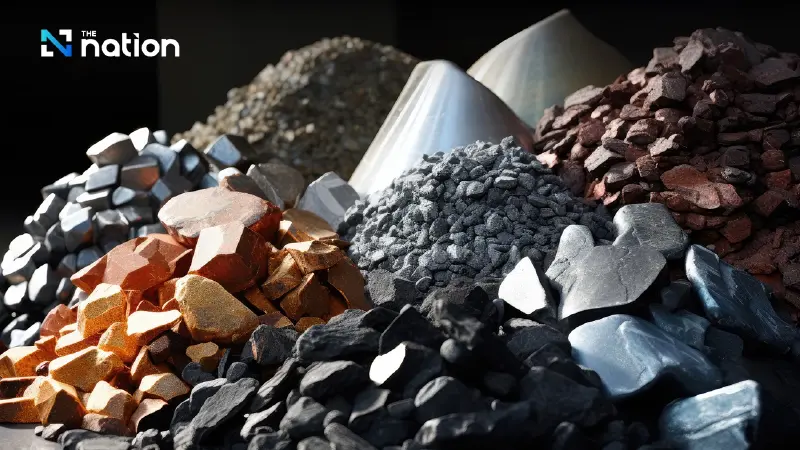


The US–China rare earth rivalry intensifies after Washington signs trade and mineral deals with four ASEAN nations, including Thailand, reshaping the global tech race.
The US-China rare earth competition has entered a new phase in Southeast Asia, with Thailand now emerging as a crucial player on the global strategic chessboard.
On October 26, the United States signed a landmark trade and rare earth agreement with four ASEAN countries — Thailand, Vietnam, the Philippines, and Indonesia — in Kuala Lumpur, marking a significant geopolitical move that could reshape the balance of economic and technological power between the world’s two largest economies.

According to Alongkorn Ponlaboot, President of FKII Thailand (Fields for Knowledge Integration and Innovation) and former chief adviser to the Minister of Natural Resources and Environment, the ASEAN rare earth race has only just begun and is set to intensify in the years ahead.
“The countries that can swiftly enhance their capabilities in production, processing, and innovation will gain the upper hand in the new global economic order — especially Thailand, the world’s sixth-largest rare earth producer,” he wrote in an analysis titled ‘US-China Rare Earth Rivalry in the ASEAN Battlefield: Thailand’s New Opportunity as the World’s Sixth Largest Rare Earth Producer’.

A turning point for ASEAN: the US strikes back
In recent weeks, tensions between Washington and Beijing have flared once again after China introduced sweeping export controls on rare earth elements. Under the new rules, any foreign company exporting goods containing even small amounts of rare earth materials must first obtain government approval and clearly state the intended purpose of use.
The United States, under President Donald Trump, retaliated swiftly by threatening to impose an additional 100% tariff on Chinese imports and tighten export restrictions on key software technologies to protect its own high-tech industries.
The US’s rare earth pact with four ASEAN nations is widely seen as a strategic countermeasure, aimed at achieving three key objectives:
- Diversifying supply chains to reduce reliance on China’s rare earth exports.
- Establishing a new production and processing network across Southeast Asia.
- Deepening reciprocal trade cooperation through strategic economic frameworks.
ASEAN has thus become a primary target in Washington’s bid to strengthen its strategic and economic alliances in the Indo-Pacific — with Thailand positioned at the centre of this new geopolitical and industrial realignment.
China moves first: cooperation with Malaysia on a new rare earth refinery
According to the U.S. Geological Survey 2025, China continues to dominate the global rare earth market, controlling 71% of global production and 86% of global refining capacity. Rare earth elements are now categorised as strategic economic minerals, as they are essential for producing high-performance magnets used in electric vehicles, electronic devices, renewable energy systems, and advanced technologies such as lighting, television screens (which use europium), glass polishing and oil refining (which use cerium), as well as in strategic military industries, including guided missiles and advanced weapons systems.
China’s dominance gives it powerful leverage through export control measures. In July 2023, Beijing imposed restrictions on exports of gallium and germanium, affecting 94% of global supply.
In short, China remains the strongest player, both as the world’s largest producer and the country with the most abundant rare earth reserves — while the United States is only beginning to establish alliances within ASEAN.
China has already taken the lead by signing a major cooperation agreement with Malaysia to build a new rare earth processing plant in Pahang State. The project, worth around US$100 million, will have an annual processing capacity of 5,000 tonnes and will be operated using Chinese technology supplied by the China Nonferrous Metal Mining Group. The plant is expected to be completed and operational by 2027.

ASEAN’s opportunity: from follower to key player
ASEAN is not only becoming a new arena of competition between global powers, but also an emerging leader in the global supply chain.
- Malaysia is positioning itself as the regional hub for rare earths.
- Vietnam has strong potential to become a production base alternative to China.
- Indonesia and the Philippines are rich in mineral resources and labour.
- Thailand, the world’s sixth-largest rare earth producer and the fastest-growing, can develop its processing industries and serve as a logistics hub for the region.
Meanwhile, the Thai Government House has released details of a memorandum of understanding (MoU) between the governments of Thailand and the United States on cooperation to diversify the global critical minerals supply chain and promote investment.
The MoU also includes provisions for knowledge development, industrial processing cooperation, and capacity-building in related industries, signalling Thailand’s growing role in the global strategic minerals landscape.
Rare earth projects in Thailand: potential and progress
As rare earth elements (REEs) become instruments of economic and geopolitical power, few realise that Thailand is already a key player in this field. The country ranks as the world’s sixth-largest producer, producing 13,000 tonnes in 2024 — an increase of over 260% from the previous year and more than thirteenfold compared to 2018. This makes Thailand the fastest-growing rare earth producer in the world, with key deposits located in the northeastern, western, and southern regions.
1. Nakhon Ratchasima project
The Neo Magnequench factory in Nakhon Ratchasima produces permanent magnets used in electric vehicles (EVs) and electronics. Chinese automaker BYD has invested US$486 million in an EV manufacturing plant in Thailand to strengthen the rare earth and magnet supply chain in the region.
2. Kanchanaburi project
Lynas Rare Earths, Australia’s largest rare earth producer outside China, is conducting a feasibility study to establish a rare earth processing plant in Thong Pha Phum district, Kanchanaburi. The study covers technical, economic, and environmental aspects.
Exploration in the district has identified deposits of monazite ore, rich in light rare earth elements (LREEs) such as lanthanum, cerium, and neodymium, all vital to high-tech industries.
According to the Department of Mineral Resources (DMR), Thailand’s preliminary reserves are estimated at around 50,000 tonnes, with commercial production expected by 2028.
3. Phuket and Phang Nga projects
Geological surveys by the DMR have detected xenotime and synchysite in Thalang district, Phuket, containing valuable heavy rare earth elements (HREEs) such as dysprosium, terbium, and erbium.
Thaisarco, a company with long-standing expertise in tin smelting, is studying the feasibility of extracting columbite–tantalite (coltan) ores containing rare earth traces. The company is developing in-house separation technology to enhance extraction efficiency.
4. Research and development
The Department of Mineral Resources is currently creating a comprehensive national rare earth map, using remote sensing and geophysical analysis technologies. Completion is expected by 2026.
Meanwhile, King Mongkut’s Institute of Technology Ladkrabang (KMITL) is researching environmentally friendly extraction methods, focusing on chemical recycling systems and waste reduction in processing. The findings are expected to be released in the first quarter of 2026.
Thailand’s opportunities and challenges
The rare earth industry presents Thailand with a significant opportunity to upgrade its industrial and technological capabilities, but several challenges remain:
- Human capital development – enhancing technical and innovation skills.
- Infrastructure development – building facilities to support rare earth processing industries.
- Environmental management – ensuring extraction and processing meet international environmental standards.
- Diplomatic balance – maintaining neutrality and economic cooperation between the United States and China amid growing global competition.
With its expanding production base, active foreign partnerships, and strategic location, Thailand stands poised to become a critical hub in the global rare earth supply chain — if it can balance sustainability, technology, and diplomacy effectively.
