
Unearthing Thailand’s rare earth treasure: where are they hidden?
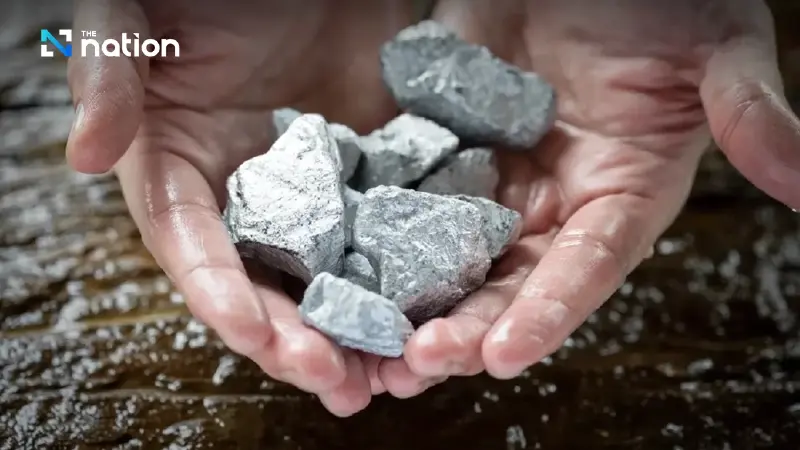


Thailand, now the world’s 6th-largest rare earth producer, holds vast deposits in the Northeast — from Korat to Buriram — positioning itself as ASEAN’s new hub

In an age where control over rare earth elements equates to dominance in global technology, Thailand has emerged as one of Asia’s brightest new players.
According to the 2024 reports by the US Geological Survey (USGS) and Investing News Network (INN), Thailand now ranks 6th among the world’s largest rare earth producers, with an annual output of 13,000 metric tonnes — an astonishing 261% increase in a single year.
The key question: Where are these rare earths hidden beneath Thai soil?

Thailand’s underground wealth: from Korat to Buriram
The Northeastern region, particularly Nakhon Ratchasima (Korat) and Buriram, has drawn intense interest as a potential natural source of rare earth minerals.
Geological surveys indicate sediment layers rich in Rare Earth Elements (REEs) such as Neodymium (Nd), Praseodymium (Pr), Dysprosium (Dy), and Yttrium (Y).
These elements are the lifeblood of modern technology — powering electric vehicle motors, wind turbines, computer chips, smartphones, and satellite systems.
Without them, there would be no Tesla, no iPhone, nor even advanced defence technologies.
Neo Magnequench: powering Thailand’s rare earth chain
One of Thailand’s major milestones is the Neo Magnequench plant in Nakhon Ratchasima, which produces permanent magnets for the global electric vehicle and electronics industries.
This facility has become a critical link in the regional rare earth supply chain.
The move by multinational corporations such as BYD (China) — which invested US$486 million (approximately 17 billion baht) to build an EV manufacturing plant in Thailand — further underscores the nation’s emergence as the “ASEAN rare earth supply chain hub.”
Thailand — the world’s 6th largest rare earth producer
According to the 2024 global production ranking, the top rare earth-producing countries are:
- China – 270,000 metric tonnes
- United States – 45,000 metric tonnes
- Myanmar – 31,000 metric tonnes
- Australia – 13,000 metric tonnes
- Nigeria – 13,000 metric tonnes
- Thailand – 13,000 metric tonnes
- India – 2,900 metric tonnes
- Russia – 2,500 metric tonnes
- Madagascar – 2,000 metric tonnes
- Vietnam – 300 metric tonnes
Thailand’s rapid ascent, surpassing several European and Asian nations in just a few years, marks it as the fastest-growing rare earth producer in the world.
Thailand’s strategic potential in the era of the rare earth war
- Golden location: Situated at the heart of ASEAN, Thailand connects major trade routes and resource corridors linking China, Laos, and Malaysia.
- BCG and EV hub policy: The Thai government’s Bio-Circular-Green (BCG) and EV hub strategies support sustainable use of domestic rare earth resources.
- Foreign investment surge: Investors from China, Japan, Canada, and Europe are actively securing production bases in Thailand.
Powering the future: Thailand’s path to becoming a rare earth processing hub
If Thailand succeeds in developing its own rare earth extraction and recycling technologies, it could transform itself from a raw material supplier into the regional processing centre for rare earths in ASEAN.
In an era when every nation is accelerating towards a clean-energy economy, rare earth elements are no longer mere minerals — they are the new oil of the 21st century.
