
Thai army denies poison gas claim, slams Cambodia for ceasefire breaches
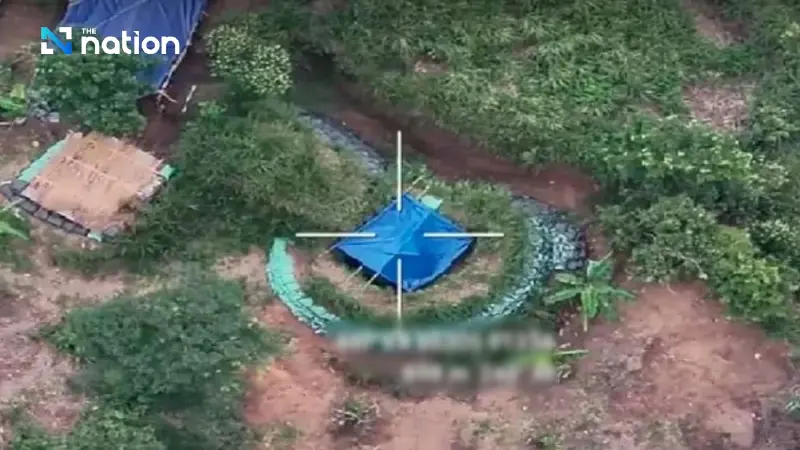


Army insists Thailand is acting in self-defence and accuses Cambodian troops of indiscriminate shelling, human shields and exploiting historic sites for military gain.
- The Thai army categorically denies Cambodia's accusation that it used poisonous gas, labeling the claim as baseless and unsupported by evidence.
- Thailand accuses Cambodian troops of repeatedly breaching the ceasefire by firing weapons, including rockets, indiscriminately into Thai territory, hitting civilian areas and medical facilities.
- The Thai military alleges that Cambodian forces are using civilian communities and historic sites, such as the Preah Vihear temple, as cover for their military operations.
The Royal Thai Army has flatly rejected a statement issued on Wednesday (December 10) by Cambodia’s Ministry of Defence, which alleged that Thai forces had fired “poisonous gas (toxic fumes)” into Ou Beichoan subdistrict in Ou Chrov district, Banteay Meanchey province described by Phnom Penh as a civilian residential area and accused Thailand of committing a grave, indiscriminate attack in violation of International Humanitarian Law.
Maj Gen Winthai Suvaree, army spokesman, dismissed the allegation and urged Cambodia to stop spreading fake news and repeatedly twisting facts to mislead both its own population and the international community.
He said the actual situation along the frontier showed that Cambodian troops had been mounting operations against Thailand along the Thai–Cambodian border since Sunday (December 7), firing both light and heavy weapons into Thai territory without distinction between military and civilian targets, including medical facilities.


He cited confirmation on Wednesday morning that BM-21 rockets had been launched from the Cambodian side towards areas near Phanom Dong Rak Hospital in Surin province and other community zones, in clear disregard of human rights and international law.
According to the spokesman, these attacks have left Thai soldiers dead and wounded and have severely disrupted the lives of civilians in multiple border districts.
He said this constitutes a direct threat to Thailand’s national security, obliging the country to exercise its right to self-defence and respond appropriately to the threat.
The army stressed that Thai operations are confined to military targets and military activity areas that pose a direct risk to Thailand.
The Royal Thai Army “categorically denies” using any form of poisonous gas or toxic fumes against Cambodia, Winthai said, describing Phnom Penh’s claim as entirely without foundation and unsupported by any credible evidence.

Responding to Cambodia’s assertion that its civilians, territory and key cultural heritage sites, including the Preah Vihear site and Ta Kwai Temple in Surin, had been damaged, Thai military intelligence reported that Cambodian forces had in fact been using civilian communities, casino complexes and historic sites as cover for their operations.
This amounted to placing civilians at risk as human shields and showed a disregard for the safety of Cambodia’s own people, the spokesman said.
Most recently, Thai forces detected that Cambodian troops had deployed within the Preah Vihear site itself, installing mortars, artillery and anti-drone systems there in preparation for attacks on Thailand.
Winthai said this was clear evidence that Cambodia neither respected nor valued the historical importance of the site, instead exploiting it as a tool for military purposes.
The Royal Thai Army strongly condemned Cambodia’s actions as a breach of all ceasefire understandings and of core principles of international humanitarian law.
It called on Phnom Penh to halt operations that inflict wide-ranging harm unrelated to legitimate military objectives and that run counter to efforts to restore peace, warning that such conduct would only further escalate tensions along the border.


