
Inside Cambodia’s casino drone base: the story behind the ‘killer drones’
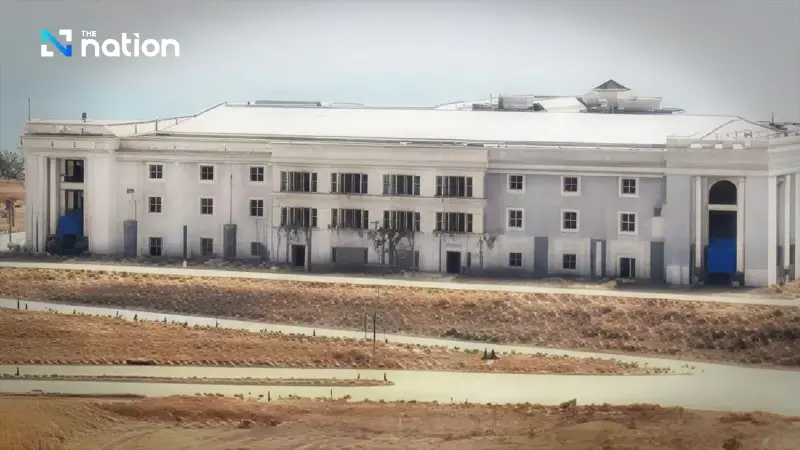


Cambodian troops were using a casino complex as a launch site for kamikaze drones and a hiding place for BM-21 multiple rocket launchers, prompting Thai forces to act to protect frontline personnel.
- Thai military forces are targeting multiple casinos along the Cambodian border, alleging they are being used as military operational hubs by Cambodian troops.
- The casinos are specifically accused of functioning as launch points and control centers for "kamikaze" drones, as well as hiding places for multiple rocket launchers.
- Five casino sites have been identified as targets, with Thai forces using air strikes, artillery, and naval operations to neutralize the alleged drone facilities.
The latest round of border fighting shows no sign of ending soon, with Thailand and Cambodia locked in a conflict that appears set to grind on.
Even if US President Donald Trump signals he wants to speak with Prime Minister Anutin Charnvirakul and Cambodian Prime Minister Hun Manet, in a bid to revive a “peace deal” similar to the previous attempt, a ceasefire does not look imminent.
For now, quick negotiations to halt the clashes are unlikely.
Thailand’s military priority, according to the logic driving the current campaign, is to degrade Cambodian forces to the point they can no longer pose a security threat.
One striking feature of this round is that casinos along the frontier have become repeated targets for Thai F-16 strikes and artillery fire.
Thai security officials argue that Cambodian troops were using the sites as operational hubs, including launch points for “kamikaze” drones and hiding places for BM-21 multiple rocket launchers, prompting Thailand to act to protect frontline personnel.
A Thai military spokesperson has said the operations are carried out under the right of self-defence, with strikes limited to military objectives and conducted as precisely as possible to minimise the wider impact.
Five casino sites cited as Thai “military coordinates”
Thai and regional reporting have linked five border-area casinos to the current operations:
Chong Chom, Surin – O Smach casino
Chong An Ma, Ubon Ratchathani – Chong An Ma casino
Chong Sai Taku, Buri Ram – Jubkogi Casino area
Ban Ta Phraya trade checkpoint, Sa Kaeo – casino on the Banteay Meanchey side (often called “Ta Phraya casino” by Thais)
Ban Chamrak, Trat – Thmor Dar casino (also known among Thais as “Tha Sen gambling den”)
Since fighting erupted on Monday (December 8), Thai F-16s have been reported striking the Chong An Ma casino, which Thai authorities described as abandoned but allegedly repurposed as a drone-control command post linked to Cambodia’s Bodyguard Headquarters (BHQ).
What is known about each site
1) Chong An Ma casino (Preah Vihear opposite Nam Yuen, Ubon Ratchathani)
The site was reportedly developed years ago by a Chinese investment group, amid expectations the local crossing would be upgraded from a trade-relaxation point to a permanent border checkpoint, a move opposed by Thai security agencies.
More recently, there were claims that scam networks relocating from Myanmar had gathered at the complex.
2) O’ Smach casino (Oddar Meanchey opposite Chong Chom, Surin)
The casino is linked to Ly Yong Phat, who expanded operations in the area after road development connecting the crossing points.
In later years, the O’Smach complex, alongside another operation in the same province opposite the Chong Sa-ngam crossing in Si Sa Ket, has been widely discussed as part of a wider “scammer empire”, with new office buildings rising near the casino zone.
3) Jubkogi area casino (Oddar Meanchey, opposite Chong Sai Taku, Buri Ram)
After Thailand and Cambodia opened the Chong Sai Taku–Jub Koki trade relaxation point in 2014, a casino-resort complex was developed near the crossing.
The investment is associated with Oknha Lim Heng.
The piece links both Oknha Ly Yong Phat and Oknha Lim Heng to Cambodia’s patronage-capital networks tied to Hun Sen.
4) Casino in Banteay Meanchey opposite Ban Ta Phraya, Sa Kaeo
Ownership is unclear in available local accounts, but Thais commonly refer to it as “Ta Phraya casino”.
The area is also described as politically sensitive, with allegations of encroachment disputes near the border.
5) Thmor Dar casino (Pursat opposite Tha Sen/Ban Laem Klat, Trat)
Following the opening of a trade route in 2017, Chinese-backed development on the Cambodian side expanded into a new “Thmor Dar City”, followed by the Thmor Dar casino.
The owner is identified as Oknha Try Pheap, described as a major concession-holder with close ties to Hun Sen’s circle, including Bun Rany.
How the sites have been hit
The account says most operations against these casinos involved air-dropped munitions and artillery strikes.
Thmor Dar, however, was described as a naval operation targeting the top of the building to disable an alleged drone-control position.
As the fighting continues, Thai forces appear focused on denying Cambodian units the ability to run drone attacks from fixed sites, with casinos repeatedly singled out as the most important nodes to neutralise.
