
No ceasefire without withdrawal: Thailand sets line ahead of ASEAN talks
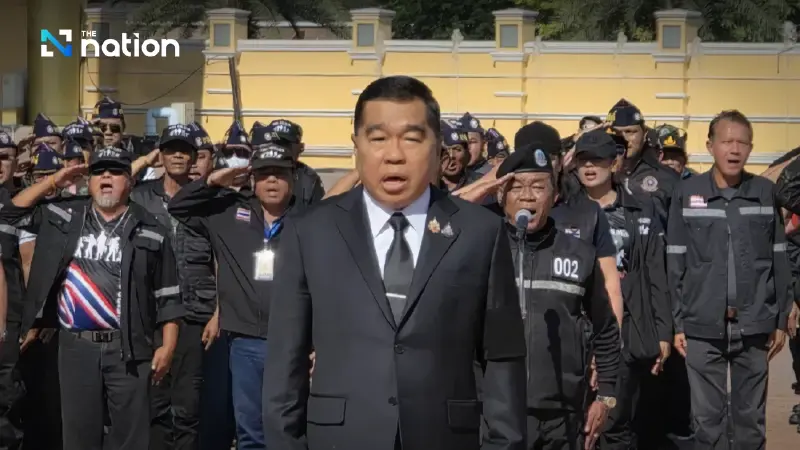


Thai Defence Minister stressed that Phnom Penh should back up its peace rhetoric with action, demanding a full troop pullout and an end to provocations before Thailand commits to any truce at the upcoming ASEAN summit.
- Thailand has stated that a ceasefire with Cambodia is not possible until Cambodian troops withdraw from all confrontation zones.
- Ahead of an ASEAN meeting, Thailand's Defence Minister asserted that the conflict is a bilateral issue and does not require third-party intervention from countries like China or the US.
- Thailand claims Cambodia initiated the military aggression and has set three conditions for a permanent end to hostilities: the cessation of aggression must be clear, continuous, and transparent.
- The Defence Minister accused Cambodian forces of indiscriminate attacks and using landmines in violation of the Ottawa Convention, criticizing the lack of international condemnation.
At the Office of the Permanent Secretary for Defence (Si Saman), the War Veterans Organisation of Thailand (WVO) hosted a gathering under the "Veterans' Power for the Motherland" project on Friday (December 19).
Gen Nattapon Nakpanich, Minister of Defence, presided over the event to bolster morale for troops currently defending Thailand’s sovereignty against Cambodian military aggression and to urge veterans to remain vigilant for national security threats.
Response to Peace Protests and Ceasefire Conditions
Addressing reports of "hundreds of thousands" of Cambodians protesting for peace, Nattapon expressed scepticism regarding the claimed figures, noting that visual evidence did not appear to support such numbers.
He emphasised that if Cambodia truly desires a ceasefire, it can be implemented immediately through action rather than rhetoric.
"If the Cambodian government and the masses, led by members of the Hun family, call for peace while their frontline troops continue provocations and remain in confrontation zones, a ceasefire cannot realistically happen," Nattapon stated.
The Minister reiterated that the solution is simple: Cambodia must withdraw its forces from the confrontation areas before negotiations can proceed.
He further asserted that the border conflict is a bilateral issue between Thailand and Cambodia, and does not require intervention from third parties like China or the United States.
Expectations for the ASEAN Ministerial Meeting
Regarding the upcoming ASEAN Foreign Ministers' meeting in Malaysia on December 22, Nattapon affirmed that Thailand has sought peace from the beginning.
While thanking the international community for their well-wishes, he noted that world powers with satellite capabilities can verify that Cambodia initiated the military movements.
Thailand remains firm on three conditions for a permanent end to hostilities:
- An end to all acts of hostility is clear.
- An end to all acts of hostility that are continuous.
- An end to all acts of hostility that are transparent.
"Once these three elements are met, we can move forward with the peace process," he said.
The Ministry of Defence has already provided supporting data to the Ministry of Foreign Affairs and has appointed Gen Nattapong Praokaew, Deputy Chief of the Joint Staff, to represent the Royal Thai Armed Forces at the December 22 meeting.
Air Operations and International Double Standards
Regarding air operations in the Poipet area, Nattapon clarified that the Royal Thai Air Force operates under strict principles to avoid civilian casualties.
- Targeting: Thailand utilises advanced technology to verify and strike only military targets.
- Contrast: He accused the Cambodian side of indiscriminate attacks that have resulted in Thai civilian casualties.
The Defence Minister concluded by expressing disappointment over the international community's silence regarding Cambodian provocations.
He specifically highlighted that seven Thai soldiers have lost limbs to landmines, a direct violation of the Ottawa Convention (the Mine Ban Treaty), yet no international body has issued a condemnation against Cambodia for these incidents.
