
2026 election set for fierce three-way race between orange, red, and blue factions
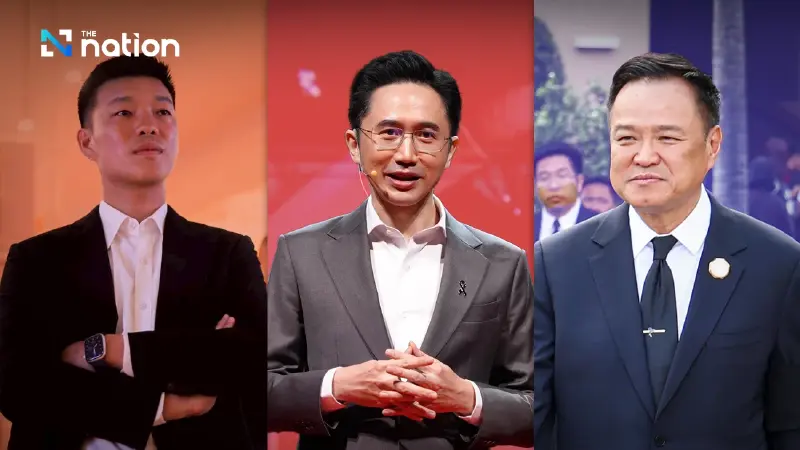


Thailand’s 2026 election heats up with Pheu Thai, Bhumjaithai, and the People’s Party each vying for the PM’s seat, as key candidates and policies take shape.
The stage is set for a three-way battle in the upcoming 2026 Thai general election, as Bhumjaithai, Pheu Thai, and the People’s Party all vie for the position of Thailand's 33rd Prime Minister.
On December 15, 2025, the People’s Party took the lead, becoming the first political party to officially announce all three of its PM candidates, signalling its readiness for a full-scale campaign. The trio of candidates includes Natthaphong Ruengpanyawut, the party leader who positions himself as a new-generation political leader, Sirikanya Tansakun, an economic expert and deputy leader, and Weerayut Kanchanachuchat, an economist and policy expert aimed at building confidence with the middle class and the business sector.
The People’s Party’s 2026 campaign focuses on economic reform, anti-corruption, and improving competition laws, as well as establishing an ASEAN cybercrime centre.
Meanwhile, Bhumjaithai Party, led by Anutin Charnvirakul, is taking a "calm but deliberate" approach, refusing to rush the announcement of their PM candidate. Anutin confirmed that only one candidate has accepted the nomination so far, while talks continue regarding a potential third candidate. Anutin also downplayed the party’s target of 200 seats, emphasising that the party’s key strength lies in the government’s track record, especially in economy, security, and international image.
On the red side, Pheu Thai is going all out, launching a major campaign under the slogan “Reboot Thailand, Pheu Thai can deliver”, and unveiling all three PM candidates: Yodchanan Wongsawat, a new generation figure and nephew of Thaksin Shinawatra, Julapun Amornvivat, the party leader with solid political experience, and Suriya Juangroongruangkit, a former minister and election director for Pheu Thai.
Pheu Thai’s immediate policy priorities include retirement lottery, debt relief for farmers, 20-baht flat-rate metro fares, and affordable housing for Thais. Yodchanan, in particular, is being positioned as a "decisive and independent leader", stressing that despite past setbacks including party dissolution and military coups, Pheu Thai always manages to return victorious in elections.
Who holds the upper hand in the race for Thailand’s 33rd PM?
As Thailand's 2026 general election approaches, the political battlefield is set for a fierce contest between three political models. The race isn’t just about popular support, but also about which party has the strongest base, campaign strategy, and potential to form a government after the vote.
Bhumjaithai Party (Blue):
Advantages: Bhumjaithai holds the upper hand as the caretaker government, enjoying an advantage in administration, continuity, and access to state mechanisms, particularly through the Interior Ministry, which plays a key role in local elections. The party’s local networks, including local government organisations and strong regional support, especially in Northeastern and Central Thailand, provide a significant edge.
With the country in a crisis over the Thai-Cambodian border, Anutin Charnvirakul, the Bhumjaithai leader, is viewed as a leader capable of managing the situation, which may attract votes from conservatives and those seeking stability.
Disadvantages: However, Bhumjaithai is burdened by the economic challenges faced during the current government, including cost of living issues and accumulated public dissatisfaction, which may result in votes flowing away from the ruling party. The rise of nationalism could backfire if seen as exploiting national security for political gain.
Summary: Bhumjaithai has an advantage going into the election but faces challenges in forming a government if it doesn’t secure a clear majority.
Pheu Thai Party (Red):
Advantages: Pheu Thai still holds the largest and most loyal voter base, particularly in Northern and Northeastern Thailand. The party’s economic policies, including debt relief, affordable transport, and electricity subsidies, resonate strongly with voters facing economic hardship.
The introduction of three PM candidates reduces internal friction and provides more room for political negotiation, with a focus on economic reform and anti-corruption efforts.
Disadvantages: The shadow of the old power structures still looms over the party, with questions about the extent of internal control remaining a potential weakness in terms of public perception. Pheu Thai also faces a tough road to government formation if it doesn’t win a majority, especially with conservative parties potentially blocking coalitions.
Summary: Pheu Thai has a solid chance of winning the election but still faces significant hurdles in securing the PM position, depending on post-election negotiations.
People’s Party (Orange):
Advantages: The People’s Party appeals to younger voters, especially in urban areas and the First Voter group, positioning itself as the party of change. It benefits from a fresh image, free from the baggage of past administrations, and can critique the government without being blamed for its failures.
Disadvantages: The party still lacks strong local networks and is at a disadvantage in electoral districts against established parties. Despite a rise in support, its chances of forming a government are slim unless it secures 250 seats, making post-election coalition-building difficult.
Summary: The People’s Party may win in terms of popularity, but it is still far from securing the PM position.
Final Take:
If we measure the likelihood of becoming Thailand’s 33rd PM, Bhumjaithai appears to have the advantage, with strong potential to lead the next government. However, the 2026 election is unlikely to be decided solely in the ballot box – it will ultimately come down to the negotiations and coalitions formed after the election.
