
Thai military rejects Cambodia’s artificial island, cites law of the sea
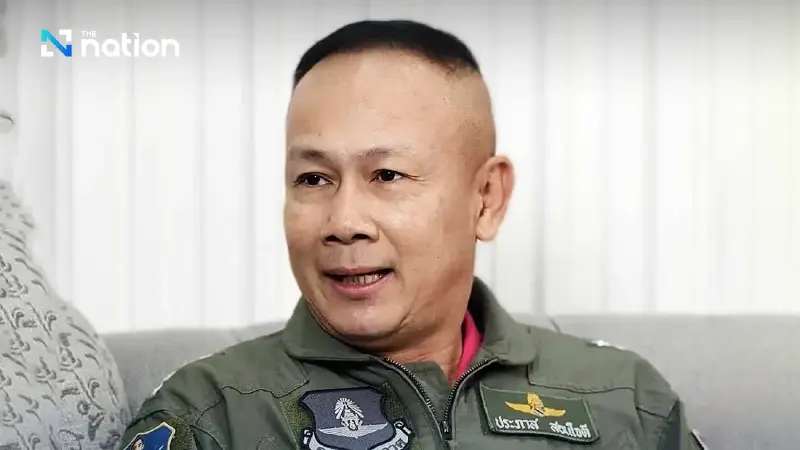


Thailand says it is reserving its maritime rights and has protested through diplomatic channels, stressing that man-made structures cannot create maritime entitlements under the United Nations Convention on the Law of the Sea.
- Thailand's military has rejected the legitimacy of an artificial island built by Cambodian interests, stating it will not use force but will not accept any legal claims arising from it.
- The rejection is based on the 1982 UN Convention on the Law of the Sea (UNCLOS), which specifies that artificial structures cannot be used to generate maritime entitlements like a territorial sea or exclusive economic zone.
- Instead of military action, Thailand is pursuing a strategy of diplomatic protest and strategic communication to consistently reserve its rights and ensure its lack of response is not interpreted as acceptance.
ACM Prapas Sonjaidee, Assistant Commander-in-Chief of the Royal Thai Air Force (RTAF), responded to public questions on Thursday (January 29) over why Thailand has not moved to demolish an “island or landmass protruding into the sea”, a structure built by Cambodian private interests, and whether this could affect Thailand’s maritime claims.
He described the matter as carrying greater political, legal and diplomatic significance than a military dimension.
Thailand’s decision not to use force at this stage, he noted, reflects restraint, adherence to peaceful dispute settlement, and compliance with international law, to avoid actions that could be interpreted as the unnecessary use of force, in line with the United Nations Charter.
From a legal standpoint, he stressed that refraining from demolishing the structure does not mean Thailand accepts the construction or allows it to create any entitlement to maritime claims.
Thailand, he added, has consistently lodged protests and communicated its non-recognition through diplomatic channels since the construction began.

He pointed to the 1982 United Nations Convention on the Law of the Sea (UNCLOS), which states that artificial islands or structures that are not naturally formed cannot generate maritime entitlements, whether territorial sea, exclusive economic zone, or continental shelf. Such structures may only have a safety zone of up to 500 metres around them.
Maritime delimitation, he said, must be assessed based on natural conditions and lawful baselines, not on later land reclamation or construction.
In practice, he observed, silence by a state alone is insufficient to create rights.
What must be avoided is “silence without a reservation of rights”, or acquiescence.
Thailand’s continued expressions of disagreement through diplomatic channels, he said, mean the case does not fall under implied acceptance.
Referring to international court jurisprudence on permanent structures built at sea, he said courts do not treat unilateral construction as a basis for determining a state’s maritime rights.
Continued, clear and consistent non-recognition by Thailand, he added, would help reduce any future attempt to claim legitimacy.
On the issue of private ownership, he said international law still places responsibility on the Cambodian government for acts by private parties within its jurisdiction, particularly where the state directs, controls, or ignores actions affecting an international dispute.
Private actions, he stressed, cannot create sovereignty or maritime rights for a state.
To strengthen Thailand’s legal and diplomatic position, he proposed a three-layer approach:
1. Legal layer
- Issue a statement or diplomatic note clearly reserving Thailand’s rights and rejecting any legal effects
- Compile evidence, including photographs, satellite images, and a construction timeline
2. Diplomatic layer
- Use bilateral mechanisms and/or ASEAN channels
- Reaffirm peaceful settlement
- Avoid escalating the issue into a confrontational dispute
3. Strategic communication
Clearly communicate that Thailand:
- will not resort to force
- will not relinquish its rights
- will continue to act in line with the international law of the sea
If circumstances change, he said Thailand retains a full range of legal and diplomatic options, including negotiations, diplomatic protests, UNCLOS dispute-settlement mechanisms, or raising the issue in international forums, without needing to begin with the use of force.
“Not demolishing the structure protruding into the sea is an exercise of restraint and situation management grounded in international law. It is not an acceptance of any rights. Artificial islands and structures at sea do not generate maritime entitlements. The key is that Thailand must ‘not use force, but not remain silent’, while consistently reserving its rights through diplomacy and strategic communication,” he said.
