
Cambodia’s UNESCO Songkran bid won’t affect Thailand’s listing: Culture Ministry
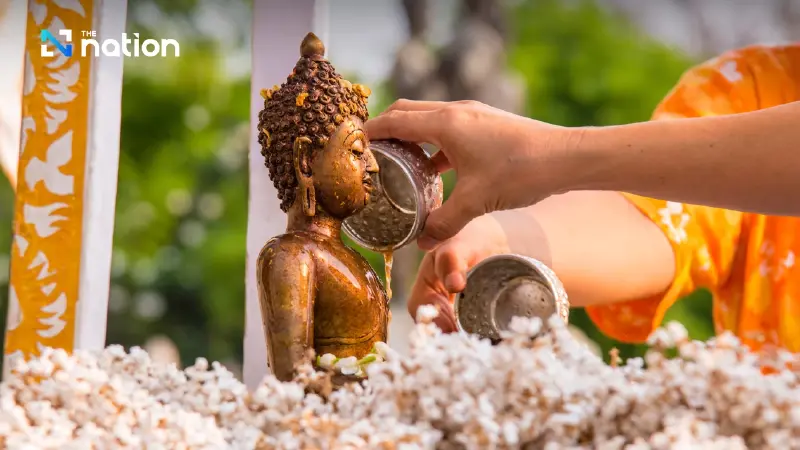


Thailand’s Culture Ministry says Cambodia’s proposed Khmer New Year entry is still in the early stages at UNESCO, and stresses that Songkran in Thailand remains fully inscribed and unchanged.
- Thailand's Culture Ministry has clarified that Cambodia's bid to list its New Year festival ("Mohasangkran chnam thmey") with UNESCO will not affect Thailand's existing "Songkran" inscription.
- Thailand's "Songkran" festival was already successfully inscribed on UNESCO's Intangible Cultural Heritage list in 2023, and this status remains fully valid.
- The ministry emphasized that the UNESCO convention is not about granting exclusive ownership, as similar cultural traditions can be recognized in multiple countries, citing Myanmar's New Year festival as an example.

Yuthika Isarangkun na Ayutthaya, Director-General of the Department of Cultural Promotion, issued a clarification on February 14, 2026, regarding social media discussion about Cambodia’s submission of “Mohasangkran chnam thmey, the traditional Khmer New Year in Cambodia” for UNESCO’s consideration as an element on the Representative List of the Intangible Cultural Heritage of Humanity.
She said the Department of Cultural Promotion had checked UNESCO’s official website and confirmed that the information appears in the organisation’s database.
Based on the information shown on the website, Cambodia has one nomination under process for 2026: the Traditional Khmer wedding.
Meanwhile, “Mohasangkran chnam thmey, the traditional Khmer New Year in Cambodia” appears under UNESCO’s category of files pending priority ‘0’ treatment, which precedes entry into the consideration process in a subsequent cycle, in line with the Convention’s procedures.
Yuthika said that, earlier, in 2021, Thailand’s Ministry of Culture submitted “Songkran in Thailand, traditional Thai New Year festival” to UNESCO, and it was inscribed in 2023 on the Representative List of the Intangible Cultural Heritage of Humanity.
She stressed that this inscription is fully valid and is not affected by submissions from other countries.
She added that the 2003 UNESCO Convention for the Safeguarding of the Intangible Cultural Heritage aims primarily to protect, conserve and promote the transmission of living heritage so it is not lost, and to raise awareness of its value at local, national and international levels.
The Convention is not intended to certify exclusive ownership by any single country, as many forms of living heritage may be found in multiple countries.
The Director-General cited Myanmar as an example: Myanmar submitted “Myanmar traditional New Year Atā Thingyan festival”, which UNESCO inscribed in 2024 on the Representative List of the Intangible Cultural Heritage of Humanity.
The festival is a solar New Year tradition held in mid-April, similar in timing to New Year traditions in several countries across the region.
Yuthika said Cambodia’s submission is a right of a State Party under the Convention.
Consideration places importance on the practice, expression and community participation within the submitting country’s territory, as well as the Safeguarding Plan and supporting academic evidence submitted for evaluation.
For Thailand, she said, Thailand became a State Party to the Convention on June 10, 2016.
At present, Thailand has six elements inscribed internationally (on the Representative List of the Intangible Cultural Heritage of Humanity), as follows:
• Khon (2018)
• Nuad Thai (2019)
• Nora (2021)
• Songkran (2023)
• Tomyum Kung (2024)
• Kebaya (2024 – multinational nomination)
At the same time, Thailand has four elements in preparation or pending entry into the consideration process: Chud Thai (Thai dress), Muay Thai, Phakhaoma, and Loy Krathong.
The element “Chud Thai” is scheduled to enter consideration in 2026.
The Director-General reiterated that the Department of Cultural Promotion is closely monitoring developments in other countries and continuously coordinating with regional partners to strengthen understanding and cultural cooperation, leading to shared international recognition and appreciation of living heritage.
“Inscribing intangible cultural heritage is a safeguarding and transmission process, not a competition or a claim of ownership.
Culture is the shared heritage of humanity,” Yuthika said.
Sabeeda Thaised, Minister of Culture, issued a clarification on February 15, in response to reports that Cambodia had submitted “Mohasangkran chnam thmey, the traditional Khmer New Year in Cambodia” to UNESCO, saying the information was accurate as reported by the media.
The minister added that Thailand still has several cultural heritage elements being prepared for future submission, such as traditional Chud Thai, Muay Thai, Phakhaoma, and Loy Krathong.
“Traditional Thai dress” is scheduled to enter UNESCO’s consideration process in late 2026.
She urged the public not to worry, saying the Ministry of Culture and the government are working proactively in all aspects to safeguard and protect Thailand’s cultural heritage.
She has assigned the Department of Cultural Promotion, as the responsible agency, to communicate accurate information to the public and to closely monitor Cambodia’s progress on the matter.
