
"Blue government" returns, strengthens border with Cambodia and moves on key security issues
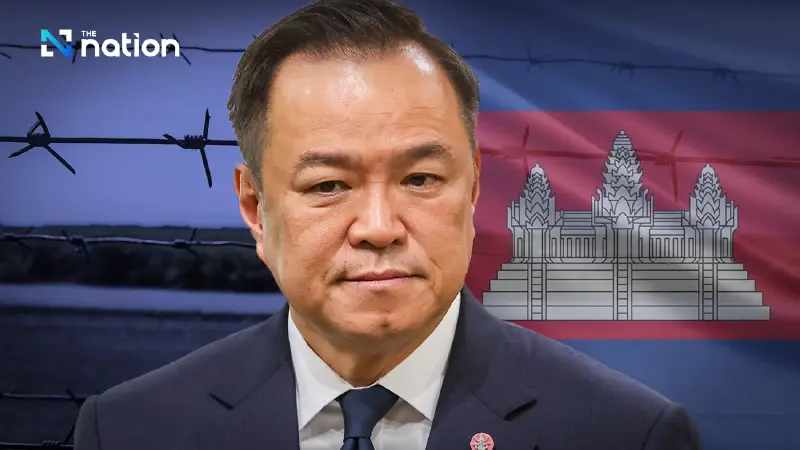


Thailand's new government, led by Anutin Charnvirakul, pushes forward with border security and strategic policies following their resounding election victory, with a strong stance on Cambodia's territorial issues.
Following Thailand’s 2026 election, Anutin Charnvirakul, acting Prime Minister and Minister of Interior, embarked on a nationwide tour to thank the public for their overwhelming support, with Bhumjaithai securing 193 seats in the House of Representatives—an outright victory over rivals.
In his address, Anutin sent a clear signal to Phnom Penh, stating: "No retreat, no dismantling, no opening of borders." His remarks reflected the new government’s intent to continue its efforts in securing Thailand’s borders, particularly focusing on areas recently reclaimed from Cambodia after prolonged territorial encroachment. He also announced that the government would continue its efforts to fortify border security, including ongoing work to build a barrier, until Cambodia’s territorial threat is fully neutralised.
In a direct move, Anutin confirmed the cancellation of MOU 44, a continuation of the previous MOU 43, which extended land claims in the Klong Yai district, Trat Province, towards the continental shelf—an area rich in underwater, surface, and sub-surface resources—remaining unresolved for over 20 years.
MOU 43, which has made some progress with 45 border markers agreed upon, still faces disagreements on 29 markers. Anutin remarked that these areas would need adjustments to reflect new realities and to account for changes since the original agreements.
Border Security: A Key Priority
Anutin highlighted the importance of border security and expressed his commitment to enhancing the nation’s defence capabilities. “The construction of the border fence will proceed, alongside strengthening the army and weaponry," he said. He also announced that the Ministry of Defence and National Security Council (NSC) had already taken action, confirming the government’s ability to make decisions independently without the need for parliamentary approval.
Anutin also addressed the MOU 43, which he believes benefits Thailand, saying that the process would focus on resolving any remaining disagreements in a diplomatic manner, based on the latest ceasefire agreements.
Cambodia’s Response
Meanwhile, Cambodia has attempted to involve neighbouring countries in the dispute, with Hun Sen, Cambodia’s Senate President, meeting with To Lam, the General Secretary of the Communist Party of Vietnam, on February 6, 2026 in Phnom Penh. The meeting focused on strengthening relations and discussing several bilateral cooperation issues.
One of the topics discussed was the request for Vietnam to act as a mediator between Thailand and Cambodia. Hun Sen urged Thailand to withdraw from the reclaimed areas, dismantle the fence and container barriers, and allow Cambodian nationals to return to their former land.
In a further escalation, Hun Manet, the Cambodian Prime Minister, declared that Cambodia would not accept Thailand’s use of military force in reclaiming the land, threatening to invoke international law and the UN Charter if necessary.
Labour and Border Security
Amid the ongoing tensions, Anutin has also been dealing with the issue of Cambodian workers in Thailand. He announced a delay in the signing of an agreement allowing Cambodian nationals to remain in Thailand under special conditions, stating that all details must be carefully reviewed to ensure national security and comply with immigration laws. This includes preventing illegal immigration and cross-border crime.
The NSC has confirmed that 100,000 Cambodian workers whose permits will expire by March 31, 2026 will have their work permits extended for one year after consultations with security agencies.
Anutin’s move has been widely supported by businesses, with employers meeting with Minister of Labour Trinuch Thienthong, stressing the need for these workers in the Thai economy. The Ministry of Labour is now reviewing the qualifications of Cambodian workers before submitting the proposal to the Cabinet by the end of the month.
Strengthening National Sovereignty
The ongoing tensions at the Thailand-Cambodia border have become one of the new government’s key priorities. Anutin’s clear stance on national sovereignty and border security underscores the government’s commitment to both economic recovery and regional stability. As Thailand’s new government settles in, their next steps will be closely watched by both the public and the international community, especially regarding their approach to foreign policy and border disputes.
As Anutin Charnvirakul returns to power, Thailand’s border security and sovereignty remain central to the government’s agenda, while the nation prepares to move forward with a new chapter in its political and economic future.
