
Youth workers: key to improved lives today, brighter tomorrow
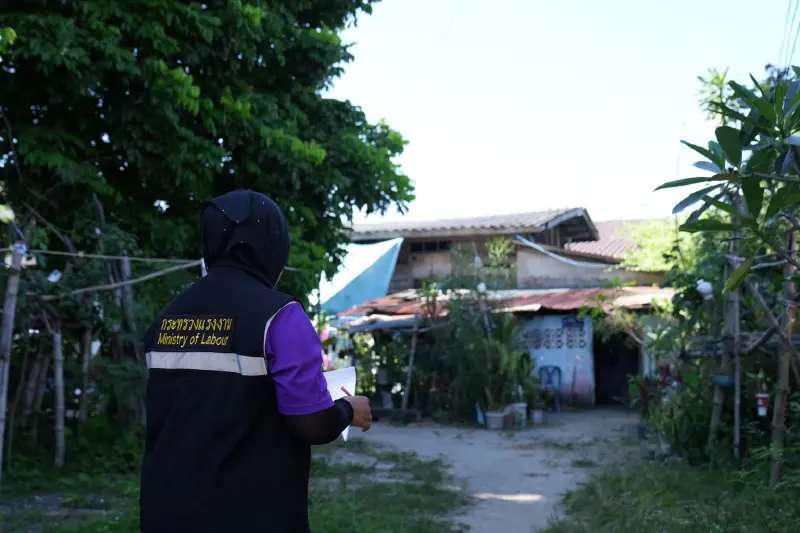


“It's so important to give opportunities to young people," says Nisuneeda Tuanmaeroh, a Labour Graduate working for the Ministry of Labour in Narathiwat Province in the south of Thailand.
"If we don't invest in young people, we’ll struggle to build safe, thriving communities.”
Nisuneeda spoke shortly after taking part in a new training programme created in partnership between the Thailand Professional Qualification Institute (TPQI) and UNICEF Thailand.
Nisuneeda explains why the training was so important to her: “Labour Graduates are responsible for driving the Ministry’s mission, such as handling job placements, skills development, social security, welfare, and more. In Narathiwat, we have been tasked with identifying and supporting young people who aren’t in school or employment... we help guide them, show them options, and support them in taking next steps."
Work like Nisuneeda’s is crucial because of two major challenges Thailand is facing.
The first is a large number of unemployed youth: in 2024, the International Labour Organisation (ILO) found that 12.8 % of Thai youth aged 15–24 were classified as NEET (Not in Education, Employment or Training) due to multiple complex factors. The second challenge is a declining birthrate.
This demographic shift means fewer young people are entering the workforce, which makes it even more critical to the country’s progress that all children and youth are given the support they need to learn and thrive.
Thousands of individuals across Thailand are already working with children and young people, whether to address their absence from employment or education, or tackle the individual challenges, including poverty, disability, rural isolation and more, that can lead to such situations.
These youth workers include NGO staff, teachers, community volunteers, and young people themselves, and they offer invaluable support driven by commitment and goodwill.

However, a UNICEF study in 2022 revealed that approaches to youth work varied across sectors and geographies. Without a common professional foundation, it is difficult to ensure consistency and quality.
To tackle this challenge and improve lives for children and young people across Thailand, UNICEF Thailand worked with TPQI over three years to create the country’s first occupational standards and professional qualifications for youth workers.
The standards were developed in partnership with civil society, government agencies, young people, and professionals currently working with young people.
UNICEF facilitated information-sharing from experts from countries with known success in the field, including the United Kingdom, Australia, Singapore, and Finland. After two years of development, the TPQI board approved the new qualifications, which are fully aligned with Thailand's national qualification framework.
“Youth workers are already supporting countless young people with the challenges they face,” says Ilaria Favero, UNICEF Thailand’s Chief of Adolescent Development. “However, with stronger skills and clearer recognition, they will be better equipped not simply to respond to problems, but to build on young people’s strengths, supporting them to navigate challenges, seize opportunities, and grow into authors of their futures. For some young people who have experienced challenges or setbacks in their childhood, adolescence creates a second window of opportunity. Now more of them will get the support they need to make the most of that opportunity and thrive."

The UNICEF-supported training began rolling out in 2024, with 588 personnel from the Ministry of Labour, 56 service providers in one pilot province, and 57 NGO or CSO staff from across Thailand trained on the core youth work skills, which are the foundation of the new qualification.
These skills include the ethics of youth work, the use of positive communication, and the creation of safe spaces where young people can speak openly about their challenges and aspirations.
Sawanee Nibu is another Labour Graduate who has worked with young people since 2008. Despite her years of experience, she still learnt new skills from attending the training.
“I learned a lot about psychology—how to talk to youth, how to motivate them, and what kind of language not to use. For example, if they do something wrong, don’t scold them right away—they’ll shut down. You need to blend in and become like a friend or older sibling, and understand what they like. One boy I work with likes football, so I talk to him about that and encourage him. It’s all about connection,” Sawanee says.
"This is a powerful example of partnership in action,” says Severine Leonardi, UNICEF Deputy Representative for Thailand. “Through our work with communities across Thailand, we saw first-hand the challenges young people face and the inspiring efforts of those supporting them, often without recognition or formal training. By working with TPQI to develop national occupational standards and professional qualifications, UNICEF is helping to turn grassroots good practices into a scalable, sustainable system. This initiative has the potential to transform the lives of young people and lay the foundations for Thailand’s future progress."
The feedback from the training was extremely positive and led to keen interest from within the Royal Thai Government. Many decision-makers recognised the potential of qualified youth workers to address deep challenges the country faces.
As an example, the Thailand Zero Dropout initiative —launched in 2024—seeks to reintegrate out-of-school children and youth across the country. Many of these young individuals face multiple and complex challenges that can best be addressed by skilled, professional youth workers who know their communities and are trained to meet their needs.
The rollout of the Youth Work occupational standards and professional qualifications will continue through 2025 and 2026, to embed qualified youth workers in every community.
This year, 210 “master trainers” will be equipped with advanced skills that will help them, in turn, train more youth workers and assess their knowledge.
The master trainers will come from across all 77 provinces under the Thailand Zero Dropout's goal of "One Tambon, One Youth Worker" (a youth worker for every sub-district).
The initiative’s ambitious target is to train 7,500 new youth workers to reach over 1 million out-of-school children and youth and bring them back into the education system by 2027.
UNICEF believes the new training will help more young people get the right support at the right time, allowing them to overcome challenges and thrive.
“I think the work youth workers do is very important,” says Sawanee.
“Even if we just help one youth to get a job and improve their quality of life, it already helps uplift the entire community. It’s like we’re adding one more capable person.” She believes the impact of the new training and professional standards will have a powerful effect across the country. “It’s useful to both the youth workers and the young people, it helps keep us motivated, inspired and moving forward,” Sawanee adds.
