
‘Clean Caffeine’ Trend: A New Opportunity for Thai Tea to Expand Globally
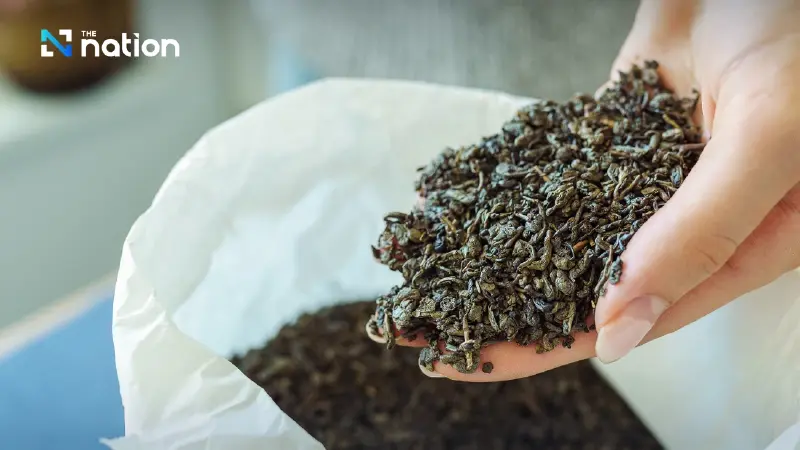


Rise of the 'Clean Caffeine' trend is boosting global demand for healthier beverages, offering Thai tea producers the opportunity to expand production and reach international markets.
- The "Clean Caffeine" trend, driven by health-conscious consumers seeking coffee alternatives like matcha, is creating a market opportunity due to rising prices and supply issues for popular teas.
- While global exports of traditional green and black tea are declining, Thailand's tea exports are experiencing significant growth (up 13.6% in 2024), positioning the country to meet increasing international demand.
- Thai producers are encouraged to capitalize on this trend by innovating with value-added products, such as functional teas with health benefits, ready-to-drink options, and novel flavors that align with wellness demands.
Poonpong Naiyanapakorn, Director-General of the Trade Policy and Strategy Office (TPSO) and spokesperson for the Ministry of Commerce, revealed the latest findings from the TPSO’s monitoring of the global and Thai tea markets.
He said tea consumption has been steadily increasing in recent years, with a significant boost coming from the growing popularity of green tea and matcha, fuelled by social media. This trend has made high-quality, authentic matcha increasingly scarce and significantly more expensive in 2025.
Data from the International Tea Committee shows that climate change is reducing tea yields even as global demand accelerates. Meanwhile, more consumers now view matcha as a source of “clean caffeine”, drinking it as an alternative to coffee in line with health and wellness trends.
However, producing matcha remains complex, requiring specialised plant varieties, meticulous processing, and highly skilled labour.
Global Tea Market: High Value, But Green and Black Tea Exports are Shrinking
According to Euromonitor, the worldwide tea retail market reached US$51.47 billion in 2024, an increase of 3.5% from the previous year.
Black tea accounted for the largest share at 41.3% of the total retail value, followed by green tea (22.8%) and fruit/herbal tea (19.5%).
The global tea retail market is forecasted to continue its growth, expanding at an average of 6.1% annually to reach an estimated retail value of US$69.22 billion by 2029.
However, a closer look at the global export value of tea and tea products in 2024 shows an overall contraction of 1.9%, with a total export value of US$9.20 billion. The breakdown is as follows:
- Black Tea US$5.65 billion Down 3.0%
- Green Tea US$2.02 billion Down 7.3%
- Tea Products (e.g., extracts, instant tea) US$1.53 billion Up 11.9%
Thai Tea: Growing Domestic Production and Demand
According to data from the Office of Agricultural Economics, Thailand's tea production reached 106,643 tons in 2024, a 0.3% increase from the previous year. The majority of this production is Assam tea (93.0%), with output forecasted to rise further to 107,393 tons in 2025. The Northern region remains the country's main tea cultivation area.
Domestically, the Thai tea retail market was valued at 2,262.7 million baht in 2024, growing by 4.2% year-on-year, as reported by Euromonitor.
Green tea holds the highest value at 1,040 million baht, accounting for 46.3% of the Thai tea market, followed by fruit/herbal tea (23.0%) and black tea (13.5%).
The Thai tea market is projected to continue expanding at an average annual rate of 2.2% through 2029.
Meanwhile, the Thai Ready-to-Drink tea market was valued at 16,834.7 million baht, showing a significant 6.8% expansion from the previous year, highlighting the increasing trend for convenient, prepared tea products.
Global Opportunities for Thai Farmers and Entrepreneurs
Thailand’s total export value of tea and tea products reached US$70.2 million (2,459.4 million baht) in 2024, an impressive 13.6% growth from the US$61.8 million exported in 2023.
- Black Tea 2,460.7 Tons US$13.2 million Up 38.9%
- Green Tea 1,791.1 Tons US$14.7 million Up 65.2%
- Tea Products 10,382.6 Tons US$42.3 million Down 2.5%
In 2024, Thai imports of tea and tea products totalled US$51.0 million (1,807.7 million baht), up 13.6% from the previous year's US$45.0 million.
- Black Tea 13,462.5 Tons US$16.3 million Up 10.9%
- Green Tea 6,451.3 Tons US$11.8 million Up 16.8%
- Tea Products 1,381.2 Tons US$22.9 million Up 13.4%
Overall, Thailand has a trade surplus in the tea and tea products sector. This highlights a significant commercial opportunity for Thailand to enhance production capabilities to meet both rising domestic and international demand, while also reducing reliance on imports.
For the first eight months of 2025 (Jan. – Aug.), the export value of Thai tea and tea products continued its strong growth, reaching US$53.3 million (1,762.6 million baht)—a 21.4% expansion.
The top five export markets during this period were: Cambodia (15.3%), Laos (14.9%), the United States (12.1%), Indonesia (10.7%), and Vietnam (8.8%).
Elevating Thai Tea for Global Health and Sustainability
The sustainable elevation of Thai tea products on the global stage will benefit entrepreneurs, farmers, and communities involved in tea production across the country.
Developing Thai tea products requires collaboration from all sectors to increase both the yield and quality of the tea, as well as to add value through creativity and innovation that aligns with market demands.
This can be achieved through:
Functional Teas (Health Focus)
These teas can incorporate ingredients like probiotics and phytochemicals (such as acerola or acai) to meet consumer needs for stress reduction, improved digestion, or natural energy boosts.
Ready-to-Drink Teas: Emphasising convenience.
Cold Brew Teas: Featuring popular fruit or floral flavours.
Novel Flavours: Creating unexpected and inviting tastes, such as blending with plant-based milk (almond, soy, or oat), or incorporating vegetables, herbs, spices, or other agricultural products like coconut, lychee, or longan.
Integrated Products: Utilising Thai tea as an ingredient in desserts, ice cream, and other sweets.
Sustainable Tea: Focusing on production processes and packaging that are environmentally friendly.
