
Low-cost weapons, high lethality change rules of war
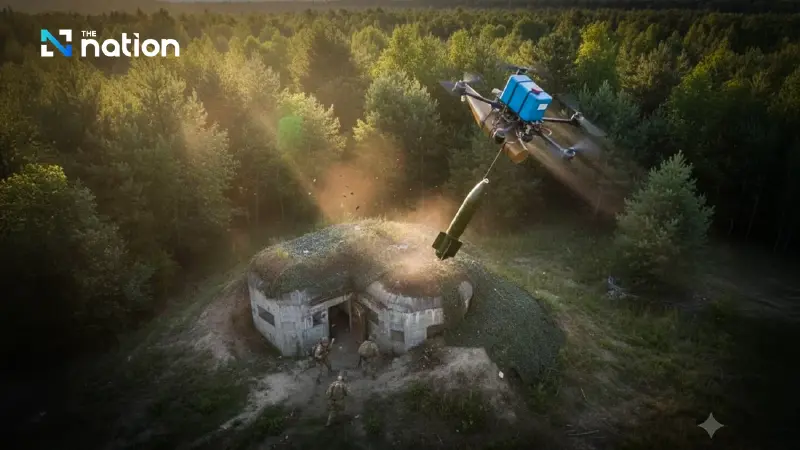


Cheap FPV kamikaze drones built from off-the-shelf parts are allowing armies to destroy tanks and artillery worth millions, signalling a shift away from traditional, high-cost weapons systems.
- Low-cost FPV kamikaze drones are challenging expensive, high-end military technology with disproportionate destructive power.
- These drones create a "cheap kills expensive" dynamic, where inexpensive units can destroy multi-million dollar assets like tanks and artillery systems with high precision.
- Traditional air-defense systems are often ineffective against these small, agile drones, forcing militaries to rapidly develop new countermeasures.
- This shift in warfare prioritizes rapid innovation and the deployment of cost-effective technology over the sheer size of a military force.
It is increasingly clear that on Thursday (December 11), battlefields, expensive high-end military technology is being challenged by “people’s weapons”, low-cost systems with disproportionate destructive power.
At the centre of this shift are FPV (first-person view) kamikaze drones, or “suicide drones”, which have rapidly become true game-changers and a signal that traditional forms of warfare may be nearing their end.


Lighting the fuse with a first-person view
These drones operate on a simple but powerful principle.
The operator wears FPV goggles and pilots a small drone fitted with an explosive warhead, seeing everything through the drone’s camera in real time.
This immersive view allows the pilot to guide a high-speed drone onto moving targets with sniper-like precision from a distance.
“This is a fusion of the accuracy of a guided missile with the flexibility of a reconnaissance drone,” one security analyst observed.
“It can slip into the weak points of tanks or bunkers in ways that heavy weapons struggle to achieve.”
Low-cost weapons, high killing power: a new level of cost-effectiveness
The key factor that turns FPV kamikaze drones into a nightmare for conventional forces is cost.
Many are assembled from commercially available components, meaning each unit can cost only tens of thousands to a few hundred thousand baht, while being capable of destroying armoured vehicles or artillery systems worth tens or even hundreds of millions.
This creates a “cheap kills expensive” dynamic, where militaries that rely on large, costly platforms face loss rates that are difficult to sustain or justify.


A wake-up call for air defence
Although FPV drones have limitations in range and endurance, their agility and low-level flight make them hard to detect and intercept.
Traditional air-defence systems were designed to counter aircraft, helicopters or large missiles, not small drones weaving through terrain, trees and buildings.
As a result, many countries are now racing to develop countermeasures, including:
Electronic warfare (EW): jamming or disrupting control and video links.
Counter-UAS systems (C-UAS): using anti-drone drones, directed-energy systems or automated rapid-fire weapons to engage incoming threats at close range.

The future of war: innovation over size
FPV kamikaze drones are no longer a niche or alternative weapon.
They are becoming a core capability that highlights how future wars will be decided less by the sheer size of armies and more by how quickly nations can innovate, adapt and field cost-effective technology.
In this new era, the balance of power will increasingly favour those who can produce and deploy smart, agile systems faster and cheaper than their adversaries and who can defend against them just as quickly.
FPV kamikaze drones
FPV (first-person view) kamikaze drones, often referred to as suicide drones or loitering munitions, have become a highly significant topic in modern security and military affairs.
1. How they work and how they are used
- FPV (First-Person View): The operator wears FPV goggles with a small built-in screen showing real-time video from a camera mounted on the drone. This creates the sensation of sitting in the drone’s cockpit, allowing very precise, agile control, especially in narrow, cluttered or complex environments.
- “Kamikaze” / suicide role: The term reflects the drone’s mission profile. It is designed to destroy a target by crashing directly into it. The drone carries a small warhead or explosive charge, which detonates on impact, destroying both the target and the drone itself.
2. Key characteristics
- Low cost: Most FPV kamikaze drones are built from commercially available components (commercial off-the-shelf – COTS), making them far cheaper than large military-grade missiles or traditional combat drones.
- High precision: FPV control allows the operator to guide the drone accurately onto moving targets or small, vulnerable points, greatly increasing the chance of a successful strike.
- High manoeuvrability: Their small size and light weight enable low-altitude flight, tight turns and obstacle avoidance, helping them approach targets while remaining difficult to detect and intercept.
- Rapid production: They can be modified, upgraded and produced in large numbers quickly, giving forces the ability to scale up their use at short notice.

3. Typical targets
FPV kamikaze drones are effective against a wide range of targets, for example:
- Personnel and infantry units: Especially those on the move or taking cover in lightly protected positions.
- Light vehicles and armoured platforms: Such as trucks, armoured personnel carriers (APCs) and even tanks, when the drone is directed at weak spots.
- Artillery positions and fixed strongpoints: Including gun emplacements, ammunition dumps and fortified positions where equipment and troops are concentrated.
4. Role in modern warfare
These drones have been widely used in recent conflicts, most notably in the Russia–Ukraine war. They have emerged as a crucial weapon system that:
- Erodes an opponent’s hardware advantage: Their low cost and high destructive effect allow forces with fewer traditional assets to inflict serious damage on more heavily equipped adversaries.
- Support reconnaissance and targeting: They can be used first for observation and surveillance, then switched to a strike role or followed by other weapons once targets have been identified.
- Exert psychological pressure: The ability of these drones to appear suddenly and attack with speed and precision creates constant stress for troops near the front line.
5. Limitations and challenges
Despite their strengths, FPV kamikaze drones also face important constraints:
- Limited range and endurance: Compared with larger reconnaissance drones, their flight range and operating time are relatively short.
- Demanding operator skills: Effective FPV flying under combat conditions requires intensive training and strong situational awareness.
- Vulnerability to electronic warfare: Their control links and video feeds can be disrupted by electronic countermeasures (ECM), making them vulnerable to signal jamming and other forms of interference.
