
CP unveils plan to position Thailand as an ASEAN tech and economic hub


Plan focuses on three things: training more skilled people, backing startups and new technology, and improving infrastructure, so Thailand can compete better in ASEAN.
- The plan involves developing human capital by turning CP businesses into "learning centres" and proposing a THB 100 billion government fund to create 200,000 student startups.
- It calls for developing Bangkok into an "Innovation Cluster," modeled on Silicon Valley, and enhancing high-speed rail to establish
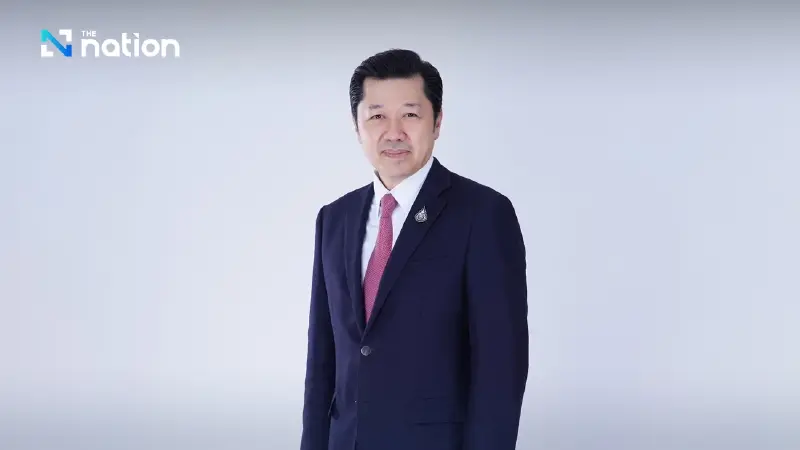
Suphachai Chearavanont, chief executive officer of Charoen Pokphand (CP) Group and chairman of True Corporation Public Company Limited (True), on Friday (January 16) set out key strategies aimed at helping position Thailand as an ASEAN economic and technology hub through advanced infrastructure and innovation.
Turning CP operations into “learning centres”
CP plans to upgrade group businesses with deep expertise into accessible “Learning Centres” for all education levels, allowing school and university students to train and learn from real technology.
The group has established a Centre of Excellence (CE) unit focused on technology oversight and knowledge transfer, as part of an effort to contribute to Thailand’s education system.
One highlighted innovation is the “space chicken” project, described as a collaboration with NASA to certify the highest level of food-safety standards for chicken produced by Charoen Pokphand Foods Public Company Limited (CPF), as proof that Thai food quality is high enough for astronauts.
Startup push and an innovation-cluster proposal for Bangkok
Suphachai stressed human-capital development as critical to national progress, pointing to a proposal to form 200,000 student startup teams (around 2 million people).
Under the plan, the state would provide seed funding of THB500,000 per team, with a total budget of THB100 billion, an investment aimed at shifting mindsets towards entrepreneurship and creating opportunities for “unicorns”.
The plan also includes developing Bangkok as an “Innovation Cluster”, modelled on Boston or Silicon Valley, partnering with leading universities such as Chulalongkorn University (computing) and Kasetsart University (bio).
The estimated investment is about THB70 billion over five years, focusing on five areas: Digital/AI, Robotics, Bio and Space.
The proposal also urges faster tax-law improvements, noting the capital gains tax exemption has begun attracting investors back from Singapore, while matching funds or co-investment mechanisms in the venture capital (VC) model remain limited.
Thailand as an ASEAN trade and transport hub
Suphachai argued that Singapore, Malaysia and Thailand are each mid-sized economies with growth constraints, citing Malaysia’s population of around 35 million, and warned that operating separately would weaken bargaining power.
A tighter “ASEAN pole” linkage would make the group more significant and could help it become a regional leader.
Connectivity, particularly via high-speed rail, would also support Thailand’s role as a trade and transportation hub, linking ASEAN and China, and creating western routes that connect to the Indian Ocean.
The remarks also warned that closer regional cooperation is necessary to prevent other countries, such as Vietnam, from becoming the main alternative to Thailand in the future.
Thailand was described as a long-standing “strategic point” in the region.
While Vietnam may appear ahead in some areas, Thailand remains a top choice for Chinese investors due to stronger trust and relations.
Energy policy urgency to attract data-centre investment
On competition for data-centre investment, Suphachai said Thailand needs a clear energy policy and adequate infrastructure.
Without a clear plan or reliable clean-power purchase agreements, investors could pivot to competitors such as Malaysia and Singapore, which are working together to attract large-scale investment.
Speed in building investor confidence was described as decisive, with delays potentially prompting global operators to relocate to better-prepared locations.
Durian value-add and R&D constraints
Suphachai said Thailand has strong agricultural potential, highlighting durian as a leading economic crop, with exports to China alone valued at THB140 billion.
Rice was cited at about THB180 billion in total nationwide trading value, underscoring durian’s scale.
Further growth was linked to moving beyond fresh durian into frozen durian or ingredient production for food and other industries.
The frozen durian market was cited as worth over THB100 billion, with Malaysia as the main player and Vietnam accelerating development to compete.
Stronger research and development (R&D) was also emphasised, with practical constraints cited despite sizable R&D budgets.
True–DTAC integration and True’s three future pillars
True Corporation is entering its third year after the True–DTAC merger, with organisational culture integration at about 70%.
True’s future focus would centre on three pillars:
- Digital Media — building local platforms to reduce foreign dominance
- Cloud — lowering data costs so SMEs can access technology more easily
- AI — upgrading towards becoming a full tech company
