
Thailand on Inflation Watch from The Middle East Conflict
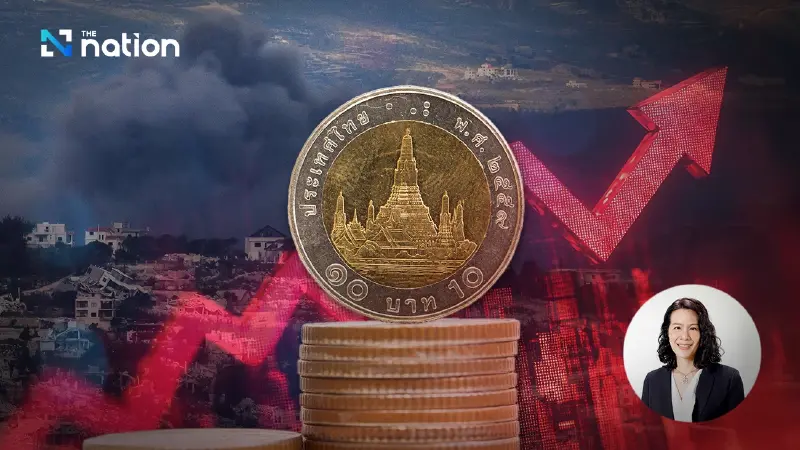


The sudden escalation of the Middle East conflict since late February 2026 has unsettled global oil markets and disrupted major shipping routes. For Thailand, one of Asia’s most energy-dependent economies, this shock could transmit quickly and at a sensitive moment.
Thailand has just emerged from a long period of exceptionally low inflation. Headline inflation was
-0.14% in 2025 and remained negative for 10 consecutive months into early 2026. The Bank of Thailand projects inflation will stay below its 1–3% target range until 2027 due to supply‑side pressures, structural shifts, and weak demand. In response, the Monetary Policy Committee cut the policy rate to 1%, a historically low level outside crisis periods, to support the economy and help bring inflation back to the target.
However, the global backdrop is shifting. If oil and freight prices continue to rise, Thailand risks a rebound in inflation for the unwanted reasons, higher import costs rather than stronger demand. This raises the risk of higher inflation alongside sluggish growth, a challenging environment for businesses and policymakers.

Why Thailand is so vulnerable to an energy shock?
Few countries in the region are as energy dependent as Thailand. The country imports around 90% of total crude oil and roughly 35-40% of total LNG usage. This dependence continues to rise.
Energy is deeply embedded in transportation, logistics, manufacturing, agriculture, and household consumption. When global oil prices rise, the ripple effects spread quickly. Households could feel it first through higher fuel and electricity bills. Logistics and delivery operations could become more expensive as freight costs climb. Food prices could also edge up because both raw materials and transportation are becoming costlier. Manufacturers, particularly those reliant on petrochemicals and plastics, could face rising input prices that squeeze margins and disrupt production planning.
These pressures will first show up in the Producer Price Index (PPI) and then pass through to the Consumer Price Index (CPI) within one to three months. Though the speed of pass-through depends on government energy subsidies, competition from low‑cost imports, especially from China, and the purchasing power of consumers, which limits how much firms can raise prices. Energy alone makes up 12% of Thailand’s CPI basket, among the highest in ASEAN. Hence, Thailand possibly feels a global energy shock more intensely than neighbouring countries such as Malaysia, Indonesia, or Singapore.
What could come next?
On 3 March, the temporary closure of the Strait of Hormuz, one of the world’s most critical oil chokepoints, pushed crude oil prices above USD 80 per barrel. This is a jump of around 14% from pre-conflict levels.
If the conflict expands or shipping disruptions prolong, these three things could happen.
1. Oil could surge past USD 100 per barrel, raising fuel and electricity prices in Thailand.
2. Freight and insurance costs could rise sharply, as vessels avoid high-risk areas and take longer routes.
3. The Thai baht may weaken, as global investors move toward safe-haven currencies.
These risks could push Thailand’s inflation noticeably higher in the months ahead, especially in transport, electricity, processed food, and imported‑component goods. Since Thailand’s shock‑absorbing capacity is limited with only 61 days of crude reserves, far below Japan (254 days) or China (90+ days), the country cannot insulate retail prices for so long.

Who will feel the pain first?
Businesses will be hit early. Transport and logistics operators, where fuel accounts for 30–40% of operating costs, will face immediate pressure. Manufacturers relying on petrochemicals, plastics, and imported components will confront rising costs, while food processors face increases in both raw materials and shipping. SMEs are particularly vulnerable given limited liquidity buffers. Intense competition from low‑cost Chinese imports further reduces firms’ ability to pass on higher costs, tightening margins across sectors.
For households, petrol and diesel prices could rise within weeks, followed by electricity bills if future FT adjustments resume. Food prices, especially for processed items and transported goods, are likely to edge up as freight and input costs climb. Lower‑income households will be hardest hit, as energy and food account for a larger share of their consumption.
The Oil Fuel Fund will shape how quickly these costs pass through. The Fund allows the government to temporarily stabilise retail fuel prices, slowing the immediate impact of higher global oil prices. But this buffer isn’t endless. If oil gets close to USD 100 per barrel or stays expensive for a long time, the Fund will start feeling squeezed and will need to make gradual changes. Policymakers must therefore balance short‑term cushioning with maintaining price signals that promote more efficient energy use.

What it means for Thailand?
1. Business Leaders - Prepare for higher costs and tighter margins
Executives should prepare now. Hedging energy and FX exposure can offer stability, while building inventory for imported materials can reduce disruption risks. Selective, targeted price adjustments, not broad hikes, may be necessary to remain competitive. Improving energy efficiency, optimising logistics routes, and accelerating the transition to EV fleets can help reduce long‑term vulnerability. Early renegotiation with suppliers and customers is essential as uncertainty increases. Pricing power will vary widely, so firms must understand which costs can be passed on and which must be absorbed.
2. Households - Expect higher living costs in the coming months
Thai families should brace for rising fuel, electricity, and food prices, especially if global oil trades above USD 90–100 per barrel. The Oil Fuel Fund can buy some time by delaying oil price pass-through, but sooner or later those costs will finally pass through. Households should monitor government announcements on diesel subsidies and FT pricing, as these decisions will directly affect expenses.
3. Policymakers - Strengthen energy security and relieve price pressures
Managing the Oil Fuel Fund will be critical. Subsidies and price caps can only delay, not solve due to Thailand’s dependence on imported fossil fuels. Policymakers should balance support with timely unwinding to protect vulnerable groups without weakening energy‑saving incentives.
Key policy priorities include diversifying supply routes, expanding reserves, supporting SMEs and transport operators, and clear communication to anchor expectations. Longer‑term solutions, such as rail logistics, energy efficiency upgrades, renewable energy use, and grid modernisation, will be essential to reduce future vulnerability.

Looking Ahead
Thailand cannot avoid geopolitical shocks, but it can prevent them from turning into domestic strain. The coming weeks will reveal whether the Middle East conflict stays contained or triggers a major inflation spike. Energy costs are the key transmission channel. Ultimately, resilience comes from preparation, not just a prediction.
Author : Thitima Chucherd, Ph.D.
Head of Macroeconomic Research Division
Economic Intelligence Centre, Siam Commercial Bank PLC. (SCB EIC)
[email protected] | EIC Online: www.scbeic.com
