
Middle East war raises a looming environmental shockwave beyond oil and markets
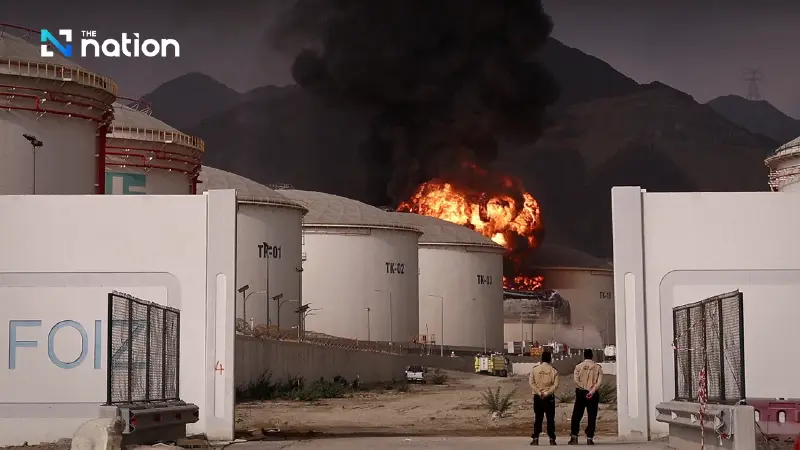


The US-Israel-Iran conflict is no longer just shaking energy and financial markets. Analysts warn of regional environmental risks—from petrochemical spills and air pollution to threats to Gulf desalination and global shipping routes.
The military confrontation involving the United States, Israel and Iran in the Middle East is not only jolting global energy and capital markets. It is also opening up a growing set of regional environmental risks that could last far longer than the fighting itself.
Even as Brent crude jumped after reports of strikes on strategic targets in Iran, environmental analysts warn that the “real damage” may not show up on commodities screens—at least not immediately.

Nuclear and petrochemical sites: cross-border risks
If attacks expand to Iran’s uranium enrichment facilities, the risk is not limited to radiation. It also includes industrial chemicals used in production processes. If leaked, these substances can contaminate soil and groundwater for years.
International bodies such as the International Atomic Energy Agency (IAEA) are watching closely, as structural damage could trigger the spread of hazardous materials across the Persian Gulf region.
One of the highest-risk scenarios would be severe damage to a coastal nuclear power facility. Contamination in the Gulf could directly affect desalination plants in GCC countries—critical water sources for tens of millions of people.

War smoke and a carbon surge
Modern warfare relies on fighter jets, missiles and energy-intensive weapons systems. The greenhouse gas emissions from even a short burst of military operations can rival the annual emissions of smaller countries.
Strikes on oil depots or refineries would add another layer of pollution, releasing carbon dioxide, nitrogen oxides, sulphur dioxide, and PM2.5 into the atmosphere.
Major cities could face acute air-quality crises. Tehran, which already struggles with persistent smog, could see conditions deteriorate rapidly. In Israel, damage to energy infrastructure could generate toxic smoke plumes in industrial urban zones.

The Persian Gulf: a global ecological and economic pressure point
If fighting disrupts shipping lanes or port infrastructure in the Persian Gulf, the risk goes beyond oil exports.
The Gulf is a semi-enclosed ecosystem. A single major oil spill can take decades to recover from, with knock-on effects for:
- Fisheries and food security
- Desalination plants and freshwater supply
- Marine insurance and shipping costs
If the Strait of Hormuz is closed or heavily restricted, vessels may need to take longer routes—pushing up carbon emissions and immediately lifting global logistics costs.
War meets the green transition
The conflict is creating a two-sided pressure on the global green transition. On one side, higher energy prices may push some countries back towards coal to curb costs. On the other, supply chains for solar panels, batteries and clean-energy equipment that rely on Middle East routes could face delays.
Together, these factors could make the goal of limiting warming to 1.5°C harder to reach.
International law under scrutiny
The destruction of environmentally significant infrastructure during war may raise questions under principles reflected in the Additional Protocols to the Geneva Conventions. Groups such as the Conflict and Environment Observatory have begun tracking damage using satellite imagery, though proving environmental harm in conflict zones is difficult and time-consuming.
In the short term, markets may focus on oil and gold. Over the medium to long term, damage to land, water, forests and seas could become a hidden cost exceeding military budgets. The core question is how long a region already facing water stress can absorb these shocks—and what economic security rests on if ecosystems begin to fail.
