
Thai Airways responds to row over fighter jet parts shipment to Israel


CEO Chai Eamsiri said the shipment followed standard interline cargo procedures, with legal checks led by customs, as the airline reviews cargo acceptance amid online backlash.
- Thai Airways is responding to criticism and boycott calls after a passenger flight was used to transport F-35 fighter jet parts destined for an Israeli airbase.
- The airline's CEO explained the shipment was handled under a standard "interline" agreement, where the cargo was booked by a partner airline, not directly by Thai Airways.
- The company stated it followed international safety protocols, which include screening for explosives but do not grant airlines the authority to open packages to identify their specific contents.
- Acknowledging the reputational impact, Thai Airways said it does not wish to be involved in the conflict and will exercise greater caution in accepting cargo in the future.
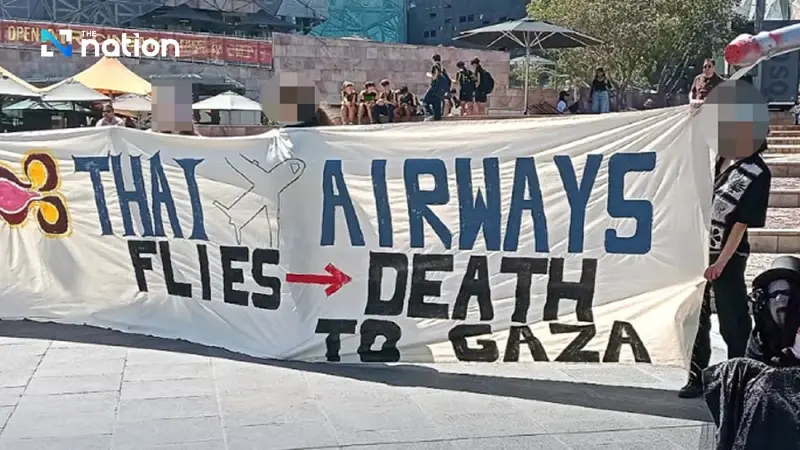
Following social media reports on Thursday (February 26) about Thai Airways transporting F-35 fighter jet parts from Sydney to Bangkok in a cargo container on a passenger aircraft, and forwarding them to their destination at Nevatim Airbase in Israel, protests and calls to boycott the airline emerged in Australia.
Most recently, Chai Eamsiri, Chief Executive Officer of Thai Airways International Public Company Limited, briefed the media in response to criticism circulating on social media about the airline carrying fighter-jet parts to Israel.
He set out the following details and facts.
Regarding Thai Airways’ air cargo operations, cargo carried in the aircraft hold, on some routes or in some markets, Thai Airways does not sell all cargo capacity itself.
Instead, it has agreements with partner airlines or counterparties, which is standard practice in the aviation business.
In the case in question, the shipping documents were issued by another airline, but the shipment used an interline carriage service (Interline) to be loaded onto a Thai Airways flight.
Thai Airways handled the shipment in accordance with its usual protocols and international standards.
For cargo screening before loading, Thai Airways is required to conduct checks in line with safety standards, such as X-ray screening to detect explosives or dangerous objects.
X-ray machines cannot identify objects that are not explosives.
Document checks are based on the shipment paperwork.
Airlines have no authority to open packages to inspect in depth what the metal parts are.
The responsibility for customs clearance and confirming legal compliance rests with the Customs Department in each country.
Therefore, if the parts contain no explosives and are not classified as dangerous goods, the airline can accept and carry them as normal, in line with international standard procedures.
On the reputational impact and the boycott calls, Mr Chai acknowledged that the company has been closely monitoring the situation on social media and has seen divided views, those who disagree, and those who understand the standard procedures of the aviation business.
Chai reiterated that this is a sensitive issue linked to a regional conflict and that the company does not wish to be caught in the middle of the conflict.
Instead, it will focus on performing its role as a business operator to the best of its ability.
He said the company would exercise greater caution in accepting cargo and would work to build a clearer mutual understanding with partners to prevent potential issues that could have an impact in the future.
