
China concerned over Middle East tensions as Wang Yi outlines Beijing’s position
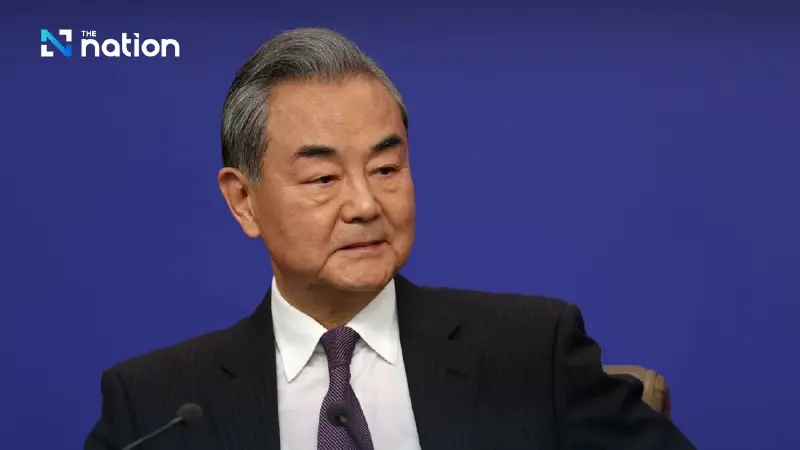


China said it values the legitimate concerns of Gulf states and supports them in safeguarding sovereignty and national security.
- China expresses grave concern over Middle East tensions, advocating for negotiation and diplomatic solutions instead of military force.
- Foreign Minister Wang Yi outlined a three-point position: an immediate stop to military operations, a swift return to negotiations, and joint opposition to unilateral actions.
- Beijing is actively mediating through diplomatic calls with Russia, Iran, and France, and will send a special envoy to the region to help de-escalate the situation.
- China condemned attacks on Iran by the US and Israel as violations of international law while affirming its support for Iran's sovereignty and national security.
A Chinese foreign ministry spokesperson said China was gravely concerned about the tense situation in the Middle East.
In recent days, China has continued intensive mediation efforts.
China believes that war and the use of force cannot truly resolve problems.
Negotiation and consultation are the correct ways to address them, and political and diplomatic means should be upheld in resolving conflicts and differences.
China will continue to maintain communication with all relevant parties, including the parties to the conflict, to strengthen mediation efforts and build a broader consensus.
In addition, China will send its special envoy on Middle East affairs to visit the region soon, to help to reduce tensions and promote a constructive easing of the situation.
The spokesperson also said that, recently, Wang Yi, China’s foreign minister, had held telephone talks with the foreign ministers of Russia, Iran, France and Oman, respectively, to explain China’s position and promote peace as well as an end to the fighting.
Wang said that the attacks by the United States and Israel on Iran during the negotiation process between Iran and the United States were unacceptable.
The open assassination of the leader of a sovereign state, as well as incitement to regime change, was also unacceptable.
Such actions, he said, violated international law and the basic norms governing international relations.
China’s position, he said, was as follows.
First, military operations must stop immediately.
Second, the parties must return to negotiation and consultation as soon as possible.
Third, unilateral actions must be jointly opposed.
Wang stressed that China supports Iran in safeguarding its sovereignty, security, territorial integrity and national dignity, as well as protecting its legitimate rights and interests.
China attaches importance to the legitimate concerns of countries in the Persian Gulf region and supports those countries in safeguarding their sovereignty and national security.
Major powers, he said, should not use their military advantage to attack other countries at will, and the world should not revert to the “law of the jungle”.
The international community, he said, should jointly oppose any actions that violate international law and jointly uphold the basic norms of international relations.
China will continue to play a constructive role, including through the United Nations Security Council, in upholding fairness, promoting peace and ending the war.
