
Team Thailand gears up for US trade talks April 23
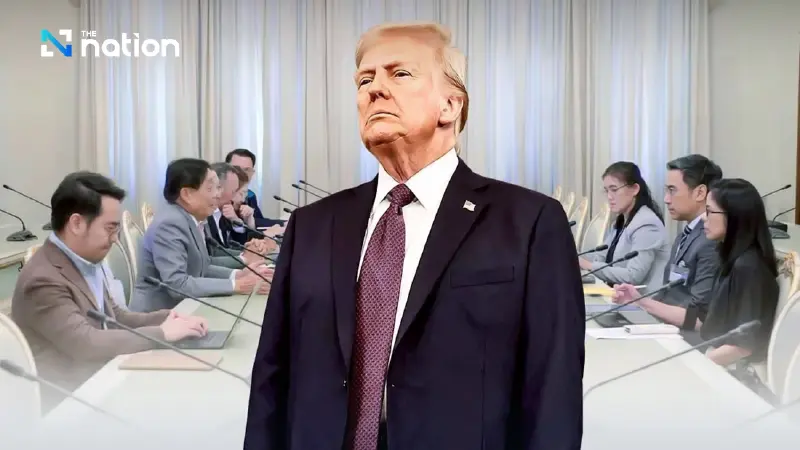


"Team Thailand" to hold trade talks with the US on April 23, aiming to negotiate down the 36% reciprocal tariff imposed on Thai goods.
After Donald Trump implemented reciprocal tariffs on countries around the world—aimed at those with trade surpluses or trade barriers against the US — Thailand was among the nations affected, facing a 36% tariff.
Although a 90-day postponement of the reciprocal tariff enforcement has been announced, this period serves as an opportunity for countries to enter negotiations with the US, under the condition that they present proposals that satisfy US interests. Several nations have already sent government representatives and negotiation proposals to the United States.
For Thailand, the negotiation team known as “Team Thailand” will represent the country. Prime Minister Paetongtarn Shinawatra stated that Thailand is scheduled to negotiate with the US on April 23. She has appointed Deputy Prime Minister and Finance Minister Pichai Chunhavajira as head of the negotiation delegation.
She expressed confidence that Thailand's well-prepared proposal is strong enough to engage in effective negotiations that would benefit both countries in a win-win manner.
A source from the Government House revealed that the negotiations with the US will be held at the ministerial level. On the US side, Treasury Secretary Scott Bessent will lead the talks.
This is seen as a positive development for Thailand’s trade negotiations, as the current US Treasury Secretary has shown a strong intent to reach agreements with 14 trading partner countries to mitigate the impacts of the US's tariff increase on China.
In addition to the readiness of the negotiating team, Thailand has also prepared a written Executive Summary outlining its proposals for US consideration. This includes five key points aimed at reducing Thailand’s trade surplus with the US by 50% within five years and enhancing strategic-level partnership cooperation in the future.
The five proposed points are as follows:
Strengthen cooperation in the processed food sector
Thailand and the US aim to jointly develop the processed food industry by leveraging each country's strengths—particularly by importing US agricultural products as raw materials for processing and re-export to global markets. Discussions have also been held with the US agricultural sector, which represents a key political base of former President Donald Trump.
Increase imports from the United States
Thailand plans to boost imports of essential goods from the US, including energy products (crude oil, LNG, ethane), aircraft and parts, military equipment, and agricultural products such as corn, soybeans, and beef. This move is aimed at strengthening commercial ties and addressing domestic economic demands.
Open markets and reduce trade barriers
One of the key cooperation goals is to reduce import tariffs under the MFN (Most Favoured Nation) system—by approximately 14% across more than 11,000 product categories—as well as to lower non-tariff barriers (NTBs). This includes revising quotas and restrictions and opening up the Thai market to U.S. goods such as cherries, apples, wheat, corn, and meat products.
Strict enforcement of rules of origin laws
Thailand will enforce stricter measures to verify and apply rules of origin laws to address the misuse of the “Made in Thailand” label by goods from third countries that transit through Thailand to the US. The country will enhance monitoring and surveillance to reduce risks and maintain the reputation of Thai exports in the US market.
Promote Thai investment in the United States
The Thai government supports expanding private Thai investment in the US over the next four years, particularly in the energy sector—such as an LNG investment project in Alaska—and in large-scale agricultural farms. Currently, more than 70 Thai companies have invested in 20 US states, generating over 16,000 jobs with a total investment value exceeding US$16 billion.
We must support Team Thailand in trade talks with the U.S. to reduce the 36% tariff imposed on us and to achieve the most mutually beneficial economic outcomes for both countries.
