
Global diesel prices surge, Oil Fund spends THB1.2bn to cap domestic prices
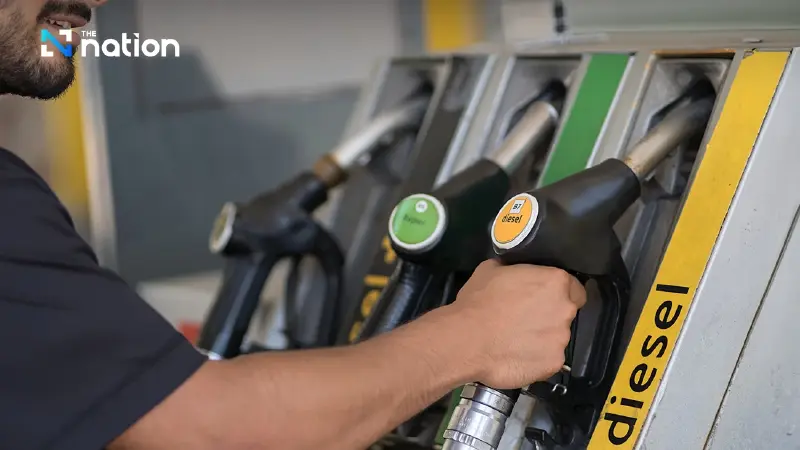


Thailand will freeze diesel for 15 days before a gradual rise, using tax measures and subsidies to soften the impact on living costs.
- Thailand's Oil Fuel Fund is spending an average of THB 1.2 billion per day to subsidize and cap domestic fuel prices amid a global surge.
- The government has frozen domestic diesel prices for 15 days, after which they will be gradually adjusted from THB 29.94 to THB 31.94 to reduce the fund's burden.
- To further prevent rising costs from impacting consumers, the government is preparing to implement a cut in the fuel excise tax.
- Officials are encouraging a switch to alternative fuels by cutting prices for E20 and E85 ethanol blends to help ease the financial strain on the fund.

Phiphat Ratchakitprakarn, Deputy Prime Minister and Minister of Transport, said in his capacity as director of the Joint Management and Monitoring Centre for the Situation in the Middle East that, under the Prime Minister’s policy, diesel prices would be frozen for 15 days.
After that, in line with the Prime Minister’s plan, diesel prices would gradually be adjusted from THB29.94 to THB31.94 to reduce the compensation burden on the Oil Fuel Fund.
In addition, the government is preparing to use tax tools, especially a cut in excise tax, which, together with other taxes, amounts to nearly THB10 per litre, to help prevent any knock-on impact on goods prices and the cost of living.
Ex-refinery pricing would be the last mechanism to be discussed.
If talks fail to produce an agreement, the government may have to introduce other measures.
As for the status of the Oil Fuel Fund and the compensation burden, discussions on March 9 found that the average burden stood at THB1.2 billion per day, based on the previous day’s announced oil price of US$111 per barrel.
However, prices have been highly volatile, with some periods falling to US$95, so the government must wait to see whether daily prices from the Singapore benchmark market decline in line with global prices, which they normally do.
Overall, Thailand is currently using an average of about THB1.2 billion per day in compensation.
The government has also raised petrol prices by THB0.50, while cutting E20 and E85 prices by THB0.50 to encourage motorists to switch to alternative fuels and help ease the burden on the fund.
Phiphat said further that a situation briefing on March 9 confirmed that, if Thailand received no additional crude oil or LNG imports at all, the country would still have enough supplies to last 95 days, or around three months.
It is now clear that sufficient LNG can be sourced for power plants and operators, with no problem on that front.
Crude oil, however, still requires further management.
Thailand currently imports about 50% of its crude oil from the Middle East, while the other 50% comes from other sources such as Malaysia, Indonesia and the United States.
If necessary, Thailand may also have to buy oil from Russia, as the global crisis has led many countries to relax measures and made it easier to coordinate purchases from Russia.
Even so, the government has a plan to extend oil use beyond three months by increasing reserves and expanding the use of alternative energy in several areas.
These include increasing legally required oil reserves and increasing the use of biodiesel (B100) by moving the blend from B5 to B7 on March 14, with a plan to shift to B10, while also encouraging greater use of E20 and E85, which are produced from cassava and sugarcane.
‘If these plans succeed and we can still import another 50% of our oil from other sources, then our domestic energy security will certainly be extended from three months to four or even five months, so that people do not panic and rush to stockpile fuel.’
As for the rise in oil prices at present, it must be acknowledged that ex-refinery price announcements have always been based on Singapore benchmark market prices, which are the international standard in Asia.
Although refineries buy crude oil one to four months in advance, the cost of oil stored in tanks is averaged out and cannot be separated, so that only oil bought at US$60 is sold today.
Therefore, in a crisis like this, the Singapore market may see speculation that pushes prices above global crude oil prices, and this is something the government is trying to address.
