
US move on Venezuela seen as driven by oil, inflation and geopolitics
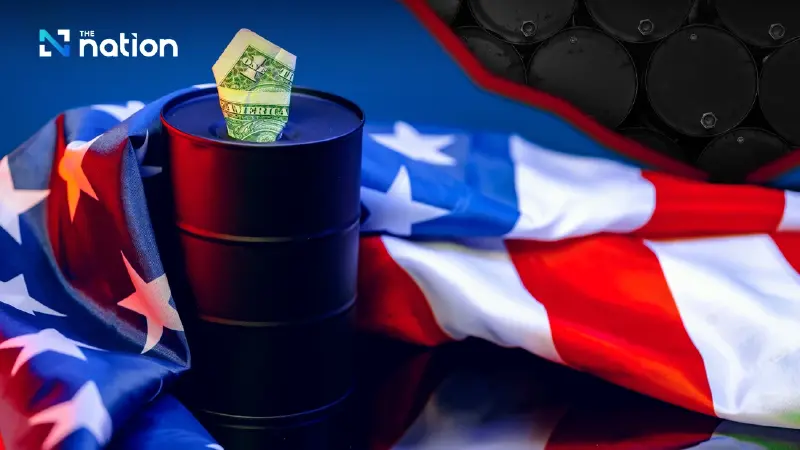


Commentary on Nicolas Maduro case points to Venezuela’s vast reserves, Washington’s inflation pressures and concerns over trade outside dollar system as key factors shaping US strategy.
- The US is motivated by gaining access to Venezuela's vast oil reserves, which would provide a nearby energy source, reduce reliance on the Middle East, and create opportunities for American energy firms.
- Increasing Venezuelan oil production is viewed as a tool to combat US domestic inflation and lower household costs by driving down global energy prices.
- Geopolitically, the action aims to counter the influence of China and Russia, who have established a strategic foothold in the Western Hemisphere through security and economic ties with Venezuela.
- The move also seeks to reinforce the dominance of the US dollar by bringing Venezuela back into traditional trading systems and shutting down its experiments with alternative payment arrangements.

Vorapak Tanyawong, a former deputy finance minister, has offered an analysis of rising tensions between the United States and Venezuela, arguing that the latest developments should be understood through the lenses of energy, global finance and great-power rivalry, not “democracy” alone.
In a post on his Facebook page, Vorapak said foreign media reports overnight claimed the US government had launched an operation to detain Venezuelan President Nicolas Maduro and announced it would temporarily take control of Venezuela’s administration.
The reports, he wrote, cited allegations involving election fraud, narcotics trafficking and threats to US national security.
Vorapak said the economic and energy stakes are central to Washington’s calculus.
Venezuela holds the world’s largest proven oil reserves, but it argued that sanctions, mismanagement and a closed political system have constrained output for years.
Reopening Venezuelan production, he said, would offer the United States a major nearby supply source that reduces reliance on the Middle East, lowers transport costs, and creates fresh opportunities for US energy firms to regain influence across upstream and midstream activities.
He also linked the issue to domestic US economic politics, saying oil prices have a direct bearing on inflation and household costs.
Under President Donald Trump, he argued, cheaper oil would translate into lower living expenses and a softer inflation picture, easing pressure on the central bank, turning Venezuela into a tool for tackling inflation beyond interest-rate policy alone.
Vorapak further warned that Venezuela has served as a testing ground for trade outside the dollar system, including oil sales to China and Russia, alternative currencies, barter arrangements and cryptocurrency.
Bringing Venezuela back into “traditional” trading channels, he argued, would help the United States counter de-dollarisation by shutting down one important front.
On geopolitics, he described Maduro-era Venezuela as a strategic foothold for China and Russia in the Western Hemisphere, China as a major creditor, and Russia through security and energy ties.
Any renewed US control over Venezuela, he said, would signal that rival powers face higher costs for expanding influence in the region, likening it to a “21st-century Monroe Doctrine”.
Vorapak added that, unlike US operations in Iraq or Afghanistan, action in Venezuela would be closer to home, faster to execute, and easier to justify publicly through narratives centred on drugs, oil and security, while delivering more tangible economic pay-offs.
He concluded that the episode reflects a shift towards a new phase of US foreign policy, one in which legal and military tools are used selectively to reduce other countries’ sovereignty, with economic and financial objectives at the forefront.
For mid-sized countries, he argued, the key lesson is that resources, financial systems and geography can shape political outcomes more powerfully than ideology alone.
Kamolchanok Teekakul
