
80 years on: Son of WWII soldier calls for warless country
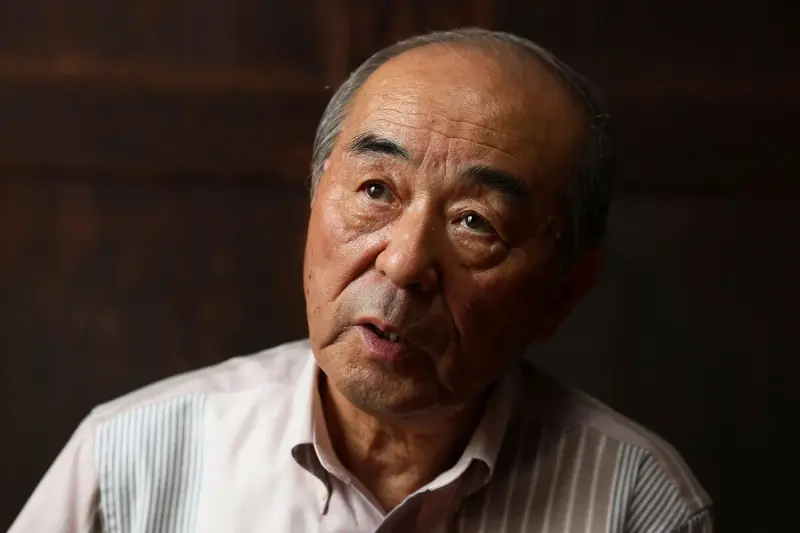


Hajime Eda, 82, a representative of bereaved relatives of World War II victims, delivered a speech at this year's war-end anniversary ceremony on Friday, voicing his hope to keep Japan out of war.
Eda's father, Tomiji, was mobilised for a second time in April 1945 to build an airfield on the Korean Peninsula. Six days after Japan surrendered on Aug. 15 that year, a repatriation ship carrying Tomiji hit a sea mine and sank.
Tomiji died at 30, never having met his daughter, who was born that month. His remains were not returned to his family.
"The sorrow of my father, who looked forward to a future with his family, is immeasurable," Eda said in the speech.
After the war ended, Eda lived in the home where Tomiji was born into a farming family. Eda's mother raised him by cultivating rice and raising silkworms with his grandparents. He now thanks her for "carefully raising me without my father."
To support the family business, Eda gave up his hope to attend university and became a farmer. His first daughter was born on the anniversary of Tomiji's death, bringing joy to the family as if she were another Tomiji.
During his second year of high school, Eda began supporting the activities of a group of bereaved families in the city of Kawagoe, Saitama Prefecture, north of Tokyo, in which his mother was involved.
Over time, however, the group's members became old and the number of members decreased. Eda's mother died in 2004.
"As survivors, we must console the souls of those who died for the country," said Eda, who currently serves as a senior official of the Japan War-Bereaved Families Association.
Even 80 years after the war ended, conflicts still take place around the world, including Russia's invasion of Ukraine.
Eda hopes that his ceremony speech will remind people that Japan should continue to send a message of peace and never wage war. "War causes casualties, and losing family members is unbearable," he said. "We will continue efforts to build a warless country."

[Copyright The Jiji Press, Ltd.]
