
Indonesia cyclone floods leave 908 dead as calls grow for national disaster status
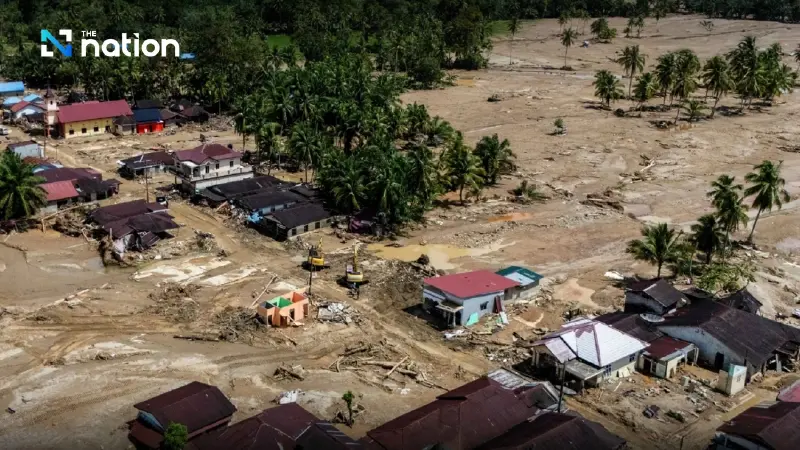


Death toll nears 1,000 as isolated Aceh communities plead for aid and Jakarta faces pressure to declare a national emergency.
- A cyclone triggering floods and landslides on Indonesia's Sumatra island has resulted in 908 deaths, with over 450 people still missing.
- Local authorities are urging the central government to declare a national disaster to unlock more resources and improve the coordination of relief efforts.
- President Prabowo Subianto has resisted these calls, insisting the situation is improving, a view that contrasts with concerns from his Vice President and local officials.
- The aid response is struggling to reach remote areas, leading to severe food shortages and warnings that people are now dying from hunger, not just the floods.
The death toll from floods and landslides triggered by a cyclone that battered three provinces (North Sumatra, West Sumatra, Aceh) on Indonesia’s Sumatra island, over recent weeks, has risen to 908 on Sunday (December 7), with more than 450 people still missing.
Many residents in hard-hit areas, including Aceh Tamiang district, are still waiting for relief, as local authorities on Sumatra urge the central government in Jakarta to declare a national disaster emergency to unlock additional resources and improve coordination of the response.
President Prabowo Subianto has insisted that the situation is improving and that current preparations are sufficient.
His assessment contrasts sharply with that of Vice President Gibran Rakabuming Raka, son of former president Joko Widodo (Jokowi), who voiced concern after visiting affected communities in person on Thursday (December 4).

The disaster has become one of Indonesia’s worst natural calamities in recent years, underscoring the vulnerability of the vast archipelago to extreme weather.
Aceh governor Muzakir Manaf said rescue teams were forced to search for bodies in mud as deep as waist level, while food shortages pose a grave threat to isolated, hard-to-reach villages.
Many remote communities have yet to receive any aid, and “people are not dying from the floods, but from hunger”, he warned.

Analysts argue that the government’s reluctance to declare a national disaster emergency is driven by a desire to conceal its inability to manage the crisis effectively.


