
New energy minister’s first big move: cut fuel costs, freeze power bills


Energy Minister Akanat Promphan plans urgent oil and power measures, including a refinery margin cap and efforts to hold electricity bills at Bt3.88 a unit
- Thailand's new Energy Minister, Akanat Promphan, will hold a meeting on April 7 to introduce measures aimed at lowering household energy costs.
- The plan targets high fuel costs by reviewing the ex-refinery pricing formula to cap gross refining margins at around Bt3-Bt4 per litre, down from a recent high of nearly Bt14.
- To address power bills, the minister aims to keep the electricity charge at Bt3.88 per unit, preventing a planned increase to Bt3.95 by reviewing utility investment plans and using over Bt9 billion in excess funds.
- The shake-up also includes implementing daily reporting of oil stocks to increase transparency and curb hoarding, speculation, and smuggling.
Thailand’s new Energy Minister, Akanat Promphan, says he will move quickly after the new Cabinet is sworn in, with an April 7 meeting planned to push through urgent measures aimed at easing pressure on household energy costs, including oil prices and electricity bills.
Speaking on April 2, Akanat said that once the government has completed the oath-taking and policy statement process, he will convene the Energy Policy Administration Committee on the morning of April 7 to consider immediate relief measures. His focus is on two fronts: cutting fuel costs by reviewing refinery pricing and preventing electricity charges from rising further.
On oil, Akanat argued that the real problem does not lie only in pump prices, but in ex-refinery pricing, which is currently tied 100% to the Singapore market benchmark and has therefore become excessively volatile in line with global turmoil. He said gross refining margins, which normally stand at around Bt2-Bt3 a litre, averaged about Bt7 in March and surged to nearly Bt14 a litre at the start of April, describing the move as an abnormal market reaction driven by panic over the Middle East.
He said the government would use powers under the fuel shortage prevention law to review the refinery gate pricing formula, with Dubai crude prices to be taken into account as part of the calculation. The aim is to set a more appropriate cap on refining margins at around Bt3-Bt4 a litre, which he said could help reduce retail fuel prices without relying solely on subsidies from the Oil Fuel Fund. He added that he wants the measure to take effect before the Songkran holiday.
Akanat also said greater transparency in the oil trade system would be crucial. He said stock reporting by the Department of Energy Business had been too loose because it relied on monthly figures, leaving room for accounting irregularities. According to his remarks, Prime Minister Anutin Charnvirakul has already ordered daily reporting of oil stock inflows and outflows to curb hoarding, speculation and smuggling to neighbouring countries, and suspicious figures have already started to emerge in some agencies.
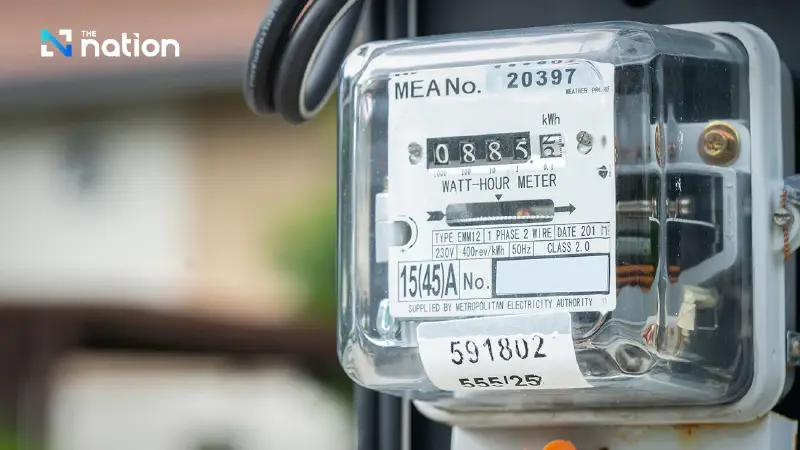
On electricity, Akanat said he wanted to keep the charge at Bt3.88 per unit instead of allowing it to rise to Bt3.95 per unit for the May-August 2026 billing cycle. Thailand’s Energy Regulatory Commission approved the Bt3.95 rate on April 1, up from the current Bt3.88, using clawback funds to cushion the increase.
To hold the rate at Bt3.88, Akanat said the government would review the investment plans of the three state-owned power utilities, the Electricity Generating Authority of Thailand, the Metropolitan Electricity Authority and the Provincial Electricity Authority, through the National Energy Policy Council, which is chaired by the prime minister. He also said more than Bt9 billion in excess investment budget, or clawback funds, from the three utilities could be used to help delay any increase in electricity charges.
He added that the tariff structure itself may also be adjusted to create a steeper progressive pricing system, in order to encourage consumers to use less electricity. Under that approach, households with lower power consumption could potentially pay an average rate of no more than Bt3 per unit.
Beyond the short-term relief package, Akanat outlined a broader restructuring plan for the power sector. He said he wants to move away from the existing single-buyer model, under which the Electricity Generating Authority of Thailand is effectively the sole purchaser and seller of electricity, towards a Direct PPA system that would allow users, particularly industrial customers, to buy electricity directly from producers. He said the approach would help create more competition and better support demand from data centres. Thailand’s regulator has already been consulting on pilot Direct PPA rules for data centres, indicating that the policy direction is already under active development.
He also pledged stronger support for rooftop solar through a net billing system that would allow households to sell electricity back into the grid at a fairer rate, alongside demand response measures to better manage electricity use by hour.
