
Southeast Asia battered by storms and massive floods, death toll surpasses 600
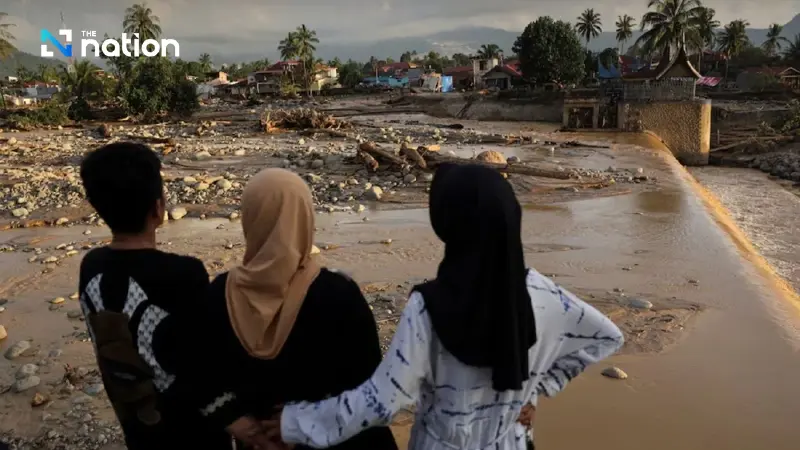


Severe storms and floods across Indonesia, Thailand, and Malaysia have killed more than 600 people, affecting over 4 million. Sri Lanka also reports heavy casualties from a cyclone.
- Powerful storms and widespread flooding have caused severe devastation across three ASEAN countries: Indonesia, Malaysia, and Thailand, including Sri Lanka.
- The combined death toll has risen above 600, with Indonesia recording the highest number at 435 fatalities, followed by Thailand with 170 deaths.
- More than 4 million people have been affected, mainly in southern Thailand and Indonesia’s Sumatra Island, forcing mass evacuations.

The death toll from flooding and landslides triggered by days of heavy rainfall across three Southeast Asian countries has surpassed 600, officials said on Sunday, as rescue teams continued assisting tens of thousands of people displaced from wide areas of destruction.
Indonesia, Malaysia, and Thailand have suffered heavy losses after a rare tropical storm formed in the Strait of Malacca, bringing intense rainfall and strong winds throughout the week. According to official figures, Indonesia reported 435 deaths, Thailand 170, and Malaysia confirmed 3 fatalities.
Rescue workers in all three countries continued efforts to reach inundated areas on Sunday, although water levels have begun to recede and large-scale evacuations have been carried out. Authorities estimate that more than 4 million people have been affected—nearly 3 million in southern Thailand and 1.1 million in western Indonesia.
In a separate event on the Bay of Bengal, Sri Lanka reported 153 deaths, 191 missing, and more than 500,000 people affected nationwide due to a cyclone.

Indonesia
The death toll in Indonesia rose to 435 on Sunday, up from 303 the previous day, according to the government’s disaster information website, as officials collected updated reports from flood-stricken western Sumatra. Three provinces were badly hit by landslides and flooding.
Many areas remain cut off due to blocked roads, while damage to telecommunications networks has disrupted communications. Rescue teams have been forced to use helicopters to deliver relief supplies to communities inaccessible by land.
A Reuters journalist who flew aboard a Navy helicopter over Palembangyan in North Sumatra reported seeing large swathes of land and homes washed away. Upon landing in a football field, dozens of residents were already waiting for food assistance.
Officials also reported looting along supply routes as shortages worsened. As of Saturday, at least 406 people remained missing, and more than 213,000 residents had been displaced.
Thailand and Malaysia
Thailand’s Ministry of Public Health reported 170 deaths from flooding in the south, an increase of eight from Saturday, along with 102 injuries. Songkhla Province recorded the highest number of fatalities at 131, with Hat Yai District recording 335 millimetres of rainfall on Friday, the highest in 300 years after days of continuous storms.
In Malaysia, around 18,700 evacuees were sheltering at relief centres, according to the National Disaster Management Agency. The Meteorological Department lifted its tropical storm and heavy-rain warnings on Saturday and forecast mostly clear skies across the country.
Heavy rainfall and strong winds hit several parts of Malaysia throughout the week. The Foreign Ministry said it had helped repatriate more than 6,200 Malaysians stranded in Thailand.
The Ministry also advised Malaysian citizens residing in West Sumatra to register with the consulate for assistance after reports that a 30-year-old Malaysian man had gone missing in a landslide.
Sri Lanka
Sri Lanka declared a state of emergency after Cyclone Diva slammed into the country, triggering torrential rainfall that led to dam failures and widespread landslides. The death toll has exceeded 300, making it one of the worst natural disasters in years.
According to the Sri Lanka Disaster Management Centre, more than 330 people have died from severe flooding and mudslides, while over 200 people remain missing. Around 20,000 homes have been damaged, forcing 108,000 people to evacuate to government shelters.
Officials said roughly one-third of the country was without electricity or running water. Cyclone Diva brought record-breaking rainfall beginning last Thursday (27 Nov), causing landslides across the central highlands and inundating major towns.
President Anura Kumara Dissanayake described the disaster as one of the most challenging in the nation’s history, warning that recovery costs will be extremely high.
More than 24,000 police, army, and air force personnel have been deployed for rescue operations.
One of the most concerning areas is the eastern region, where floodwaters breached the Mavil Aru Dam, forcing the Air Force to evacuate more than 120 stranded people, with another 2,000 residents moved to higher ground.
Significant damage has also been reported in Colombo and key economic zones. In Kelaniya, dozens of families remain trapped in their homes due to high water levels. Despite attempts by state agencies and the private sector to distribute cooked food, many residents say assistance has not yet reached all areas.
Sri Lanka’s irrigation authority expects water levels to begin receding within three days as the cyclone moves toward southern India. Authorities are preparing to restore electricity, water, and telecommunications once flooding subsides.

