
Quake-hit Aomori residents worried over aftershock warning
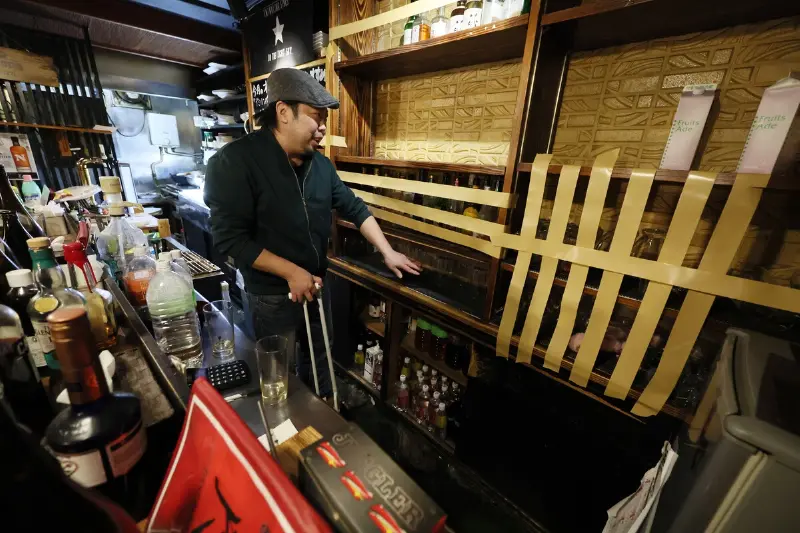


Many residents on Tuesday (December 9) voiced their concerns over a warning of possible powerful aftershocks after spending a sleepless night following a strong earthquake that mainly struck northeastern Japan.
- An earthquake off the coast of Aomori Prefecture prompted the Japan Meteorological Agency to issue its first-ever aftershock warning under a system introduced in 2022.
- Residents in the affected city of Hachinohe expressed fear and anxiety, with some stating they are scared and cannot stop thinking about when the next earthquake might strike.
- The warning has spurred locals to focus on emergency preparedness, with many planning to stock up on food
The temblor occurred off the east coast of Aomori Prefecture at around 11.15pm Monday, registering upper 6, the second-highest level on the country's seismic intensity scale, in the city of Hachinohe in the prefecture.
Shortly after the quake, the Japan Meteorological Agency issued the aftershock warning for the northernmost prefecture of Hokkaido and the Sanriku Pacific coastal area of northeastern Japan for the first time since such a system was introduced in December 2022.
A 79-year-old resident of Hachinohe said Tuesday, "I'm a bit scared because I can't stop thinking about when (the next big earthquake) might strike."
"You can't stop earthquakes from happening because they are a natural phenomenon," she said. "I'll need to organise my thoughts about what to do when a temblor occurs."
Masayuki Ueno, 66, was busy tidying up the glass window panes of his photo gallery that had shattered when the quake rocked the city.
"Earthquakes have always occurred frequently off the Sanriku coast," Ueno said. "We need to be prepared for a big temblor at all times, not just because of the aftershock warning."
According to the prefectural governments of Aomori, Hokkaido and Iwate, over 50 people have been injured in the quake so far.
Japan Nuclear Fuel Ltd. said that while about 650 litres of water overflowed from a storage pool at a spent nuclear fuel reprocessing plant in Aomori, this did not affect the environment.
According to the Fire and Disaster Management Agency, up to around 114,000 people were ordered to evacuate in five prefectures, including Hokkaido and Aomori, in the early hours of Tuesday.
A man in his 30s in Hachinohe evacuated to a nearby community centre with his wife and two sons. "The shaking (in the latest quake) was something that I'd never experienced before," he said. "I plan on stocking up on enough food and water to prepare for any emergencies."
In the city of Kuji in Iwate Prefecture, residents gathered at the municipal welfare centre located on high ground. The city saw a tsunami of 70 centimetres, which was the largest tsunami recorded in the aftermath of Monday's quake.
"People were quick to evacuate, in light of the 2011 earthquake and tsunami (which mainly hit northeastern Japan) and the July 2025 earthquake near Russia's Kamchatka Peninsula," said Seigo Natsui, secretary-general of the city's social welfare council. Shortly after the July earthquake, tsunamis reached many areas in Japan, including Kuji Port in Iwate city.

[Copyright The Jiji Press, Ltd.]
