
Commerce moves to curb prices as oil surges; firms eye state talks over rising costs
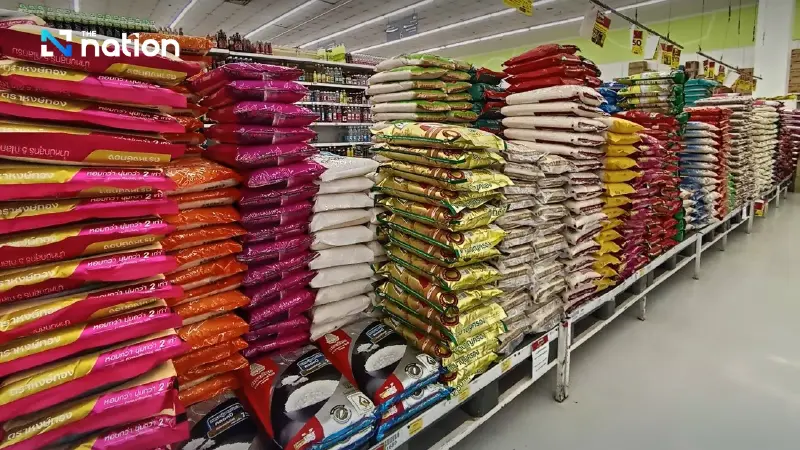


The government is keeping watch on key consumer goods and farm inputs, while producers warn that higher oil, palm oil and packaging costs could squeeze prices in the months ahead.
- The Ministry of Commerce is monitoring prices of key product groups linked to oil costs and has asked manufacturers to maintain current prices.
- Businesses are facing rising production costs, particularly for plastic packaging and raw materials like palm oil, due to the surge in energy prices.
- While absorbing costs for now, companies are preparing to negotiate with the government for price increases if the cost pressures become unsustainable.
Wittayakorn Maneenetr, director-general of the Department of Internal Trade at the Ministry of Commerce, said the department was monitoring the impact of the conflict in the Middle East, particularly by keeping watch over and supervising prices whose cost structures are linked to oil prices and imported raw materials.
At present, no operators have submitted requests to raise product prices.
The department has asked manufacturers and distributors to maintain current prices, while also assessing product cost structures.
It found six key product groups that are basic to daily life and the economy and could be affected by higher oil costs, namely:
- Fresh food products such as eggs, pork and chicken, as well as key agricultural products including rice, palm oil and fruit
- Essential consumer goods such as tissue paper and paper packaging, as well as canned food products, especially canned fish
- Beverages and products using plastic packaging, such as drinking water, bottled milk and vegetable oil
- Construction materials such as cement, steel bars, house paint, PVC pipes and tiles


Diversifying fertiliser import sources to reduce risk
As for measures to oversee agricultural products and production inputs, the department has continued to monitor the chemical fertiliser situation.
Thailand currently has sufficient domestic stocks, while importers have diversified their sourcing to trading partners not affected by the conflict, namely Malaysia, Brunei and Oman.
To oversee the product situation, the department is using a three-tier product monitoring mechanism, reviewed every month, as follows:
- The Sensitive List, comprising 18 items such as chemical fertiliser, eggs, pork, vegetable oil, diesel and plastic resin pellets. Prices are monitored daily, with officials dispatched for strict inspections.
- The Priority Watch List comprises four items: prepared food, milk powder, pesticides and hot-rolled steel sheets. These are monitored twice a week to prevent hoarding.
- The Watch List comprises 197 items, such as soap and laundry detergent. These are checked continuously every 15 days.
In addition, under the 2025 notification of the Central Committee on Pricing of Goods and Services, there are 59 controlled goods items.
Manufacturers and distributors must seek permission from the Department of Internal Trade, which will consider the full cost structure before approving any price increase.


Wai Wai says suppliers are no longer quoting plastic resin prices.
Yossaran Taemkongka, Executive Marketing Director of Thai Preserved Food Factory Co., Ltd., said the conflict in the Middle East had pushed up energy prices and production costs, particularly petrochemical by-products such as plastic resin pellets used to make packaging.
This is a major concern.
The impact is not limited to instant noodle manufacturers, but also extends to other product categories that use packaging.
Wai Wai has set up a management team to handle the emergency situation, drawing on lessons from the Covid-19 period.
The difference is that, instead of dealing with an infectious disease, the company is now closely tracking oil prices and product costs, while also working to negotiate production costs as effectively as possible.
Initially, in the short term through the end of April, the company will not yet be affected, nor will there be any impact on product prices, because it has already negotiated raw material purchases in advance with suppliers, such as agreeing on a given price for a given raw material over a three-to-six-month period.
As a result, when costs rise, suppliers absorb some of the increase to keep prices unchanged.
However, for plastic resin pellets, there is currently no longer any price indication or quoted price.
“We have a team closely monitoring cost increases on a daily and weekly basis. If raw materials show signs of rising in price, we have to see whether we can negotiate to lock in the cost, because it is difficult to predict how high raw material prices will go or how many dollars per barrel oil will reach.”
Yossaran said the company has different scenarios for calculating costs. At present, it has raw materials planned through the end of April, so the overall picture is not yet affected.
After May, however, costs will have to be reviewed again.
“What worries us most right now is plastic resin pellets, because suppliers are no longer quoting prices. If the Middle East situation drags on, the impact will be quite severe, not only on instant noodles but on all products.”
Cutting back on low-margin products
In addition to closely monitoring costs, the company is also managing production more efficiently by cutting back on low-margin stock-keeping units (SKUs) that are not worth producing and do not generate economies of scale, such as the vegetarian flavour, which has low sales and is mainly sold during festival periods.
Production has therefore been temporarily halted.
However, the company is also looking at the worst-case scenario.
If the Middle East conflict drags on and puts heavy pressure on production costs, it may have to join forces with other instant noodle producers to explain the impact to the Department of Internal Trade at the Ministry of Commerce and seek to allow prices to move in line with market mechanisms.
“In the long term, oil energy costs, palm oil and wheat flour will all have an impact. But in the short term, by April, we have not yet been affected. If the situation really becomes severe and drags on, and suppliers can no longer deliver raw materials to us, while every cost rises beyond what we can bear, then we will have to discuss it. Prices would have to be adjusted in line with market and pricing mechanisms. Otherwise, we would also have to ensure that consumers do not hoard goods.”
Yossaran said that, if the company truly cannot absorb the burden any longer, it will stop producing products priced below cost.
For example, if the production cost of a 7-baht packet of instant noodles exceeds its 7-baht retail price, the company cannot sell it.
Product prices will depend on the actual situation.
If, after May, shipping can pass through the Strait of Hormuz, the situation ends, and nothing further happens, then the company will continue selling at the same prices.
Controlled goods producers must endure soaring costs.
Pun Paniangvait, General Manager of Thai President Foods Public Company Limited, the manufacturer of MAMA instant noodles, said the energy price situation had pushed up instant noodle production costs, particularly film used for sachet packaging, which had risen by 30%.
Another key factor to watch is palm oil prices, because if palm oil is diverted into fuel blending or biodiesel, crude palm oil prices may rise.
At present, the price stands at 6 baht per kilogramme, while output is now entering the market.
If palm oil, wheat flour and packaging all rise in price at the same time, instant noodle manufacturers may have to discuss the matter with the government, explain their costs and set a new pricing approach.
Initially, however, as a controlled product, they have a duty to endure.
“The Middle East situation is affecting energy costs and product manufacturing. Right now, producers have to absorb it, and it ends with us. But if oil jumps to 200 dollars a barrel, it becomes difficult to assess. And if wheat flour, palm oil and packaging all rise together, then we will have to see how long we can endure it, because controlled goods have a duty to endure. If we can’t cope, then we can’t cope.”

