
Trump brands fentanyl a ‘weapon of mass destruction’ in drug war escalation
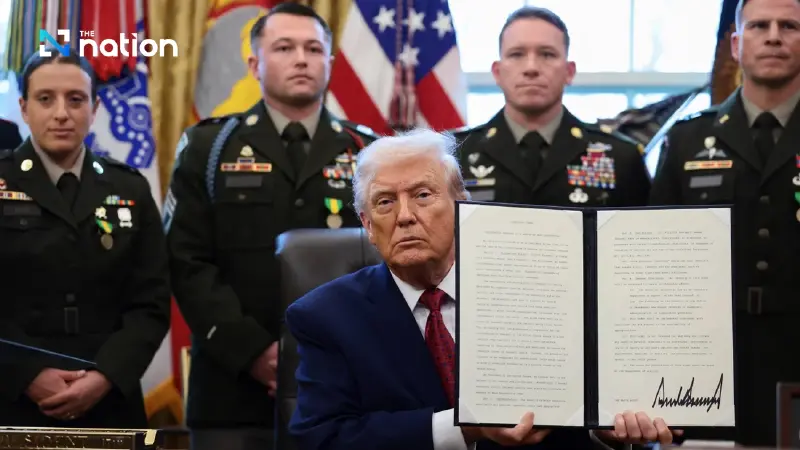


President Donald Trump signed an executive order declaring fentanyl a weapon of mass destruction on Monday (December 15), significantly broadening the US government's powers to combat the synthetic opioid responsible for tens of thousands of overdose deaths each year.
- President Trump has officially classified fentanyl as a "weapon of mass destruction," reframing it as a national security threat rather than solely a public health issue.
- This designation allows the Pentagon and intelligence agencies to use tools and tactics normally reserved for combating weapons proliferation against drug traffickers.
- The move is intended to intensify the fight against drug cartels, which the administration had previously labeled as foreign terrorist organizations.
- This policy escalation has already led to military strikes against suspected drug vessels, a move that has drawn legal concerns and public opposition.
This unprecedented move marks a shift in how fentanyl is viewed, positioning it not only as a public health emergency but also as a national security threat akin to chemical warfare.
By classifying fentanyl in this way, Trump seeks to intensify the battle against drug cartels, particularly those flooding the US with illicit substances.
The new designation grants the Pentagon support in law enforcement efforts and allows intelligence agencies to use tools normally reserved for weapons proliferation against drug traffickers.
"We’re officially classifying fentanyl as a weapon of mass destruction, because that’s what it is," Trump stated during an event at the White House honouring service members working along the southern border with Mexico.
"They are trying to drag out our country."
The executive order further described fentanyl as "closer to a chemical weapon than a narcotic."
This designation follows Trump's earlier move to label drug cartels as foreign terrorist organisations, which has paved the way for military action against them.
Since September, the administration has launched over 20 strikes targeting suspected drug vessels in the Caribbean and Pacific, killing more than 80 people.
However, legal experts have raised concerns over the legality of these strikes, with little public evidence proving the vessels were carrying drugs or that the violent approach was necessary.
A Reuters/Ipsos poll released this week found significant opposition to the strikes, including from around 20% of Trump's Republican supporters.
Trump has also threatened military action on land in Venezuela, Colombia, and Mexico to address drug trafficking.
In a recent strategy document, he emphasised his administration’s focus on reasserting US dominance in the Western Hemisphere.
Mexico is the primary source of fentanyl entering the US, with many of the chemicals used to produce the drug coming from China.
Fentanyl is one of the leading contributors to the opioid overdose crisis in the US.
Reuters
