
10 Thai Steel Associations urge government to tighten regulations
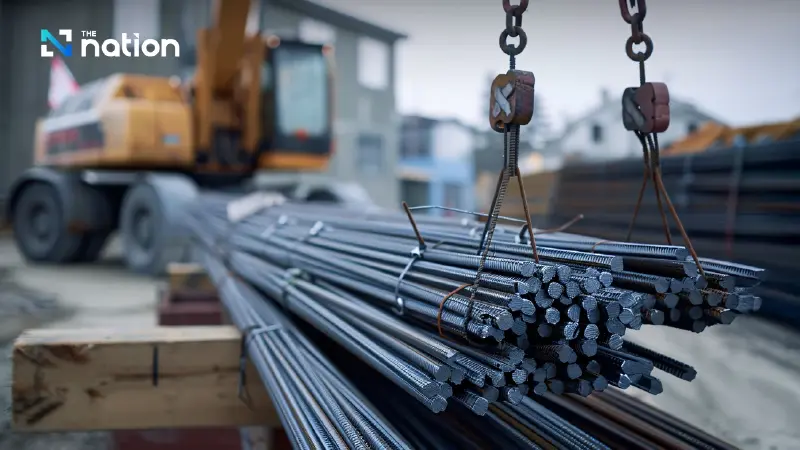


10 Thai Steel Associations urge the government to enforce stricter regulations on steel factories, emphasizing the importance of public safety and updated standards before allowing production to resume
December 17, 2025 – The 10 Thai Steel Industry Associations have made a strong call to the government to impose strict regulations and oversight before allowing steel factories to reopen. They stress the need to ensure that steel production meets the latest industry standards under the Thai Industrial Standards (TIS) regulations. The associations warn that without upgrading these standards, there could be serious risks to public safety.

Prawit emphasized that the 10 associations support the government's efforts to thoroughly investigate the use of steel rods and red dust to ensure transparent and effective regulations, which will help address societal concerns about product quality and its impact on public safety. He pointed out that Thailand must upgrade the TIS for steel rods to meet international standards, such as the Chinese steel standard GB 1499-2024, which mandates the use of production processes from BOF (Basic Oxygen Furnace) and EAF (Electric Arc Furnace) only. This standard also requires that special-grade steel for use in earthquake-prone areas undergo external refining processes, reflecting a commitment to public safety.
"Thailand must improve the TIS for steel rods to meet current standards, eliminate low-quality steel from the market, and ensure that higher-grade steel is available for high-risk applications. Public safety should never be compromised for lower costs," Prawit said.
Regarding concerns that not allowing steel production using induction furnaces (IF) would lead to shortages or market monopolies, Prawit confirmed that these concerns are unfounded. He pointed out that for about a year, following the closure of problematic IF factories, steel prices in the fourth quarter of 2025 averaged about 19.6 baht per kilogram, which is lower than the average price of 20.9 baht per kilogram in the third quarter of the same year. This reflects that the market continues to function normally without any shortages or price hikes.
Additionally, IF factories can still import billets produced by the BOF or EAF process, which are readily available in the global market, to roll into steel rods. Importing standard billets for rolling steel rods is a regular business practice in the industry, and there is no need to close these operations.
Prawit reiterated that the 10 Thai Steel Associations urge the government to strictly regulate IF steel factories that wish to reopen, ensuring they fully comply with the TIS, particularly in terms of materials, production processes, and chemical compositions. Any factory seeking to reopen must employ proper steel refining processes, such as using Ladle Furnace (LF) or an equivalent or superior technique, and must obtain approval from the Bureau of Industrial Standards and the Industrial Products Standards Committee before being allowed to resume operations.
