
Japan’s rural municipalities partner with urban students
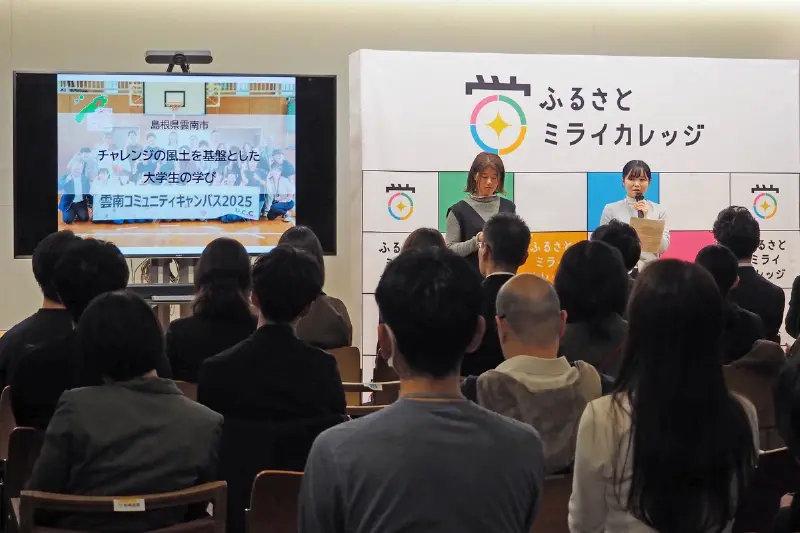


In a model project by Japan's internal affairs ministry, municipalities in the countryside are collaborating with university students from urban areas to leverage young people's ideas for regional revitalisation on Friday (January 2).
The project is aimed at securing human resources for community development and creating "related populations," or people who are continuously involved in regional communities.
The model project, launched this fiscal year, is available to local governments that accept students to work with residents on regional development.
It covers costs such as students' travel expenses.
The city of Minamiuonuma, Niigata Prefecture, central Japan, is working to develop a base for exchanges between students and residents.
Students learn from residents about regional challenges, such as measures against snow damage, and provide proposals.
Among areas that are expected to be hit hard by a potential massive earthquake in the Nankai Trough off the country's central to southwestern Pacific coast, the city of Uwajima, Ehime Prefecture, is working with students on "pre-disaster reconstruction" efforts to promote town development under the assumption of a major quake.
Through this collaboration, the city will draw up concrete measures to improve the effectiveness of its disaster reconstruction plan, drawn up in March 2025, and inform its residents of the measures.
"The viewpoint of students is valuable and important", as there is no university in the city, a city government official said.
In Wakayama Prefecture, western Japan, five municipalities have accepted a total of 43 students, working with them to address local challenges, such as utilising vacant houses and promoting local specialities.
The prefectural government is supporting the municipalities.
At a time when rural areas are facing outflows of young people for higher education and other reasons, the ministry and local governments hope that the model project will encourage them to settle in or maintain long-term ties with these areas.
"Continued involvement from not just universities but also individual students is necessary," said an official of the Wakayama prefectural government.

[Copyright The Jiji Press, Ltd.]
