
Aloka, the stray dog in India who walked 100 days for peace
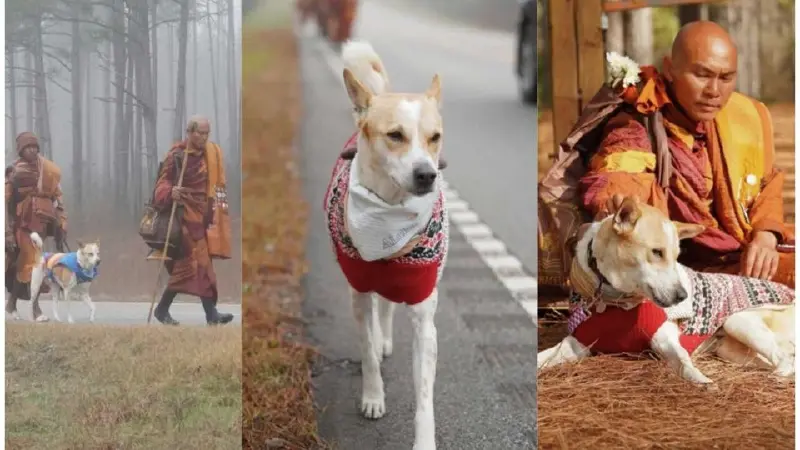


Before Aloka became known as the “peace dog,” he was a stray navigating the streets of India. What set him apart from others like him was not strength or speed, but an unexpected decision to follow a group of barefoot Buddhist monks who were beginning a long ‘Walk for Peace.’
Aloka does not fit neatly into any category that people usually look for when they ask about dogs. His breed is uncertain; most say he is likely an Indian pariah dog, whose name means divine light in Sanskrit. His age is estimated at around four years. There is no record of his birth, no known owner, and no early photographs.
Yet his story has travelled farther than many pedigreed dogs ever will.
Before Aloka became known as the “peace dog,” he was a stray navigating the streets of India. Like countless others, he survived through instinct and chance. What set him apart was not strength or speed, but an unexpected decision to follow a group of barefoot Buddhist monks who were beginning a long ‘Walk for Peace.’
For more than 100 days, Aloka walked with them. He did not lag behind, demand attention, or seek shelter beyond what was offered. He simply stayed. Day after day, mile after mile, he matched their pace — through heat, fatigue, and unfamiliar terrain. The monks did not adopt him in the traditional sense. There was no leash, no command, no training. What formed instead was quiet companionship.
According to those who walked beside him, Aloka never resisted the journey. He showed no signs of fear or restlessness. When the monks rested, he rested. When they walked, he walked. Over time, his presence became part of the rhythm of the pilgrimage, a living reminder of patience and commitment.
The monks say they do not know where Aloka came from or what he endured before he found them. But they are clear about one thing: people who meet him feel calm around him. Not excitement, not novelty, calm. It is this quality that earned him the name Aloka, meaning “light” or “inner clarity.”
His story resonates because it challenges assumptions about worth. Aloka was not rescued through a planned intervention. He chose connection on his own terms. In a world that often treats stray animals as invisible or disposable, his journey highlights how easily resilience and loyalty are overlooked.
There is also something deeply human in Aloka’s presence. He did not demand certainty or comfort before committing himself to the walk. He did not need an explanation. He responded to movement, consistency, and quiet intention. In that sense, his journey mirrors the monks’ philosophy more closely than any symbol could.
Aloka is not a mascot or a miracle. He is a living example of what happens when survival turns into trust. His story does not promise transformation through spectacle. It offers something more grounded: the idea that peace can exist without words, without ownership, without expectations.
In following the monks for over 100 days, Aloka did not become extraordinary. He revealed something already there, that courage, loyalty, and gentleness often come from places we fail to notice. And sometimes, the most meaningful journeys are walked without knowing the destination.
Ayman Anika
The Daily Star
