
Takaichi dissolves Japan’s Lower House, calls Feb 8 election
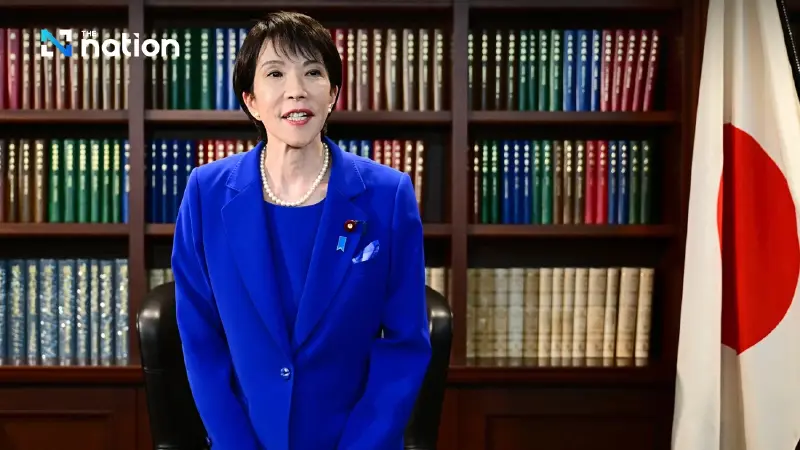


Takaichi says she will stake her premiership on vote, pitching a two-year suspension of food consumption tax while markets fret over fiscal cost.
- Prime Minister Sanae Takaichi has dissolved the House of Representatives to hold a snap election on February 8, a move described as a "bold calculation" to secure her long-term hold on power.
- The election call leverages Takaichi's high personal approval ratings (62%-78%) against the low popularity of her ruling Liberal Democratic Party (29.7%), which has been damaged by scandals.
- A core issue in the election is Takaichi's economic policy, which includes a controversial proposal to suspend the 8% consumption tax on food for two years.
- A victory would provide Takaichi with a stable governing majority and a stronger mandate to handle domestic issues and international pressures, including tensions with China.
Foreign media reports that, in Japan’s political history long dominated by men, Sanae Takaichi’s rise as the country’s first female prime minister in October 2025, three months ago, was seen as a decisive shattering of the “glass ceiling”.
But only months after taking the helm, Takaichi has made a move that analysts describe as a “bold calculation” to secure her long-term hold on power, amid a continuing crisis of confidence that has been eroding support for the ruling party.
Takaichi held a press conference on Monday to announce the dissolution of the House of Representatives on January 23, to prepare for a general election on February 8, 2026.
In a firm tone, she said: “I am staking my future as prime minister on this election,” stressing that she wanted the public to decide whether she should be trusted to continue running the country.
Economic policy is a bet on fiscal discipline
The core weapon Takaichi is using in this campaign is an economic stimulus focused on household livelihoods.
She has announced a policy to suspend the 8% consumption tax on food for two years.
She has also pledged to increase government spending to create jobs and encourage household consumption.
However, this “all-in” policy has unsettled markets.
Government data indicate the tax cut could reduce state revenue by as much as US$32 billion a year, sending the 10-year Japanese government bond yield surging to its highest level in 27 years immediately after the announcement.
This is the central question Takaichi must answer for voters who are grappling with a rising cost of living.
Personal appeal versus the party’s crisis of faith
What makes this election especially noteworthy is the “gap” in popularity.
Takaichi has been praised as a woman who rose from a working-class family through perseverance, pushing her personal approval ratings to 62%–78%, according to surveys by major outlets such as NHK and Nikkei.
By contrast, her Liberal Democratic Party (LDP) is polling at just 29.7%.
A key reason is the deep public anger in the wake of the assassination of former prime minister Shinzo Abe in 2022, which exposed an infamous relationship between LDP politicians and the Unification Church, leading to the resignation of several ministers.
A shaken political board and external threats
Victory in this election would mean more than simply keeping the top job; it would be about building a stable power base when the ruling bloc holds a majority by only one seat.
Meanwhile, opposition parties have announced a new alliance called the Centrist Reform Alliance, bringing in Komeito, which had been allied with the LDP for 26 years.
Beyond domestic battles, Takaichi also faces international pressure, including escalating tensions with China over Taiwan, and a plan to meet US President Donald Trump as early as March.
Securing a strong “mandate” from February’s election will therefore be decisive in determining how much leverage she has on the global stage.
February 8 will not be merely a polling day, but a verdict on whether Japanese voters will continue with this resolute female leader, or choose a new change as the old political structure is shaken.
