
Aramco warns of catastrophic impact if Strait of Hormuz stays blocked
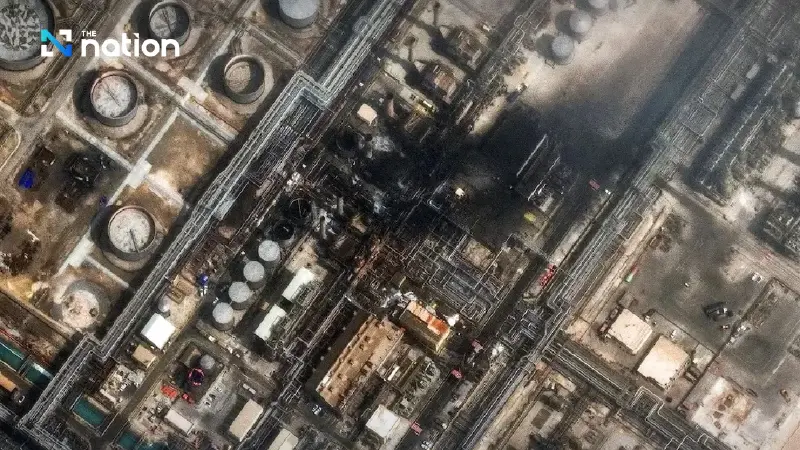


Saudi Aramco says continued disruption in the Gulf could squeeze crude supplies, drain inventories and hit the global economy.
- Saudi Aramco's CEO warned that a prolonged blockage of the Strait of Hormuz, which normally handles one-fifth of the world's daily oil supply, would cause severe damage to global oil markets and the world economy.
- The impact is described as extending beyond energy to other sectors, including shipping, insurance, aviation, and agriculture, with the global oil benchmark price already surging to a three-year high.
- The crisis is exacerbated by global oil inventories being at a five-year low, which will be drawn down quickly as most of the world's spare production capacity is concentrated in the affected region.
- While Aramco is using alternate routes like its East-West pipeline and drawing on global inventories to meet demand, the CEO cautioned that these are not sustainable long-term solutions.
Saudi Aramco warned on Tuesday (March 10) that continued disruption to shipping through the Strait of Hormuz caused by the Iran war could trigger severe damage across global oil markets and the wider world economy.
Speaking to reporters during an earnings call, Aramco chief executive Amin Nasser said the longer the interruption lasted, the harsher the fallout would be.
He described the current turmoil as the most serious crisis ever faced by the region’s oil and gas industry, adding that while the company had weathered disruptions before, none had matched the scale of the present situation.
The warning came as oil movements through the Strait of Hormuz remained largely paralysed.
Under normal conditions, about one-fifth of the world’s daily oil supply passes through the strategic waterway.
On Tuesday, Iran’s Revolutionary Guards said they would not permit “one litre of oil” to leave the Middle East if attacks by the United States and Israel continued.
Nasser said the consequences were already spreading well beyond the energy sector.
In addition to hitting shipping and insurance, the crisis was also set to ripple through aviation, agriculture, the automotive industry and a wide range of other businesses.
Brent crude, the global benchmark, had surged on Monday to nearly US$120 a barrel, its highest level in more than three years, before easing to around US$92 on Tuesday after US President Donald Trump said the conflict could end soon.
Even so, Trump also warned that Washington would strike Iran much harder if it blocked exports from the region, a key source of global energy supplies.
Trump has also said the US Navy could escort ships in the Gulf to ensure safe passage, though it remains unclear whether that could be carried out on the necessary scale, with some American vessels already involved in strikes on Iran and intercepting its missiles.
When asked whether such naval escorts were realistic given the volume of oil involved, Nasser said the quantities were substantial and noted that Aramco’s customers bear the delivery risk.
He said the company would back any action or measure that helped its products reach customers and global markets.
Another senior Gulf energy official, however, cast doubt on that option, saying the only real way to reopen the strait for oil and gas exports was to end the war.
Nasser also pointed to tightening supply conditions, saying global oil inventories were already at their lowest level in five years and would be drawn down even faster as the crisis continued.
He told analysts it was vital for shipping through Hormuz to resume, especially because most spare production capacity is concentrated in the region.
He added that rising demand over the course of the year would keep the market finely balanced.
For now, Aramco is not exporting crude from the Gulf because ships are unable to load cargoes there.
Still, Nasser said the company was continuing to meet most customer demand, in part by drawing on inventories held elsewhere around the world.
He cautioned, however, that this was not a solution that could be sustained for a long period, although it was helping in the short term.
At the same time, Aramco has been using its East-West pipeline to move mainly Arab Light and some Arab Extra Light crude to the Red Sea port of Yanbu.
Nasser said the pipeline, whose capacity has been expanded to more than double its original level, is expected to reach its full capacity of 7 million barrels per day within the next few days as customers redirect shipments.
Even with exports routed through the kingdom’s western side, Nasser said the market still faced disruptions amounting to nearly 350 million barrels being removed from supply.
He added that Aramco could also divert crude to meet domestic demand.
Of the pipeline’s 7 million barrels per day capacity, nearly 2 million barrels per day are being supplied to refineries in western Saudi Arabia, which are net exporters of refined products.
Nasser also said a small fire caused by last week’s attack on Aramco’s Ras Tanura refinery, the company’s largest domestic refinery, had been quickly contained and extinguished.
He added that the refinery was now in the process of restarting.
Separately, Aramco reported on Tuesday that its annual profit had fallen 12%, mainly because of lower crude prices.
The company also said it would buy back up to US$3 billion of its shares, marking its first-ever share repurchase programme.
Reuters
