
The science student who dances for kings: How Thanyathorn Sapsomboon is rewriting Thailand's cultural future
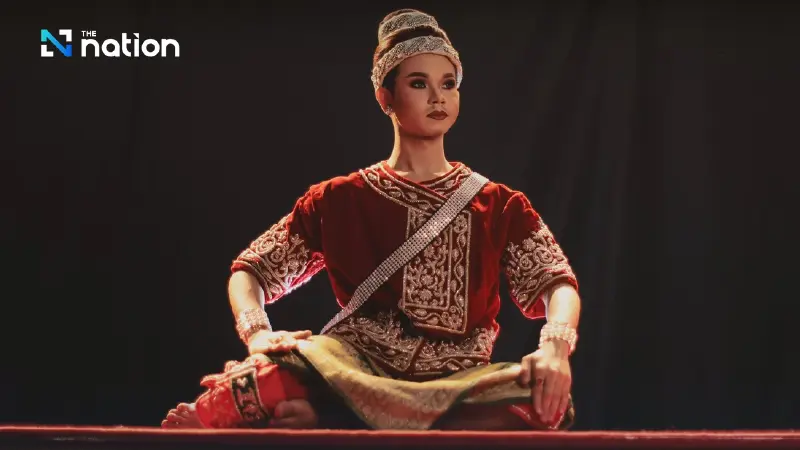


At 21, this Thai classical dancer balances royal performances with a mission to make ancient art forms relevant for Generation Z.
- Thanyathorn Sapsomboon, a 21-year-old university student, applies his science background to enhance his classical Thai dancing, which he has performed for the King of Thailand.
- He is on a mission to make ancient art forms relevant to younger generations by reframing traditional khon dance as "'pop culture with class'".
- To attract a Gen Z audience, he blends classical forms with contemporary instruments and creates modern, social media-friendly video content.
- He aims to become a university professor to teach the next generation, ensuring the preservation and evolution of Thai cultural arts.
At 21, this Thai classical dancer balances royal performances with a mission to make ancient art forms relevant for Generation Z.
Most 21-year-olds would struggle to choose between science and the arts. Thanyathorn Sapsomboon decided he didn't have to.
The Chulalongkorn University student has already achieved what many Thai classical dancers spend lifetimes pursuing: performing in the presence of His Majesty King Rama X and Her Majesty the Queen. Yet his journey to this pinnacle began not in a dance studio, but in a Science-Mathematics classroom.
"Studying science helped me understand the structure of the body — the muscular system, how to use breath rhythm to control weight and lightness," explains Thanyathorn, who now majors in Thai Dance at the Faculty of Fine and Applied Arts. "It helps me understand my physical capabilities in movement and use my body appropriately."
Born in Bangkok and raised in Samut Songkhram, Thanyathorn's path was set in motion at the Yuwa Silapin (Young Artists) programme at King Rama II Memorial Park. There, he discovered Thai Classical Dance — and it discovered him.

His dedication earned him the profound honour of performing during a royal audience with Her Royal Highness Maha Chakri Sirindhorn, a milestone that transformed a childhood interest into a life calling.
"I received attention from experts and trained until I became proficient — not everyone can endure that," he reflects. "But my confidence in choosing this path came when senior artists selected me to perform on that prestigious stage. I understood the joy of performing and wanted to continue this career path."

Discipline, Leadership, and Life Beyond Performance
The accolades followed swiftly. In 2024, he was selected for the Royal Khon Performance (The Incarnation of Narayana), alongside numerous university-led productions including the Piphat Duekdamban. Each performance required not just technical mastery but emotional resilience under extraordinary pressure.
"Every time before going on stage, I always think I must do my best to match the rehearsals," he says of performing before royalty. "I want to create an impression and bring happiness to everyone watching."

But Thanyathorn's ambitions extend beyond personal achievement. As a former Student Council President who balanced leadership with demanding rehearsal schedules, he learned that traditional discipline and modern initiative aren't opposing forces — they're complementary skills.
"Being a dancer helped me develop good personality traits, humility, and confidence to express myself," he explains. "It made me brave enough to engage with society and become beloved by school members quickly. Meanwhile, being Student Council President reinforced strategic thinking and organisational development."

Khon as “Pop Culture with Class” — Reframing Tradition for Gen Z
Now, he's channelling both into his vision for Thai classical dance's future. To those who dismiss khon as "old-fashioned," Thanyathorn offers a rebuttal rooted in his generation's language.
"In the perspective of new-generation artists, I see khon not as something old that's 'untouchable,' but as 'pop culture with class' waiting for interested people to learn," he argues.

His strategy involves blending contemporary instruments with classical forms, creating vertical video content with modern effects, and adjusting language levels to reach Gen Z audiences.
"We haven't changed khon's identity," he insists. "We've changed the 'lens' that the new generation uses to view khon."

Teaching the Next Generation Without Lecturing the Past
It's a philosophy he hopes to instill as a future university professor — his stated career goal. Rather than lecturing reluctant students about tradition, he plans to begin with his own journey, then address cultural threats Thailand currently faces.
"I'd start by sharing my own beginning experiences rather than teaching content students haven't opened their hearts to receive," he says. "Then explain the cultural threats happening now, so young people understand and feel proud of this valuable culture."

His teaching approach would emphasise "learning and doing" with modern technology — the same balance between heritage and innovation that defines his own practice.
Growing up in Samut Songkhram, a province intimately connected to King Rama II's reign, provided Thanyathorn advantages that urban-raised dancers might lack.

The region's cultural tourism sites and institutions patronised by Princess Maha Chakri Sirindhorn gave him access to master teachers and National Artists from secondary school onwards.
Yet for all his achievements — the royal performances, the prestigious productions, the growing recognition — Thanyathorn measures success by a different standard.
"Successfully performing difficult dance movements is the first level of success," he says. "But the highest true success is receiving applause from the audience and sincere praise from those who watched the performance. These things demonstrate that my potential has reached the audience and become evident to those who witnessed it."

It's a humble philosophy from someone already performing at the highest levels. But perhaps that humility, combined with his systematic thinking and genuine passion, is precisely what makes Thanyathorn Sapsomboon the future of Thai classical dance — and not just its past preserved.
As he continues his studies and prepares for more performances, one thing is clear: this science student who chose art, this teenager who performed for princesses, this leader who never stopped learning — he's not preserving culture by keeping it frozen in time. He's ensuring it lives and breathes for generations to come.
Thanyathorn Sapsomboon is currently pursuing his degree in Thai Dance at Chulalongkorn University's Faculty of Fine and Applied Arts.
