
China shifts reserves strategy, reducing US Treasuries and buying more gold
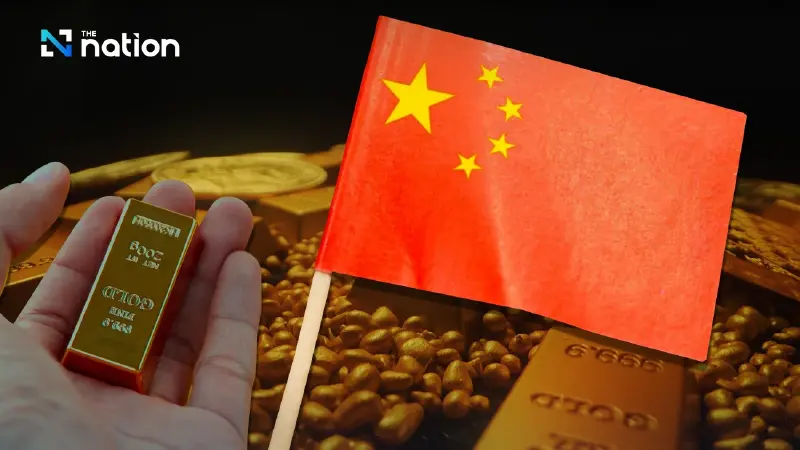


Australia and New Zealand Banking Group estimates China holds about 5,500 tonnes of gold, more than double its declared reserves, potentially making it the world’s second-largest holder after the United States.
- China is significantly increasing its gold reserves, with one estimate suggesting its holdings are more than double the officially reported amount, which would make it the world's second-largest holder.
- Concurrently, the country has reduced its holdings of US government bonds to below $700 billion, a figure that is almost half of its previous peak.
- This strategic shift is viewed as a move to accumulate strategic resources in preparation for a potential "two blocs" global power structure led by China and the US
- The move away from US debt may also be driven by concerns over American credit risk and a lack of other "better investment options" for its reserves.
Nikkei Asia reported that, as gold prices surged to fresh record highs, China’s gold holdings may be “far larger than reported”.
Australia and New Zealand Banking Group (ANZ) estimates China’s gold reserves at about 5,500 tonnes, “more than double” the figure China has officially disclosed.
If true, that would make China the world’s second-largest holder of gold reserves, behind the United States, which holds more than 8,000 tonnes.
Whether or not ANZ’s estimate is accurate, the assessment suggests China is accumulating strategic resources to prepare for an era of “two blocs”, in which China and the United States dominate global power.
China’s strategy of “a new round of mineral prospecting and exploration for a breakthrough”, first announced in 2011, called for surveying and extracting all types of resources, from crude oil and natural gas to minerals such as gold, copper, uranium and rare earths.
China’s seriousness about this resource-accumulation strategy is reflected in an accelerated recruitment drive.
Major state-owned resource groups, such as Zijin Mining Group, have stepped up efforts to attract people with backgrounds in metallurgy, geological exploration and mining.
At the same time, China has been reducing its holdings of US government bonds.
Official data from the US Treasury Department shows China’s holdings have fallen below US$700 billion, almost half their previous peak.
That amount represents only about 2% of the US public debt total of US$38 trillion.
Based on ANZ’s estimate, China’s gold reserves would be “higher” than its US Treasury holdings.
Analysts say that if President Xi Jinping truly wants to “play hardball”, China should significantly increase its purchases of US government bonds.
They argue that if China still held close to 10% of US debt as it did in the past, President Trump might not have put as much pressure on China’s leader as he has over the past year.
On the other hand, China’s reduction in US Treasury holdings may reflect concerns about the credit risk of US government debt.
Previously, China channelled part of its foreign-exchange reserves into funds to support Belt and Road infrastructure projects, but the results were not particularly impressive.
Gold, while resilient in emergencies and against inflation, does not generate interest income.
China’s gold-buying rush may simply reflect that China has little left in the way of “better investment options”.
