
Undocumented migrant children left in legal limbo as birth registration bills stall
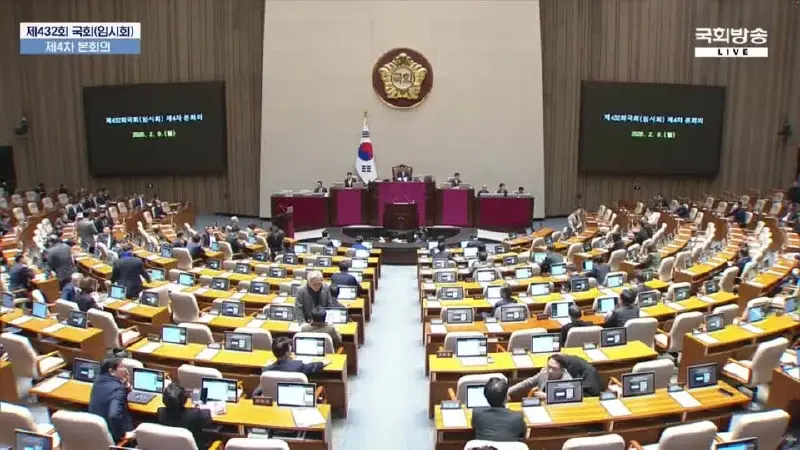


Multiple bills aimed at establishing a birth registration system for undocumented migrant children born in South Korea remain pending in the National Assembly, leaving thousands of children without legal recognition and access to basic services, despite growing calls for legislative action.
At least two proposals pending in the parliament seek to create a legal framework allowing the registration, certification and amendment of birth records for non-Korean children, who are currently excluded from the country's family registry system.
No law has yet been enacted.
Under existing rules, children born to foreign parents cannot be formally registered at birth even if they are born in South Korea, as the family registry system applies only to Korean nationals.
Without a resident registration number, many face difficulties accessing health care, education, child care and social protection.
The pending bills aim to establish a separate legal framework governing the registration, certification and amendment of birth records for foreign children.
They propose allowing parents or guardians to report births through administrative authorities, while enabling courts or local governments to register births ex officio if necessary.
The proposals also include measures to prevent disadvantages to undocumented migrant parents, such as limiting automatic notification to immigration authorities, and call for administrative coordination between hospitals and local governments to prevent unregistered births.
Advocates say the absence of registration leaves children in legal limbo and vulnerable to exploitation.
International norms, including the United Nations Convention on the Rights of the Child, recognise birth registration as a fundamental right, and South Korea’s Supreme Court has underscored the state’s responsibility to ensure that all children born in the country can have their births recorded.
According to the latest data on the matter released in 2023 by the state audit institution, the Board of Audit and Inspection, an estimated 4,025 foreign children born between 2015 and 2022 were never registered.
Despite broad recognition of the issue, legislative progress has been slow due to political and policy sensitivities.
Lawmakers remain divided over concerns that a new registration system could intersect with immigration control, potentially encouraging irregular stays or creating administrative burdens.
Debate also continues over how to clearly separate birth registration from nationality or residency rights, as well as which government body should oversee the system and how it should be funded.
The issue has drawn attention from lawmakers and civil society groups.
Speaking at a forum held at the Assembly on the matter in November last year, Deputy National Assembly Speaker Joo Ho-young warned that some children are left without even a record of their birth and are excluded from basic services, stressing the need for institutional reforms so that every child’s existence can be officially recognised “regardless of nationality or parental status.”
At the same event, Rep.
Park Hong-keun of the ruling Democratic Party of Korea said unregistered children face long-term disadvantages, including limited access to health care and education, and an unstable residency status into adulthood.
Park called for legal safeguards to “universalise birth registration” and strengthen access to essential services.
Efforts to address the issue have also come from civil society, with both global and local nongovernmental organisations and religious groups stepping in to advocate institutional reform.
Launched in 2024, the Unregistered Children Hope Forum is a civil society-led advocacy platform in South Korea that seeks legal and policy changes to protect children whose births are not officially registered.
Five organisations, including Save the Children Korea, UNICEF Korea and the UN Refugee Agency, jointly launched the forum to advocate the introduction of a universal birth registration system that would allow all children born in Korea to be registered regardless of their parents’ nationality or residency status.
Cases involving abandoned infants have also underscored the urgency of reform.
While the government introduced a birth notification system and protected childbirth program in July last year, measures credited with reducing child abandonment cases from 80 in 2023 to 30 in 2024, foreign children remain outside the system’s coverage.
Experts warn that without institutional reform, children born to undocumented migrant parents risk being excluded from social protection altogether.
Legislative researcher Heo Min-sook of the National Assembly Research Service noted in a report that “if a foreign woman who gives birth lacks Korean nationality or remains unregistered, both the mother and the child are excluded from social protection systems.”
Local governments have begun exploring interim measures.
Gyeonggi Province announced it will introduce a “public verification system” next month to officially confirm the existence of unregistered foreign children and link them to medical and welfare support, even though the system does not grant nationality or residency status.
Eun Hi-gon, head of the Centre for Undocumented Immigrant Children, an NGO here, described the situation as urgent, saying, “Unregistered children are ‘children who exist but do not exist,’ and they need absolute support from society.
It is urgent to design a systematic framework so they can fill the legal gaps and live as full members of our society," in a phone call with The Korea Herald.
