
Over 20 countries will attend Trump's Board of Peace meeting on Thursday, White House says
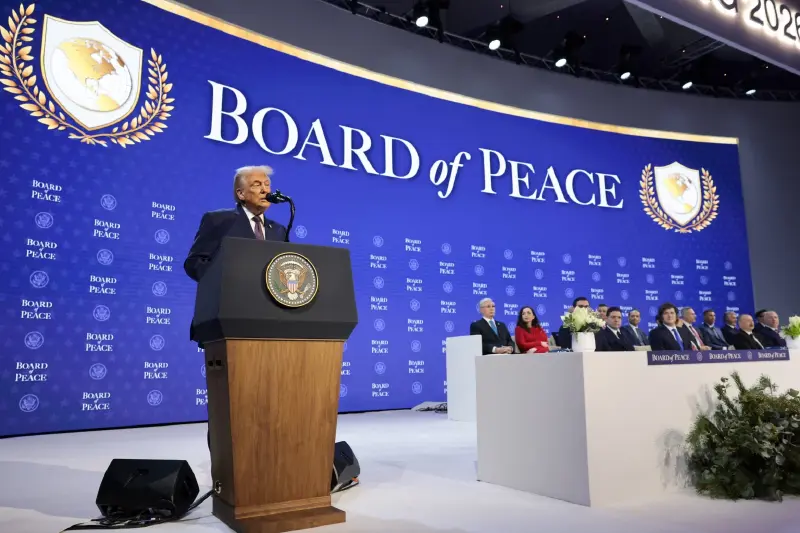


President Donald Trump is set to convene a meeting of the "Board of Peace" this Thursday (February 19) in the nation’s capital, where he will announce a massive US$5 billion international commitment dedicated to humanitarian relief and the rebuilding of Gaza.
White House Press Secretary Karoline Leavitt informed reporters on Wednesday that the summit will feature representatives from more than 20 nations.
Beyond the financial aid, member states have also pledged to contribute thousands of personnel to form an international stabilisation force for the territory.
The initiative has faced some pushback from the Holy See.
Cardinal Pietro Parolin, the Vatican's top diplomat, stated Tuesday that crisis management should remain under the purview of the United Nations.
Leavitt described the Vatican's decision to abstain as "deeply unfortunate."
Pope Leo, the first American pope, had been invited to join the board in January.
President Trump is scheduled to chair the opening segment of Thursday’s proceedings before departing for an engagement in Georgia.
The Board of Peace was officially established on January 23 during Trump's visit to Davos, Switzerland, and its creation was later supported by a United Nations Security Council resolution.
While the board was originally designed to manage Gaza’s temporary governance following the October ceasefire, Trump’s later suggestions that the body could address global conflicts have raised concerns about it competing with the UN.
"The president has a very bold and ambitious plan and vision to rebuild and reconstruct Gaza," Leavitt stated, emphasising that the board is a "legitimate organisation" with dozens of member countries.
The board’s membership includes regional powers such as Egypt, Turkey, Saudi Arabia, and Qatar, as well as Indonesia.
However, traditional Western allies and other global powers have shown more hesitation toward the project.
Despite the broader ambitions for the board, Thursday’s session is expected to deal exclusively with the situation in Gaza.
Reuters
