
Takaichi set to bolster security policy under second cabinet
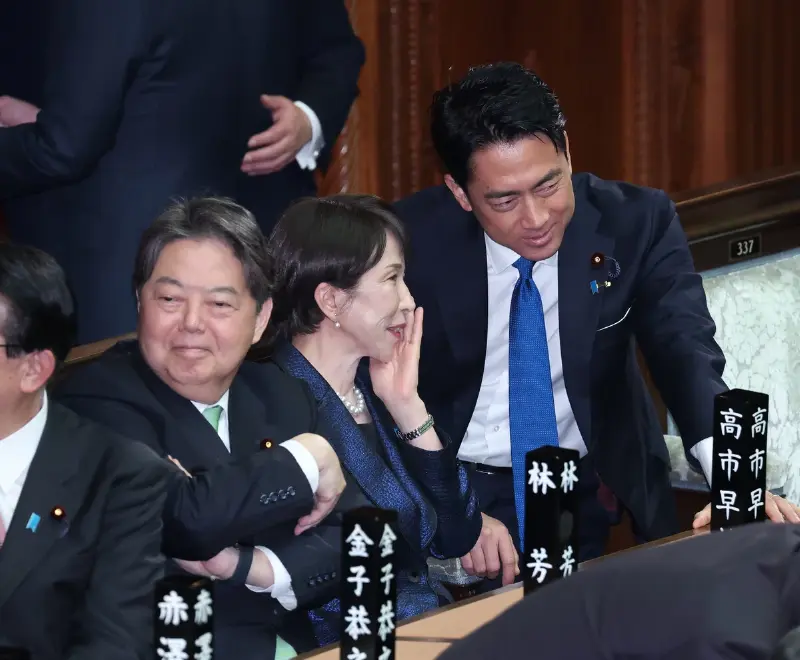


Japan's Prime Minister Sanae Takaichi will step up efforts to bolster the country's national security under her second cabinet, launched Wednesday following her Liberal Democratic Party's landslide victory in the February 8 House of Representatives election.
The Takaichi administration plans to revise the government's three key national security-related documents, including the National Security Strategy, by the end of this year.
The focus will be on how to secure funding for a potential increase in defence spending.
On the diplomatic front, Takaichi faces challenges such as deteriorating relations with China and how to deal with US President Donald Trump, who is shifting his focus to the Western Hemisphere.
The Takaichi administration earmarked some 1.1 trillion yen for defence spending in the government's fiscal 2025 supplementary budget, hitting the goal of increasing defence spending as a share of gross domestic product to 2 per cent earlier than planned.
It plans to procure financial resources by raising the income, corporate and tobacco taxes to finance some 43 trillion yen in spending over the five years from fiscal 2023 under the current defence buildup program.
Meanwhile, the US government is pressuring its allies to raise their defence expenditures to at least 5 per cent of their respective GDP.
During the campaign period for the election for the lower chamber of parliament, Takaichi said that national security policy is one of the areas that could divide public opinion.
Following the election victory, her administration is expected to work on implementing conservative policies based on the LDP's coalition agreement with the Japan Innovation Party, which positions itself as the "gas pedal" of the ruling bloc.
As early as this spring, the government plans to scrap current rules limiting defence equipment exports to five categories rescue, transport, reconnaissance, surveillance and minesweeping.
The challenge is how to ensure safeguards that prevent Japan from fueling conflicts in other countries by expanding defence equipment transfers.
Other controversial issues to be tackled by the second Takaichi administration are likely to include discussions on whether Japan is allowed to possess submarines utilising next-generation power sources, including nuclear energy, and what to do about its three non-nuclear principles.
The prime minister has not ruled out the possibility of Japan reviewing the principles of not possessing or making nuclear weapons or letting them be brought into the country.
In the planned revisions of the country's three key security documents, the government is expected to include ways to deal with new forms of warfare, ensure combat sustainability and strengthen the response on the Pacific side of the country, in light of the changing security environment.
In March, Takaichi will visit the United States for the first time since taking office in October last year to hold talks with Trump.
She plans to explain Japan's efforts to strengthen defence capabilities in order to secure US understanding.
While giving priority to the Western Hemisphere, including Latin America, Trump is believed to be taking a relatively lenient stance toward China.
Under these circumstances, Takaichi's diplomatic skills will be tested in her ability to maintain the US involvement in the Indo-Pacific region, while reaffirming the strong Japan-US alliance.
The prime minister is also facing an urgent need to improve ties with China, which worsened due to her remarks from last year on a potential Taiwan contingency.
Takaichi aims to hold talks with Chinese President Xi Jinping on the sidelines of an Asia-Pacific Economic Cooperation summit slated to be held in China in November, but it is unclear whether the meeting will take place.

[Copyright The Jiji Press, Ltd.]
