
International leaders condemn US-Israel military strikes on Iran
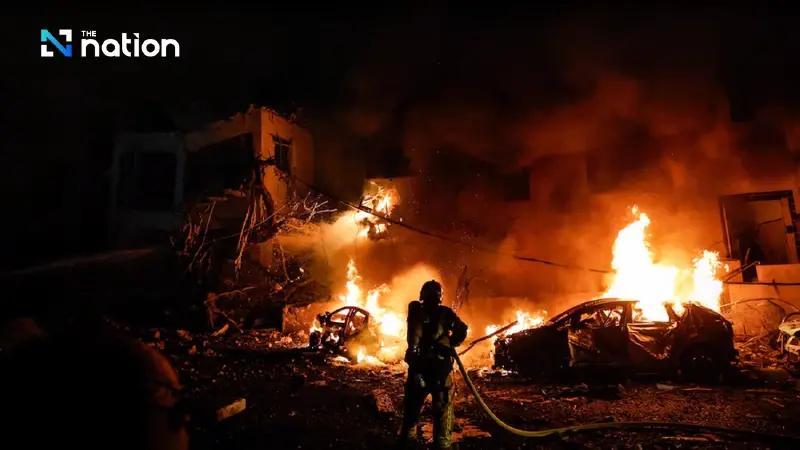


Reactions poured in worldwide after the United States and Israel carried out military strikes on Iran on Saturday, with leaders warning the violence could spiral into a broader regional conflict.
- Russian official Dmitry Medvedev sharply criticized the US actions, calling past negotiations a "smokescreen".
- Norway's Foreign Minister stated the strikes were inconsistent with international law, a sentiment echoed by Spain's Prime Minister who also called for de-escalation.
- French President Emmanuel Macron warned of severe consequences for international peace and security, calling for an urgent meeting of the UN Security Council.
Middle East tensions have escalated again after the United States and Israel launched attacks on Iran on Saturday (February 28), triggering reactions from countries around the world.
US President Donald Trump pledged to destroy Tehran’s missile capabilities and prevent the development of nuclear weapons.
Dmitry Medvedev, Deputy Chairman of Russia’s Security Council and a former Russian president, sharply criticised Washington’s actions, saying past negotiations with Iran were merely a “smokescreen”.
He also posed a rhetorical comparison between the historical longevity of the United States and the Persian Empire.

Lebanon’s Prime Minister Nawaf Salam said he opposed any attempt to drag the country into a conflict that could undermine internal security and national unity.
Norway’s Foreign Minister Espen Barth Eide said the strikes Israel described as “pre-emptive” were not consistent with international law, adding that preventive attacks must be based on an immediate and imminent threat.
French President Emmanuel Macron called for an urgent meeting of the United Nations Security Council, warning that a war involving the US, Israel and Iran would have severe consequences for international peace and security.
He also urged Iran to enter serious talks to end its nuclear and missile programmes.

Spanish Prime Minister Pedro Sánchez called for an immediate de-escalation and strict respect for international law.
Ukraine’s Foreign Ministry said the current situation stemmed from the Iranian government’s use of violence and impunity, particularly its past crackdowns on peaceful protesters.
These developments reflect growing international concern over the risk of further escalation in the region, which could spread and affect broader security and economic stability.
Many countries continue to urge all sides to show restraint and return to negotiations as soon as possible.
