
Filipino private companies urged to adopt 4-day workweek
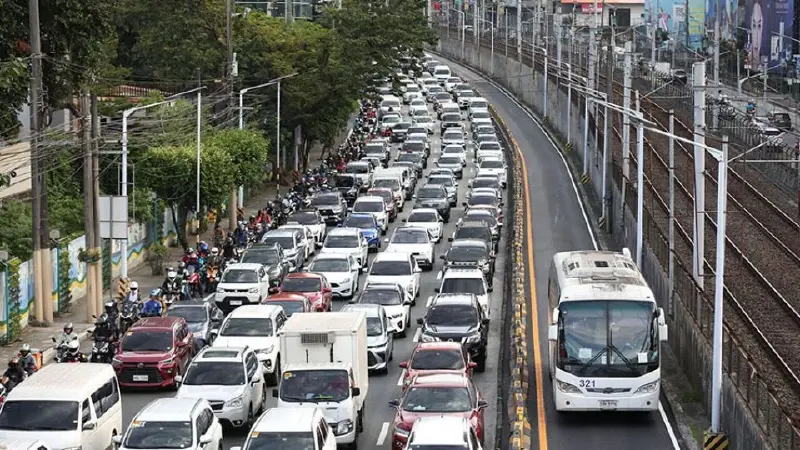


Private companies were urged to consider adopting the government’s four-day onsite work week, or at the very least, implement staggered work-hour schemes to cushion the impact of fuel price hikes amid escalating military conflict in the Middle East.
Sen. Francis Escudero made the proposal after President Ferdinand R. Marcos Jr. recently announced a four-day workweek scheme beginning March 9 for executive branch offices to reduce energy costs.
Escudero, in a statement, said such flexible arrangements could help reduce daily transportation demand, lower operating costs, provide workers with added relief, and reduce billions of pesos in lost opportunities caused by traffic congestion.
“Acting this early as we anticipate what could happen would strengthen the country’s resilience should the situation worsen,” Escudero said.
Escudero added that the private sector’s participation in the initiative would significantly amplify the benefits of the government’s temporary shift to a compressed work arrangement, especially in major business districts.
He specifically called on Makati and Bonifacio Global City business firms to do so, especially as areas with the heaviest traffic volumes.
“These areas experience some of the heaviest daily traffic volumes, making them ideal starting points for mobility‑oriented workplace reforms,” he said.
Citing a study conducted by Japan International Cooperation Agency (JICA), Escudero pointed out that Metro Manila’s traffic congestion alone costs the economy an estimated P3.5 billion per day, a figure projected to rise to P5.4 billion daily by 2035 if unaddressed.
“If we are losing P3.5 billion every single day because of traffic, that means Metro Manila is bleeding roughly P105 billion a month and more than P1.27 trillion a year,” Escudero said, adding that even modest reductions in congestion can translate into massive national savings.
Hence, Escudero said local government units in major business districts should collaborate with employers on area‑wide mobility strategies, including synchronised staggered schedules, improved pedestrian access, and safer cycling routes.
He also urged the public to contribute to energy conservation through biking and carpooling, and to adopt energy‑efficient practices at home.
Asia News Network
