
Washington weighs troop boost as Iran war edges towards broader action
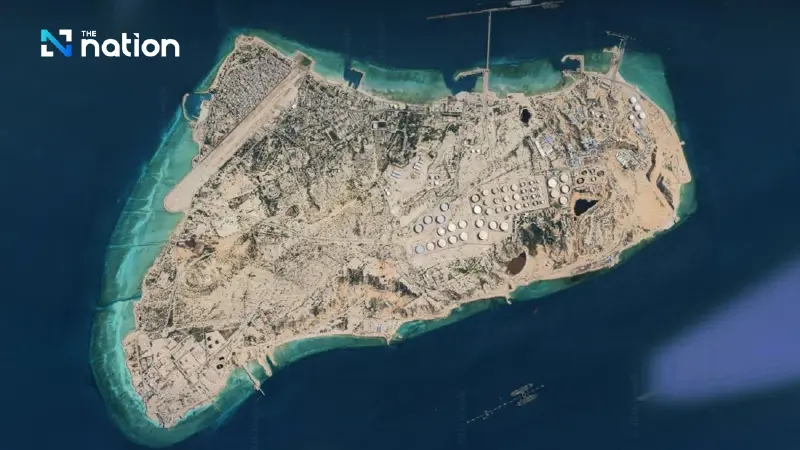


The administration of President Donald Trump is weighing whether to send thousands more US troops to support its Middle East operation, as the American military considers possible next moves in its campaign against Iran, according to a US official and three people familiar with the discussions.

Such a deployment would widen Trump’s choices as the war with Iran moves into its third week.
One option under consideration is protecting oil tanker traffic through the Strait of Hormuz.
Sources said that the mission would rely chiefly on air and naval assets, but four people, including two US officials, said it could also involve stationing American troops along Iran’s coastline.
Reuters is not naming the sources because they were discussing confidential military planning.
Another scenario being examined is the possible dispatch of US ground forces to Iran’s Kharg Island, the terminal that handles 90% of the country’s oil exports, according to three people familiar with the matter and three US officials.
One official said such an operation would carry major risks, given Iran’s ability to strike the island with missiles and drones.
The United States hit military targets on Kharg Island on March 13, and Trump has also warned that Iran’s key oil infrastructure could be targeted.
Military specialists say that because of the island’s importance to Iran’s economy, seizing control of it could be seen as more advantageous than destroying it.
Even a limited use of US ground troops would present serious political dangers for Trump.

Public backing in the United States for the Iran campaign remains weak, and Trump has long campaigned on keeping the country out of fresh Middle East wars.
Officials have also discussed using US forces to secure Iran’s stockpiles of highly enriched uranium, one person familiar with the matter said.
Those briefed on the talks said they did not believe any ground deployment inside Iran was close, but they would not discuss operational details.
Experts say taking control of Iran’s uranium stockpiles would be an extremely difficult and hazardous mission, even for US special operations troops.
A White House official, speaking anonymously, said no decision had been taken to send ground troops for now, but added that Trump was keeping every option open.
The official said the president remained focused on the aims of Operation Epic Fury: destroying Iran’s ballistic missile capability, eliminating its navy, preventing its proxy groups from destabilising the region and ensuring Iran can never obtain a nuclear weapon.
Trump said on Thursday (March 19) that he was not deploying additional troops to the region, while adding that he would not publicly disclose such a move in advance.


The Pentagon declined to comment.
The discussions are taking place as the US military continues striking Iran’s navy, its missile and drone stockpiles and its defence industry.
According to a factsheet issued on Wednesday (March 18) by US Central Command, which oversees about 50,000 US troops in the Middle East, Washington has launched more than 7,800 strikes since the war began on February 28 and has damaged or destroyed more than 120 Iranian vessels.
Trump has said his objectives extend beyond reducing Iran’s military power and could also include securing freedom of navigation through the Strait of Hormuz and stopping Tehran from acquiring a nuclear weapon.
Ground troops could expand the ways he pursues those goals, but the risks are considerable.
Even without direct combat on Iranian soil, the US military says 13 American troops have been killed in the war and around 200 wounded, though most of the injuries were minor.
For years, Trump criticised earlier US presidents for dragging the country into overseas conflicts and pledged to avoid new wars.
More recently, however, he has stopped short of ruling out the use of boots on the ground in Iran.
A senior White House official told Reuters that Trump had several possible ways to obtain Iran’s nuclear material but had not yet chosen a course of action.
In written testimony to lawmakers on Wednesday, Director of National Intelligence Tulsi Gabbard said Iran’s nuclear enrichment programme had been obliterated by strikes in June and that the entrances to the underground facilities had been buried and sealed with cement.
The sources said the discussions over possible US reinforcements extend beyond the arrival next week of an Amphibious Ready Group in the Middle East, accompanied by a Marine Expeditionary Unit of more than 2,000 Marines.
But one source said the US military would also lose significant strength as the aircraft carrier USS Gerald R Ford is sent to Greece for maintenance following a fire on board.
Trump has also shifted his stance on whether the United States should take responsibility for the Strait of Hormuz.
After first saying the US Navy could escort shipping, he later urged other countries to help reopen the waterway.
On Wednesday, he also suggested on Truth Social that the United States could instead leave responsibility for the Strait to the nations that depend on it.
Reuters
