
Forests lose diversity as large birds vanish and average bird size shrinks 72%
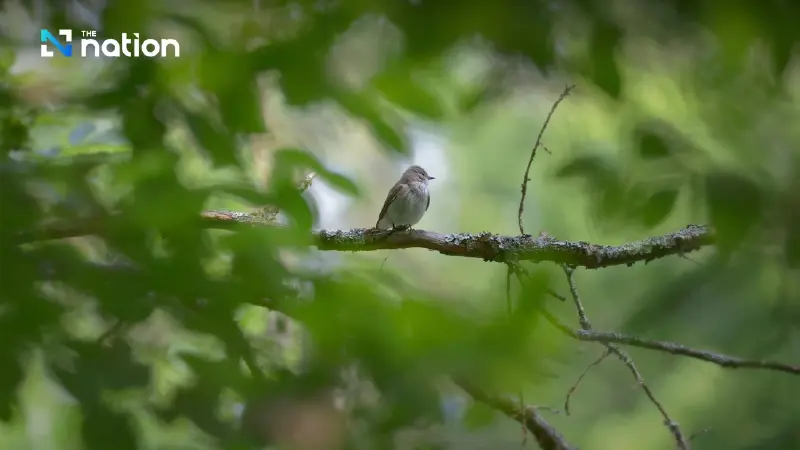


A global study found that the disappearance of large bird species over the past 80 years has reduced average bird body mass by 72%, weakening ecosystems and eroding the cultural ties local communities have with nature.
- A study using local community knowledge across three continents found the average body mass of birds has declined by as much as 72% between 1940 and 2020.
- This decline is driven by the local extinction of large-bodied bird species, which are especially vulnerable to hunting, habitat loss, and deforestation.
- The disappearance of large birds, which play key roles in seed dispersal and forest regeneration, leads to "biodiversity homogenization" as they are replaced by smaller, more common species.
The world is currently facing a severe biodiversity crisis, particularly the disappearance of large local bird species, which has caused the average body size of the birds people encounter to decline sharply over the past 80 years.
This problem not only affects ecosystems but also undermines the cultural foundations and memories of local communities that have long been closely tied to nature.
International research published in the journal Oryx, led by the Institute of Environmental Science and Technology at the Autonomous University of Barcelona (ICTA-UAB), found that the average body mass of birds in many areas across Africa, Latin America and Asia fell by as much as 72% between 1940 and 2020.
The study used a database of “ecological memory” from 10 Indigenous and local communities across three continents.
The research team surveyed 1,434 adults to compare the bird species they most commonly saw in childhood with the birds seen today, and also analysed more than 6,914 bird reports covering 283 species.
The findings showed a consistent global pattern: large-bodied bird species are gradually disappearing and being replaced by smaller birds.
The data showed that in 1940, the average body mass of the birds reported was more than 1,500 grams, but by 2020, this average had fallen to only around 535 grams.
Dr Álvaro Fernández-Llamazares, the study’s lead author, said this change reflects the local extinction of large birds, which are especially vulnerable to hunting, habitat loss and the expansion of infrastructure.
In addition, Dr Fernández-Llamazares pointed out that the climate crisis, wildlife trade and deforestation are key drivers behind the disappearance of large birds, while bird species that are better able to adapt to human disturbance and urban environments have become the group replacing them.
This phenomenon is called “biodiversity homogenisation” (Homogenization), which means the birds people encounter are becoming increasingly similar in all places.
For example, in the Bolivian Amazon rainforest, the Tsimane people reported that in the past they used to see macaws and large guans, but now they see only pigeons and cowbirds, which are smaller and commonly found birds.
In ecological terms, the loss of large birds is considered serious because they play important and irreplaceable roles such as seed dispersal, pest control and helping forests regenerate.
When these birds disappear, the functioning of ecosystems declines as well.
The study also emphasises the cultural loss that occurs alongside the disappearance of birds.
Many bird species form part of identity, memory and traditional rituals.
Dr Yolanda López-Maldonado gave the example of an Indigenous Maya dance that imitates the stone-curlew, noting that if this bird disappears, that cultural heritage is also at risk of disappearing.
Dr Fernández-Llamazares stressed that the knowledge of local communities is highly accurate because it is based on continuous observation and the passing down of knowledge from generation to generation, and should not be treated merely as supplementary information, but recognised as having equal value to Western scientific systems.
The research also found differences in some areas, with statistically significant declines in bird size in Mexico, Bolivia, Madagascar and China, while in places such as Chile and Mongolia, no especially clear change has yet been found.
Another key issue identified by the study is “shifting baseline syndrome”, which means younger generations accept degraded natural conditions as normal because they have never seen the abundance of the past.
The ecological memory of elders is, therefore, an important tool in demonstrating just how much the world has changed.
Dr Fernández-Llamazares commented that “the decline of birds is not an abstract statistic, but something visible, remembered and felt by those who live close to nature”.
The fact that people across three continents reported the same pattern shows that the avian extinction crisis is more severe and more widespread than mainstream scientific data have recorded.
This study is therefore a call for an equal dialogue between scientific knowledge systems and Indigenous knowledge in order to strengthen biodiversity conservation policy.
The research team believes that unless the root causes of this loss are addressed urgently, we will lose both the natural functions and the cultural spirit bound up with these birds.
Conservation must therefore do more than collect numerical data; it must also preserve the relationship between humans and nature.
Ultimately, the 72% reduction in bird size over 80 years is a clear warning sign that the world’s ecosystems are falling out of balance.
The disappearance of large birds means the loss of the guardians of the forest, and the voices of local communities are living evidence of global change.
Their deep understanding helps fill gaps that science may overlook.
Protecting local bird species is therefore an urgent mission to prevent nature’s baseline from shifting to a point where diversity is reduced beyond recovery, and to ensure that future generations do not grow up in a world of silence and small, undifferentiated birds.
