
The ‘colour-changing forest’ phenomenon: a spectacular palette in Nam Nao Forest, Phetchabun
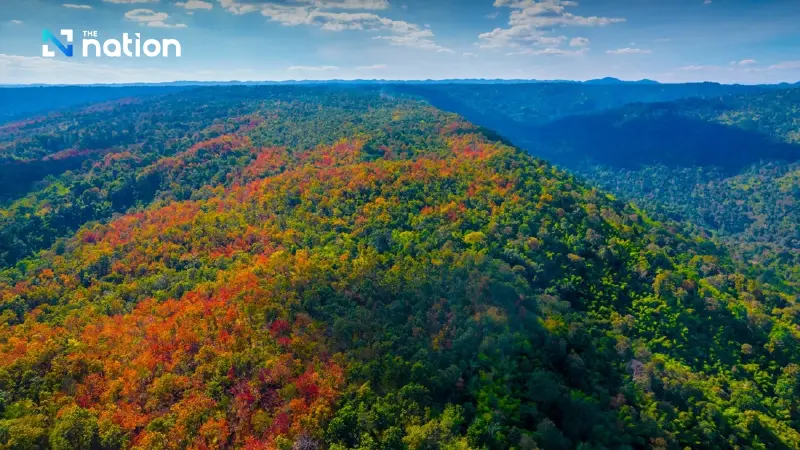


Nam Nao National Park in Phetchabun turns gold, amber and red in its once-a-year “colour-changing forest” phenomenon, with mornings down to 6°C
Seen only once a year. The ‘colour-changing forest’ phenomenon—an extraordinary burst of colour across the forest of Nam Nao National Park, Phetchabun.
On the morning of January 24, 2026, the weather at Nam Nao National Park in Phetchabun was cool, dropping to 6 degrees Celsius. This forest is now showing off a breathtaking natural beauty that occurs only once a year: the ‘colour-changing forest’, which many compare to seeing autumn abroad.

Around Phu Lang Kong Kwian, on the eastern side of Nam Nao National Park, the deciduous dipterocarp forest and mixed deciduous forest that were once lush green during the rainy season have gradually transformed at the start of the dry season. Millions of leaves have shifted from bright green into tones of gold, amber orange, brilliant yellow, and vivid red, interwoven across the forest in a striking display.

This eye-catching beauty does not happen by chance. It is the result of an astonishing natural survival mechanism.
Forests in Thailand can be broadly divided into two main types:
• Evergreen forest, with green leaves throughout the year
• Deciduous forest, including mixed deciduous forest and deciduous dipterocarp forest

It is this deciduous forest that creates the beautiful ‘colour-changing forest’ phenomenon. During the rainy season, this type of forest appears lush and full of life. But in the dry season, most trees change colour and shed their leaves to reduce water loss and help themselves survive throughout the dry months.
What makes the colour-changing forest at Nam Nao different—and more beautiful than elsewhere—is the high biodiversity and variety of tree species.
This means the trees do not shed their leaves at the same time across the whole forest. Some trees begin turning yellow first, some become orange, some turn a vivid red, and some remain green.

Because each species changes colour on a different timetable, it creates a breathtaking mosaic of colours—orange, red, and yellow amid the green forest—enhancing the landscape even more. It resembles an enormous oil painting on a giant canvas, created by nature only once a year.
This special phenomenon occurs only at the start of the dry season, especially during December to January each year. It is a short window—if you miss it, you must wait another full year to see it again. Temperatures during this period drop noticeably, particularly in the morning, which can be as low as 6 degrees Celsius, creating a cool, fresh atmosphere that is ideal for relaxing and enjoying nature.
Information/Photos: Nam Nao National Park, Protected Area Management Office 11 (Phitsanulok)
