
China, Pakistan joint statement calls for Iran truce, Hormuz reopen
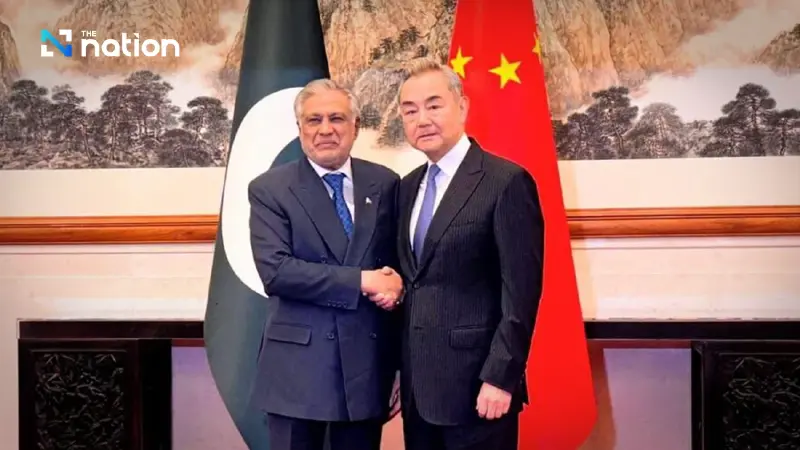


In Beijing, the two countries issued a joint statement urging an immediate ceasefire, peace talks and the swift restoration of normal navigation in Hormuz.
- China and Pakistan issued a joint statement calling for an immediate ceasefire in the Gulf and the wider Middle East amid the conflict involving Iran.
- The statement specifically urged the restoration of normal navigation in the Strait of Hormuz and called for safe passage for all commercial vessels.
- As part of a five-point initiative, the two nations emphasized that dialogue and diplomacy are the only feasible ways to resolve the conflict.
- The proposal also stressed the need to protect the sovereignty and territorial integrity of Iran and other Gulf countries, as well as the safety of civilians and infrastructure.
China and Pakistan on Tuesday (March 31) jointly called for an immediate ceasefire in the Gulf and the wider Middle East, while urging the prompt start of peace negotiations and a return to normal navigation in the Strait of Hormuz, as Chinese Foreign Minister Wang Yi met Pakistan’s Foreign Minister Mohammad Ishaq Dar in Beijing.
The appeal came in the fifth week of the US-Israeli war on Iran. Both countries said talks were needed to end the conflict, while Pakistan had earlier said it was ready to help facilitate negotiations between Washington and Tehran.
During the meeting, the two sides put forward a five-point initiative focused on restoring peace and stability in the Gulf and the wider Middle East. In that proposal, China and Pakistan said: “Dialogue and diplomacy are the only feasible ways to resolve conflicts.” They also said they supported the parties concerned in launching negotiations and that all sides should remain committed to settling disputes through peaceful means.

The initiative added that the sovereignty, territorial integrity, national independence and security of Iran and the Gulf countries must be protected. It also called for the protection of civilians, civilian infrastructure and peaceful nuclear facilities.
China and Pakistan also stressed the need to secure waterways, including the safety of ships and crews stranded in and around the Strait of Hormuz, the strategic chokepoint now at the centre of global concern over energy supplies and shipping.
Their joint initiative called on all parties to arrange safe passage for civil and commercial vessels as soon as possible and to restore normal navigation in the strait at the earliest date.
Dar’s visit to Beijing followed Pakistan’s hosting of talks on Sunday with Turkey, Egypt and Saudi Arabia, and came after US President Donald Trump warned that he would “obliterate” Iran’s oil wells and power plants if it did not reopen the Strait of Hormuz.
Pakistan, which shares a border of more than 900 kilometres with Iran, has increasingly taken on the role of a key mediator, building on its outreach to Trump and its standing as a relatively neutral player with long-established ties to Iran.
Wang on Tuesday welcomed Pakistan’s mediation efforts, saying China supported and expected Pakistan to play an important role in easing tensions and helping restart peace talks. According to a statement from China’s foreign ministry, Wang told Dar that China was willing to work with Pakistan to overcome difficulties, remove obstacles, end the fighting as soon as possible, “create opportunities for peace” and help open the way for negotiations.
Reuters
