
Beyond Beaches: How China Is Remaking Thai Tourism
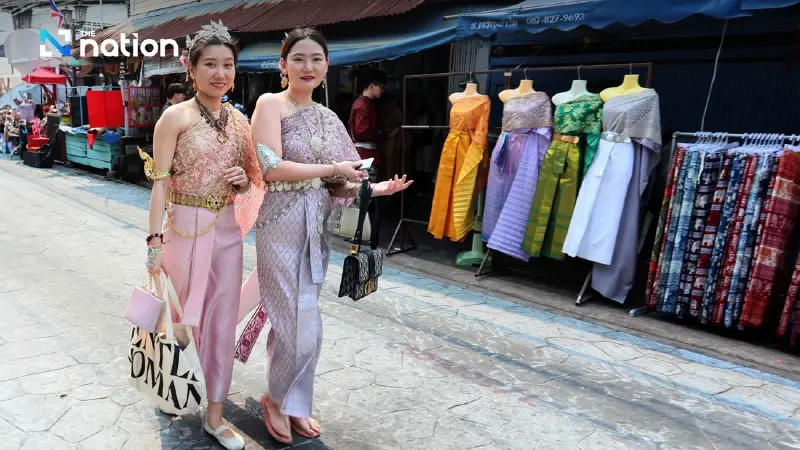


Chinese visitors are swapping sunbeds for silk dresses and souvenirs — and their evolving tastes could unlock Thailand's forgotten secondary cities
- Chinese tourists are shifting from traditional beach holidays to cultural immersion, with activities like renting traditional Thai dresses for photoshoots now more popular than visiting islands.
- Spending patterns are benefiting the grassroots economy, as popular souvenirs like "elephant pants" and herbal cosmetics are primarily produced by small, local artisans.
- A vast majority of Chinese visitors (93%) express a strong interest in exploring Thailand's lesser-known "secondary cities," indicating a move away from mainstream tourist hubs.
- To capitalize on this trend, Thailand must improve infrastructure, such as transportation links and safety measures, in these secondary cities to convert tourist interest into actual visits.
Chinese visitors are swapping sunbeds for silk dresses and souvenirs — and their evolving tastes could unlock Thailand's forgotten secondary cities.
On a Tuesday morning at a heritage house in Bangkok's old quarter, a queue of young Chinese women in elaborate Thai traditional dress waits patiently for a photographer to finish composing the perfect shot.
They have not come to see a temple. They have not booked a beach. They have come, in the most contemporary sense of the word, to experience Thailand — and to post about it.
That scene, replicated across the country from Chiang Mai's night bazaars to the silk villages of the Northeast, encapsulates a transformation reshaping Thailand's most important source market.
The Chinese tourist of 2026 is not the visitor of a decade ago. The new archetype is younger, more discerning, less interested in ticking off landmarks and increasingly drawn to cultural immersion, tactile authenticity and what tourism researchers now call "experience-based" travel.

The Dress That Outranked The Beach
The numbers confirm the shift decisively. Renting Thai traditional dress for photoshoots has become the most popular activity among Chinese visitors, cited by 64 per cent of respondents in the Q1/2026 Tourism Confidence survey — comfortably ahead of visiting islands or beaches, which attracted only 43 per cent.
In a country that has marketed its coastline as its primary calling card for generations, that inversion is remarkable.
The soft-power dimension of this trend is hard to overstate. Thailand's cultural exports — classical dance costume, artisan craftsmanship, the visual vocabulary of the kingdom's royal heritage — are performing a function that no marketing budget could fully replicate.
Chinese visitors are not merely consuming a service; they are co-creating content, generating millions of social-media impressions that feed the next wave of arrivals.
Renting Thai traditional dress for photoshoots was cited by 64 per cent of Chinese visitors — comfortably ahead of beaches at 43 per cent. The selfie, it turns out, is the new souvenir.

The Elephant Pants Economy
If traditional dress is the experience, elephant pants are the artefact. The loose-fitting, brightly patterned trousers — long dismissed by Thai urbanites as a tourist cliché — have emerged as the single most sought-after souvenir among Chinese visitors, with 64 per cent naming them as their top must-buy purchase.
Herbal cosmetics, another distinctly Thai category rooted in local plant knowledge, rank second.
The significance extends beyond retail figures. Both products have something in common: they are produced predominantly by small Thai artisans, community enterprises and cottage-industry workshops rather than by multinational chains.
The Chinese traveller's souvenir spend is, by preference, flowing into the grassroots economy — a fact with considerable implications for rural development policy and the government's broader ambitions to spread tourism's economic benefits beyond the established resort clusters.


The Secondary-City Opportunity
Those ambitions are underscored by a striking statistic: 93 per cent of Chinese tourists surveyed expressed interest in visiting secondary cities — places such as Chiang Rai, Trang and Phrae — that sit well off the conventional tourist trail.
The appetite for the road less travelled appears genuine and widespread.
The caveat is equally clear. That 93 per cent figure represents aspiration, not commitment.
The same respondents identified two conditions that would need to be met before intention converted to booking: improved transportation links and greater confidence in personal safety.
Both are solvable problems, but they require coordinated investment.
Currently, secondary cities lack the airport connectivity, reliable intercity bus services and English-language signage that budget-conscious independent travellers require.
In several Northern provinces, seasonal PM 2.5 pollution — with dust levels in Lampang and parts of Chiang Mai exceeding 100 micrograms per cubic metre in March — adds an additional deterrent.
For businesses in these cities, the commercial logic is compelling.
Chinese visitors already spending around 45,000 baht per trip are, by Thai provincial standards, extraordinarily high-value guests.
A single Chinese tourist group staying three nights in Chiang Rai generates more direct economic activity than multiple domestic weekenders. The market is there; the infrastructure is not yet.

What The Industry Must Do
Tourism operators are beginning to respond. Boutique guesthouses in Phrae are investing in cultural programming. Trang's night market operators are producing Mandarin-language menus.
A handful of forward-thinking tour companies are packaging multi-city itineraries that thread the new Chinese traveller's wish list together: a traditional dress photoshoot in Chiang Rai, a silk-weaving workshop in Phrae, street food in Trang, an elephant sanctuary in the hills.
The challenge for policy-makers is speed. The diversion of Chinese tourists from Japan — the direct result of Tokyo–Beijing diplomatic tensions — has created a window of opportunity that may not remain open indefinitely.
Relations between China and Japan could normalise. Other competitors, notably Vietnam and Malaysia, are investing aggressively in Chinese-language visitor infrastructure. Thailand's advantage today is cultural; its risk tomorrow is complacency.
The young woman in the borrowed silk dress, laughing at the camera in Bangkok's old quarter, is not merely a tourist. She is, in the language of modern marketing, a micro-influencer, a brand ambassador, a data point and a harbinger all at once.
Thailand would do well to understand exactly what she is looking for — and to make sure it can be found not just in the capital, but in Chiang Rai, Trang and Phrae too.
