
Myanmar to choose president at Friday's parliamentary sitting
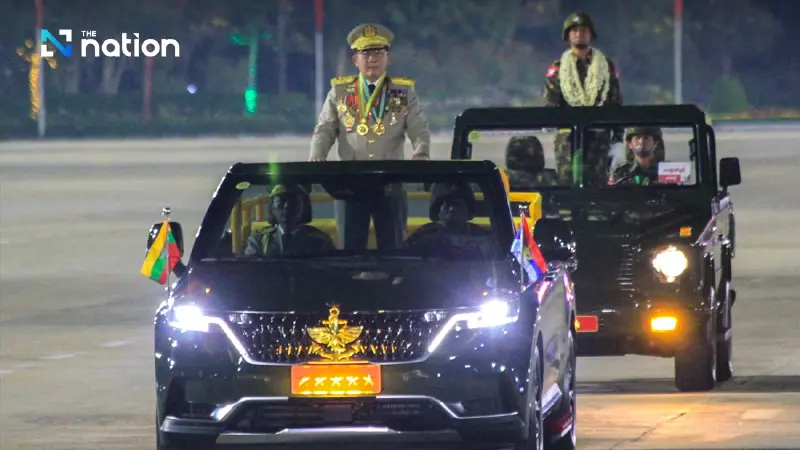


Myanmar's bicameral parliament will meet on Friday to choose a president from three nominees, including Min Aung Hlaing.
- Myanmar's parliament will hold a joint session of its upper and lower houses on Friday to select a new president.
- The president will be chosen from a pool of three vice-presidential nominees.
- Former junta leader and recently retired military chief Min Aung Hlaing is one of the three candidates for the presidency.
- Military-appointed members of parliament will also participate in the presidential selection process.
After a disputed election in December and January, Myanmar’s parliament is due to meet on Friday to select a president from three vice-presidential nominees, with former junta leader Min Aung Hlaing among those in contention.
House Speaker Aung Lin Dwe told lawmakers on Thursday that the decision would be made at a joint sitting of the upper and lower houses at 10am local time (0330 GMT). Military-appointed members of parliament will also take part in the session.
Min Aung Hlaing, 69, was nominated on Monday by a member of the lower house. He stepped down as Myanmar’s top military commander on the same day, bringing to an end a 15-year tenure in the post.
The other two vice-presidential nominees were put forward separately by the upper house and the bloc of military representatives in parliament. The president will be chosen from those three candidates.

According to parliamentary proceedings carried by state media, Aung Lin Dwe said the nominees selected by the three groups had all met the required qualifications.
Min Aung Hlaing led the 2021 coup that ousted the democratically elected government of Nobel laureate Aung San Suu Kyi, a move that triggered a civil war.
The presidential vote comes after an election held in December and January, which was won by the military-backed Union Solidarity and Development Party, but was widely dismissed as a sham by the United Nations and many Western countries.
Reuters
