
Min Aung Hlaing steps down as army chief and moves towards Myanmar presidency
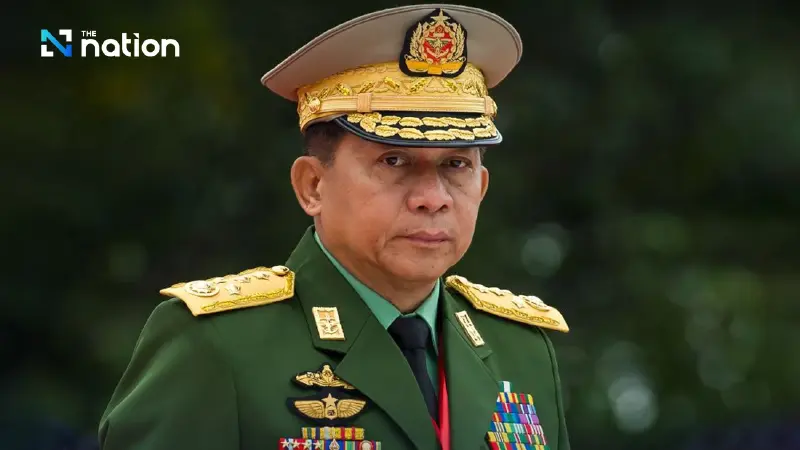


Min Aung Hlaing quits as Myanmar military chief and enters the presidential process, handing command to loyalist Ye Win Oo.
Myanmar coup leader Min Aung Hlaing stepped down as commander-in-chief of the armed forces on Monday, March 30, 2026, in a move widely seen as paving the way for him to become the country’s next president following the first election held since the 2021 military takeover.
The 69-year-old general, who has led Myanmar’s military since 2011 and orchestrated the coup that toppled the elected government of Aung San Suu Kyi in 2021, was nominated by lawmakers in the newly convened lower house as one of two vice-presidential candidates. Under Myanmar’s system, the upper house and the military bloc will also put forward nominees, with the president then to be chosen from the three candidates in a later parliamentary vote. No date for that vote has yet been announced.

The move follows a controversial election held amid intense conflict in December and January. The military-backed Union Solidarity and Development Party emerged victorious, but the poll was widely dismissed by the United Nations and many Western countries as lacking legitimacy.
Reuters reported that Min Aung Hlaing has long harboured ambitions to become president, even as Myanmar’s post-coup civil war has badly eroded the military’s prestige and weakened its grip on the country. Independent analyst Htin Kyaw Aye said this had always been Min Aung Hlaing’s objective, with the shift representing a transition from control as military ruler to control under the title of president.
Born into a family from southern Myanmar, Min Aung Hlaing studied law before joining the military and steadily rose through the ranks before taking over as commander-in-chief 15 years ago. He has long been regarded as a hardline and ruthless operator who maintained power by managing elite interests, rewarding loyalists with key posts and sidelining rivals. That reputation has defined both his military rule and his political manoeuvring since the coup.
In a separate ceremony in Naypyitaw, Min Aung Hlaing formally handed over the top military post to General Ye Win Oo, a veteran officer and former intelligence chief who was appointed army commander earlier this month. The rapid rise is striking: within just two months, Ye Win Oo has moved from army chief to commander-in-chief, a pace that analysts say reflects the depth of Min Aung Hlaing’s trust in him.
Independent analyst Aung Kyaw Soe said the double promotion made clear that Ye Win Oo was among the coup leader’s most trusted loyalists. Unlike many senior officers who came through the elite Defence Services Academy, Ye Win Oo graduated from the Officer Training School. He previously served as an infantry division commander and oversaw the Southwestern Command in the Ayeyarwady Delta region in southern Myanmar.
A March analysis by the Myanmar Strategy and Policy Institute, a think tank based in Thailand, said Ye Win Oo had remained a general since the coup and had handled some of the most important responsibilities in the military administration. However, it also said he appeared to lack broad leadership experience across both battlefield command and institutional management.
The reshuffle had been signalled in advance. On March 27, Myanmar’s military was preparing for a leadership change after Armed Forces Day, a rare public indication from the usually opaque institution that a transition was imminent. Analysts said even then that the change appeared designed to ease Min Aung Hlaing into the presidency while preserving the military’s dominance under a new formal arrangement.
Although the titles are changing, many observers see little sign of any real transfer of power. Instead, the latest move appears aimed at recasting Min Aung Hlaing’s rule in civilian form while ensuring that control of the armed forces remains in the hands of a loyal ally.
