
High crude oil prices still dampen business confidence in Japan
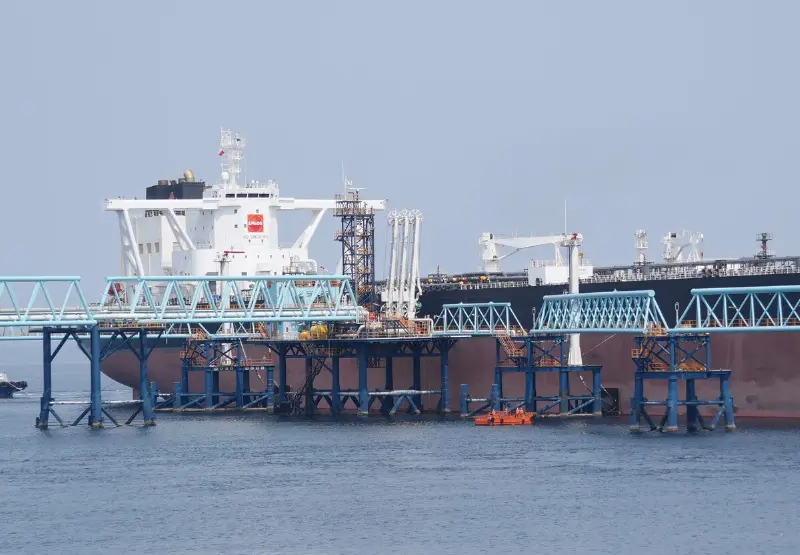


The March tankan showed sentiment holding up, but firms across Japan expect conditions to worsen as Middle East turmoil drives up fuel costs.
- High crude oil prices, stemming from rising tensions in the Middle East, are causing Japanese businesses to expect worsening conditions in the near future, according to the Bank of Japan's "tankan" survey.
- The price surge is raising input costs across various sectors, with industries like chemicals and oil products seeing their business condition indexes fall, while service companies face higher fuel expenses for transportation and operations.
- The economic pressure threatens to stagnate corporate earnings, dampen momentum for wage hikes, and may cause the Bank of Japan to review its plans for raising interest rates.
High crude oil prices stemming from rising tensions in the Middle East are dampening corporate sentiment in Japan, with the Bank of Japan's "tankan" quarterly survey for March showing that both large manufacturers and non-manufacturers expect their business conditions to worsen in the near-term future.
Prolonged fighting involving Iran may weaken the Japanese economy, possibly prompting the BOJ, which has forecast that the economic and price situation will keep improving gradually, to review its plan to continue raising its policy interest rate.
In the March tankan survey, released Wednesday (April 1), the diffusion index for large manufacturers' current business conditions rose for the fourth straight quarter, supported by expanding demand linked to artificial intelligence and semiconductors as well as reduced uncertainty regarding US trade policy. Sentiment warmed up also because more companies are reflecting higher material and labour costs in their prices.
Masahiko Kato, chairman of the Japanese Bankers Association, said that the tankan also showed the strength of surveyed companies' capital investment plans.
However, the Strait of Hormuz, a key crude oil transport chokepoint, continues to be effectively closed, beginning to adversely affect some industries. Among large manufacturers, the chemical sector and the oil and coal products sector saw their current condition DIs fall from three months before, according to the Tankan survey.
The business condition outlook DI toward June dropped in many industries, regardless of the size of the business.
About 70 per cent of the responses in the latest tankan were submitted by March 12, about two weeks after the United States and Israel started attacks on Iran, meaning that not many companies took the impact of prolonged Middle East tensions into account.
Meanwhile, the DI representing the percentage of companies currently experiencing rises in input prices minus that of firms seeing drops rose for both manufacturers and non-manufacturers. The input price DI toward June also went up.
A dry-cleaning service business in Tokyo recently increased its cleaning fees by 20 per cent due to inflation. It is considering the possibility of raising delivery fees as well, in light of rising gasoline prices, in addition to higher prices of kerosene used for boilers.
The president of the company expressed concern over the situation, saying, "More people may opt to wash clothes by themselves."
Shigeo Arai, president of Arai-yu, which operates a "sento" public bathhouse and a nursing service in Tokyo, said that he thinks rising crude oil prices would hit the firm's business "like a body blow."
As the company has already switched from fuel oil to gas to boil water for the public bath, the latest turmoil in the Middle East is unlikely to hinder the sento operations.
With the nursing service arm using vehicles to transport elderly people every day, however, "costs would increase considerably if gasoline prices double," Arai said.
Chemical makers are seeking new supply sources for naphtha, a crude oil-based material, and other items amid soaring prices.
With no end in sight to the conflict in the Middle East, the retail industry is also wary. "Some have voiced concerns that plastic wraps used for food products and shopping bags provided at a fee may be impacted," said Akio Masuda, a senior official of the Japan Chain Stores Association.
"Prices are expected to rise for plastic bottles, electricity and fuels needed for various businesses," Asahi Soft Drinks Co. Chairman Taichi Yoneme said.
According to an estimate by research firm Teikoku Databank Ltd., a year-on-year fuel cost increase of 30 per cent would raise the annual financial burden on companies with fuel expenditures by about 484,000 yen, leading to a decrease of about 4.8 per cent in operating profit.
If corporate earnings stagnate, it could dampen momentum for wage hikes. BOJ Governor Kazuo Ueda has said, "A risk scenario stemming from rising crude oil prices has newly emerged."
The BOJ needs to carefully consider when to implement the next interest rate hike while preventing an economic slowdown and helping companies maintain their wage hike momentum, analysts said.

[Copyright The Jiji Press, Ltd.]
