
G20 finance meeting ends without statement over Middle East war
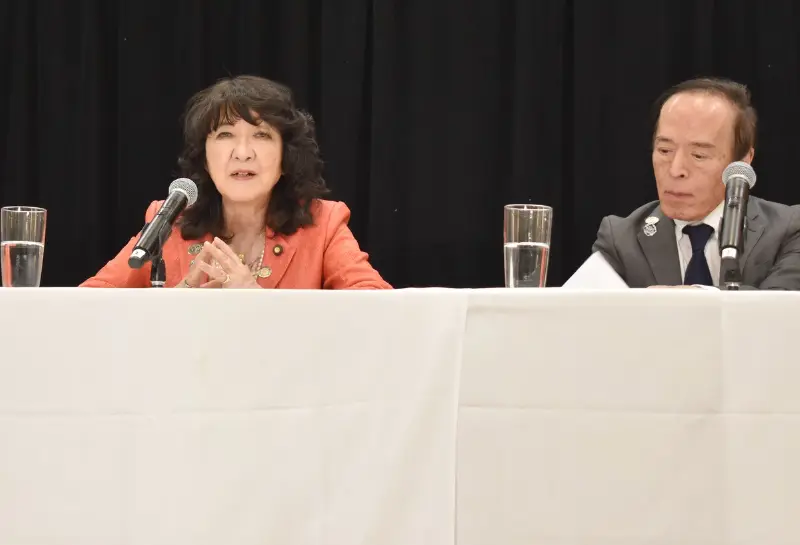


Japan said many countries urged an early settlement and stressed the need to protect navigation through the Strait of Hormuz as oil prices climbed.
- A G20 meeting of finance ministers and central bank governors concluded without issuing a joint statement due to disagreements over the conflict in the Middle East.
- Discussions focused on the economic impact of the conflict, including the surge in crude oil prices and the importance of safe navigation in the Strait of Hormuz.
- The meeting was chaired by the United States, a party to the conflict, and many participants reportedly voiced concerns and called for an early resolution.
- During the meeting, the US called for cooperation on financial sanctions against Iran, while other nations expressed concern for the global economy.
A meeting of finance ministers and central bank governors from the Group of 20 major economies was held in Washington on Thursday (April 16), but it did not produce a joint statement.
The G-20 finance officials discussed the impact on the global economy and financial markets of heightened tensions in the Middle East stemming from the conflict between US-Israeli forces and Iran and the resulting surge in crude oil prices.
In the meeting, chaired by the United States, a party to the conflict, many participants voiced concerns over it and called for an early resolution, but no joint statement to wrap up the discussions was issued. The United States did not hold a press conference after the meeting.
It was the first G-20 finance officials' meeting since the conflict began in late February. From Japan, Finance Minister Satsuki Katayama and Bank of Japan Governor Kazuo Ueda participated in the gathering.
Katayama told a press conference that no direct criticism of the United States was made during the meeting.
But many participants sought the soonest possible settlement of the conflict, saying that ensuring free and safe navigation in the Strait of Hormuz and preserving infrastructure are of vital importance to the global economy, Katayama said. "This may be a message to the US side," she added.
During the meeting, Katayama explained Japan's plan to provide financial aid to other Asian countries that are heavily dependent on crude oil from the Middle East. As part of this initiative, Japan announced the establishment of a framework for investment and loans of up to 600 billion through the government-affiliated Japan Bank for International Cooperation.
Katayama said, "If we don't do anything, some Asian countries will seek to import more crude oil from Russia."
According to Katayama, US Treasury Secretary Scott Bessent called for cooperation on financial sanctions against Iran. She said there was no opposition to this, and that neighbouring countries of Iran affected by Iranian attacks asked for the full enforcement of the sanctions.
The meeting also addressed the impact of the deteriorating situation in the Middle East on food production.
Furthermore, the G-20 officials discussed current account imbalances, with overproduction in China in mind. China took part in the meeting.
South Africa, which held the G-20 presidency last year, did not join the latest meeting. US media have reported that this was because the United States, whose relations with South Africa have deteriorated, did not approve the country's participation.

[Copyright The Jiji Press, Ltd.]
