
BOJ to weigh rate rise to 1 per cent as inflation risks mount in June
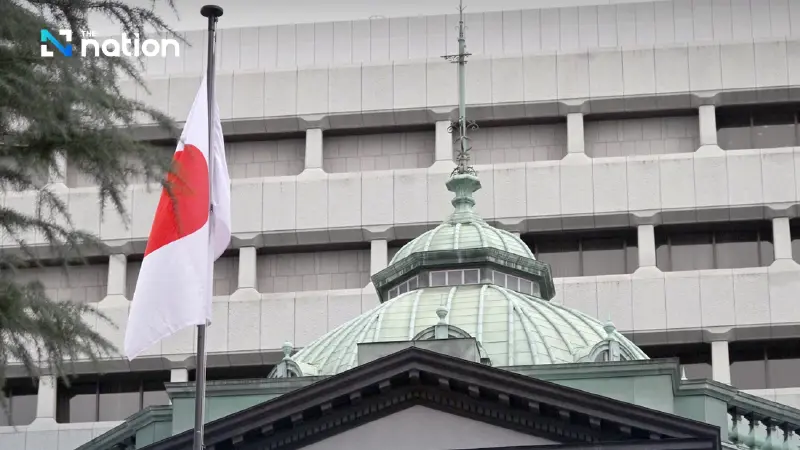


Kazuo Ueda says the Bank of Japan must debate whether to lift rates, with oil prices and Middle East risks shaping policy.
- The Bank of Japan (BOJ) is preparing to discuss raising its policy interest rate to 1 per cent at its next meeting, which begins on June 15.
- The potential rate hike, from the current 0.75 per cent, is being considered due to strong concerns that inflation could accelerate, driven by factors like high crude oil prices.
- BOJ Governor Kazuo Ueda stated the bank should be more vigilant about the risk of rising inflation to avoid a more substantial and economically damaging rate hike later.
- A senior BOJ official indicated that a rate increase is possible as long as oil supplies are not significantly disrupted.
The Bank of Japan is preparing to discuss a possible increase in its policy interest rate to 1 per cent, likely at its next policy-setting meeting, Jiji Press learned on Wednesday (June 3).
The central bank’s next two-day Policy Board meeting is due to begin on June 15. Its policy rate, the target used to guide the unsecured overnight call rate, now stands at 0.75 per cent after the BOJ last raised it in December.
The planned debate comes as concerns remain strong that inflation could speed up while crude oil prices stay high, although the risk of further turmoil in the Middle East has eased.
Speaking in Tokyo on Wednesday, BOJ Governor Kazuo Ueda said, “It will be necessary to thoroughly discuss the pros and cons of raising the policy interest rate.”
A senior BOJ official told Jiji Press that a rate increase is “possible” as long as supplies of oil-related products are unlikely to be disrupted, even if the de facto blockade of the Strait of Hormuz continues.
During the same speech, Ueda said the BOJ “should be attentive to downside risks to economic activity” but should be “more vigilant about the risk of a significant upward deviation in inflation materialising, which could exert an adverse impact on the economy afterwards.”
“Interest rate hikes to date notwithstanding, Japan’s financial and economic activities have not been constrained,” Ueda said. “On the contrary, I believe accommodative financial conditions have firmly supported economic activity.”
“If a delay in the necessary response later compels the bank to make a substantial policy interest rate hike, this could inflict a heavy burden not only on the economy but also on the financial markets and the financial system,” he added.
Prime Minister Sanae Takaichi, speaking at a parliamentary meeting on Wednesday, did not express opposition to a BOJ rate rise. “The specific method of monetary policy should be left to the BOJ, regardless of whether the government compiles a supplementary budget,” she said.
Also on Wednesday, the government submitted a fiscal 2026 supplementary budget bill aimed at addressing the impact of the Middle East turmoil.
