
ThaiBev bottles the sun in Thailand’s green industry push
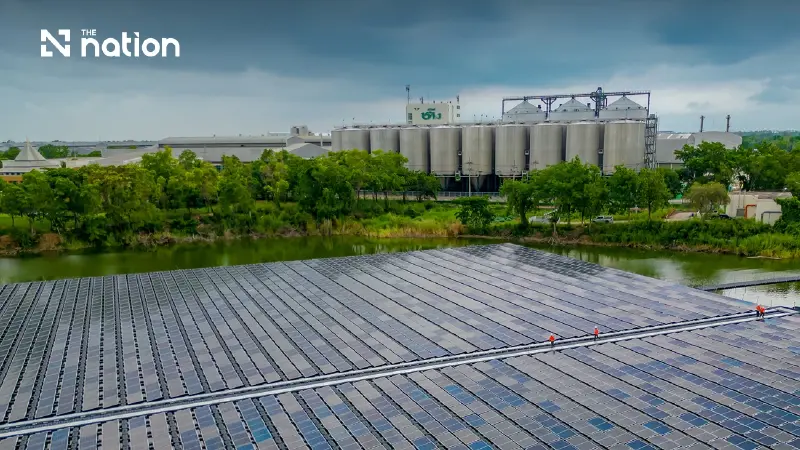


ThaiBev’s solar, biogas, biomass and circular packaging drive shows how Thai manufacturing can turn sustainability into a competitive advantage.
Sustainability has moved beyond the language of annual reports. In Thailand, it is becoming something far more tangible: solar panels on factory roofs, biogas from production by-products, lighter packaging, smarter energy systems and industrial discipline that can be measured in tonnes of avoided carbon.
Thai Beverage, or ThaiBev, offers a polished example of this shift. The regional beverage group is using Thailand’s abundant sunlight and agricultural-industrial base to reimagine how high-volume manufacturing can operate in a low-carbon age.
Its climate ambition is clear. ThaiBev says its targets have been verified by the Science Based Targets initiative, with goals to cut Scope 1 and 2 emissions by 42% and Scope 3 emissions by 25% by 2030, compared with a 2023 base year. It also targets net-zero greenhouse gas emissions across Scopes 1, 2 and 3 by 2050, and aims for 50% renewable energy by 2030.
The most visible symbol is solar. ThaiBev’s solar programme covers rooftop and floating solar installations in Thailand, Myanmar, Vietnam, Singapore and Malaysia, with total completed capacity of 87.51MWp. In fiscal 2025, those panels generated 83,519MWh, reduced grid-electricity costs by 301.68 million baht, and cut greenhouse-gas emissions by 41,178 tonnes of CO2 equivalent. In 2026, the company plans another 12.84MWp of solar capacity across Thailand and Vietnam, backed by investment of about 165.62 million baht.
Yet the story is not solar alone. ThaiBev’s energy transition also reaches into the heat, steam and waste streams of industry. Its biogas facilities use by-products from alcohol distillation and methane captured from wastewater treatment, while biomass boilers use organic materials such as wood chips, rice husks and palm shells. Together, these projects reduce reliance on fossil fuels and turn what might once have been waste into industrial energy.
Circular thinking continues into packaging. ThaiBev has established collection and recycling systems for materials including glass, paper, aluminium and PET, while introducing initiatives such as lighter aluminium cans, 100% recycled PET bottles for selected products, and packaging recovery through community and partner networks.
The global market has noticed. ThaiBev was accepted as a DJSI World member for nine consecutive years and as an Emerging Market member for 10 consecutive years as of December 2025. It also achieved full marks in seven of 23 criteria in S&P Global’s Corporate Sustainability Assessment, while earning CDP scores of A for climate change and A– for water security.
For Thailand, the message is quietly powerful: green industry is not a Western import. It can be engineered under Thai sunlight, scaled through Thai factories, and turned into a competitive edge for ASEAN’s sustainable future.
